Unveiling the Worth How to Determine Your Antique Vanity with Mirrors True Value: appraisal and value basics
Unveiling the Worth How to Determine Your Antique Vanity with Mirrors True Value research should start with identification, condition, provenance, and item-specific market evidence. Use this guide to compare the signals that matter before paying for a formal appraisal or deciding whether to sell.
Antique vanity with mirror value checklist
Antique vanities with mirrors blend utility and artistry, making them perennial favorites for collectors and decorators alike. Determining true value, however, takes more than a glance at age or aesthetics. It requires reading construction clues, weighing originality and condition, understanding stylistic demand, and triangulating market comparables. This guide walks you through a practical, defensible approach to appraisal.
What You’re Really Valuing: Vanity, Dressing Table, or Dresser?
Terminology matters because form influences desirability.
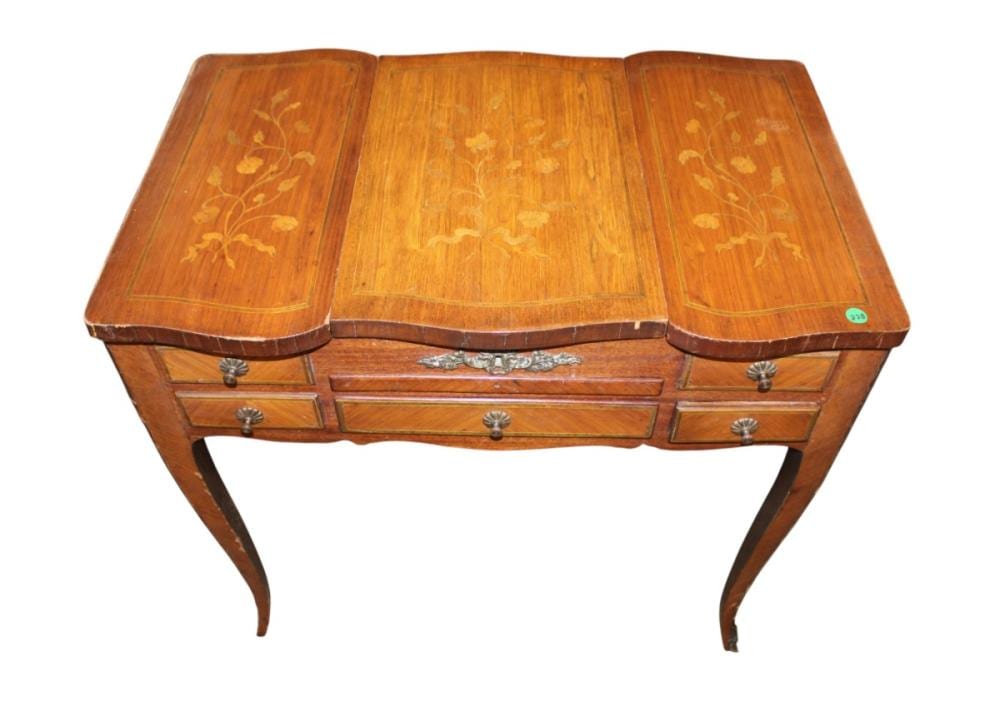
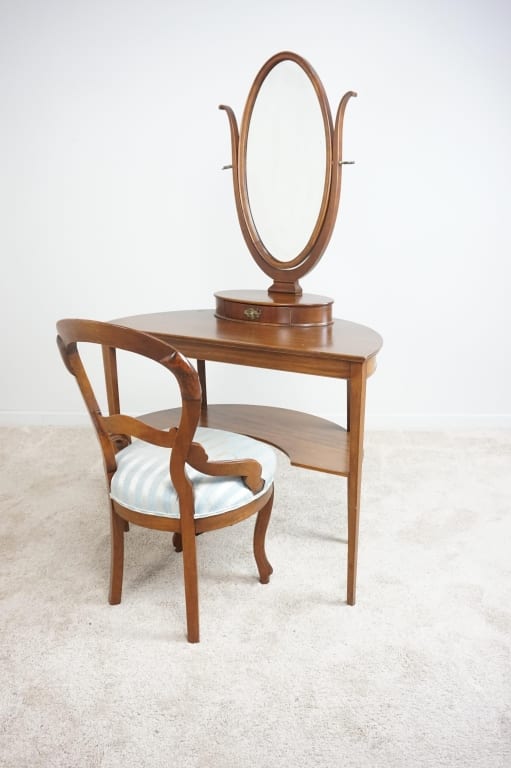
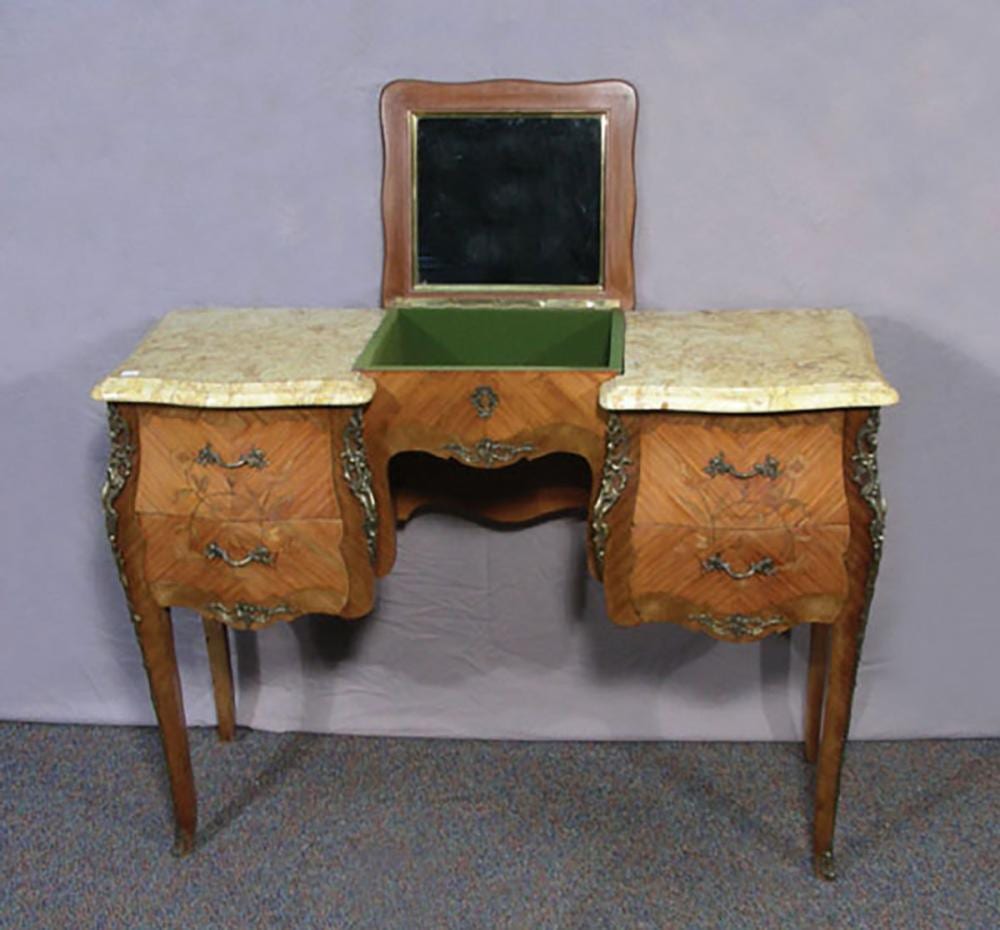
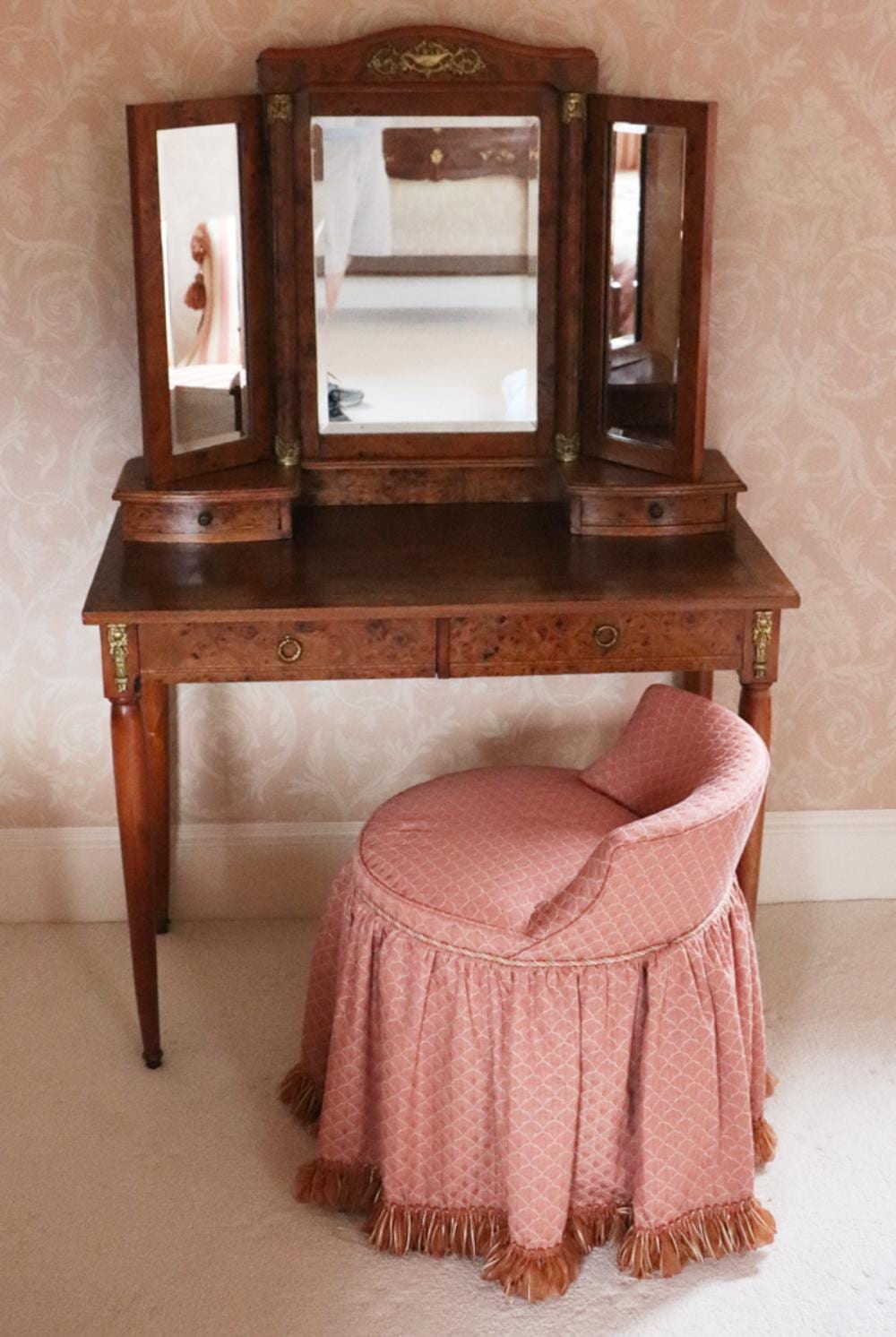
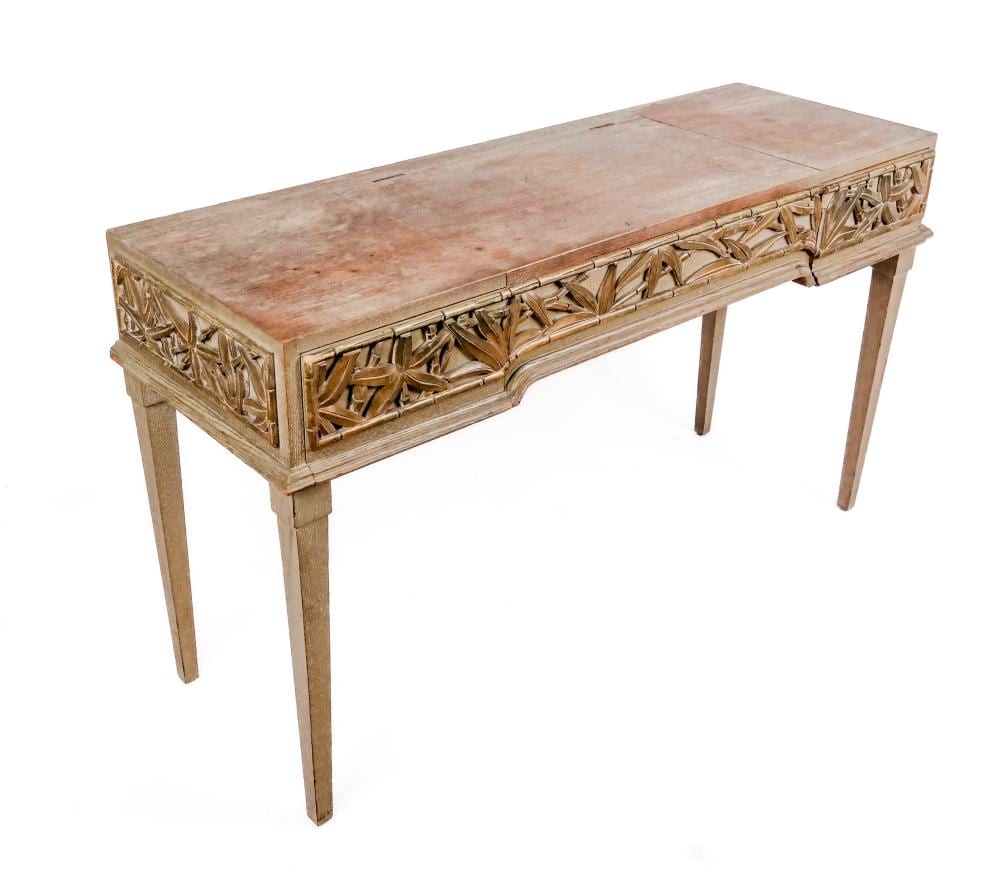
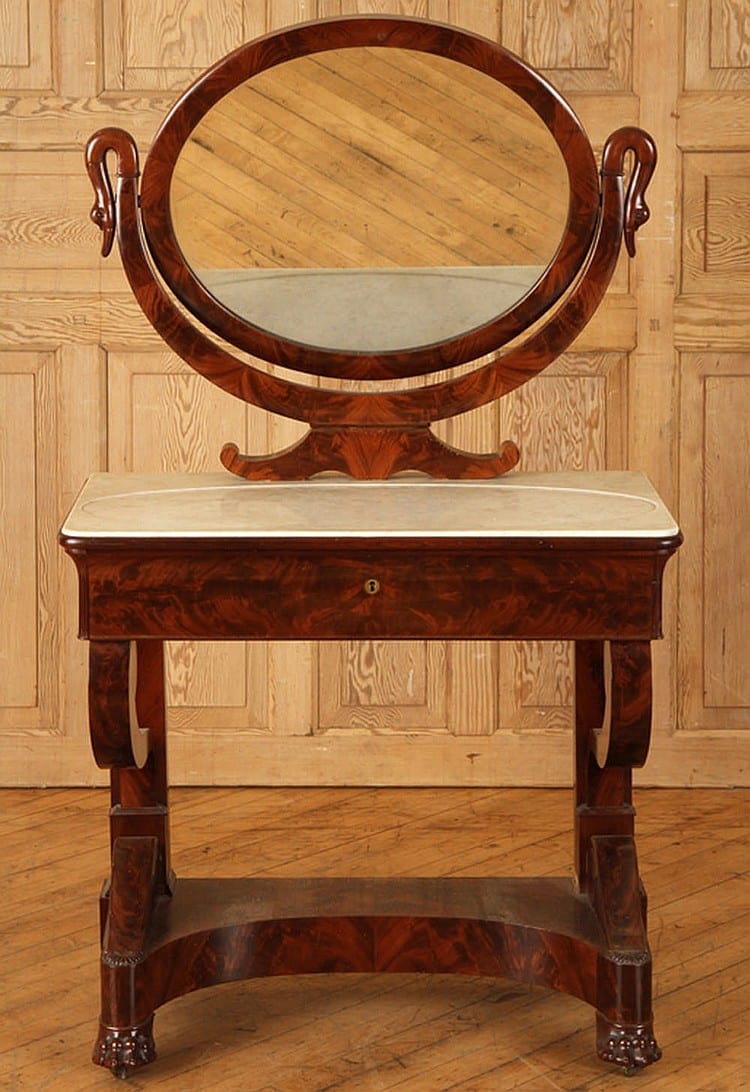
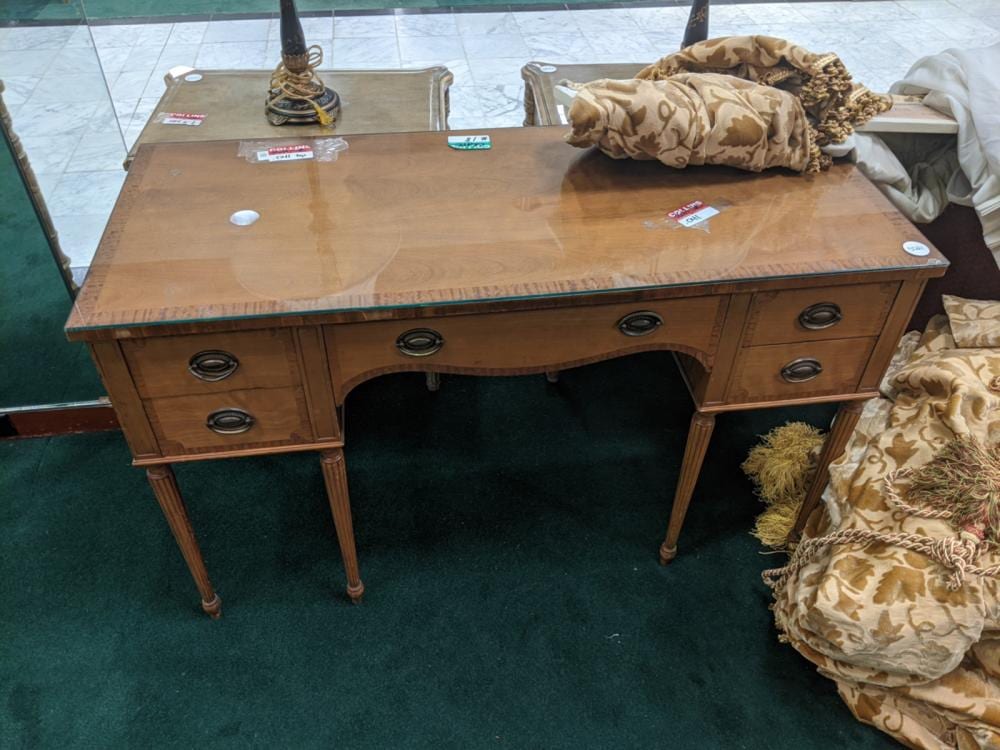
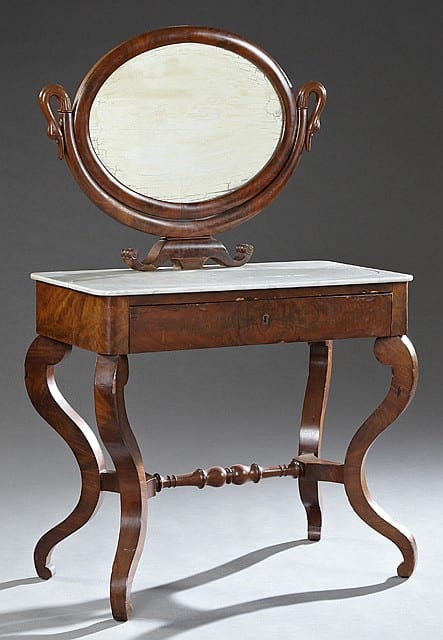
- Dressing table or toilet table (18th–early 19th century): Typically a compact table with drawers and a separate swiveling or frame-mounted mirror (sometimes detachable). Earlier examples can be exceptionally valuable.
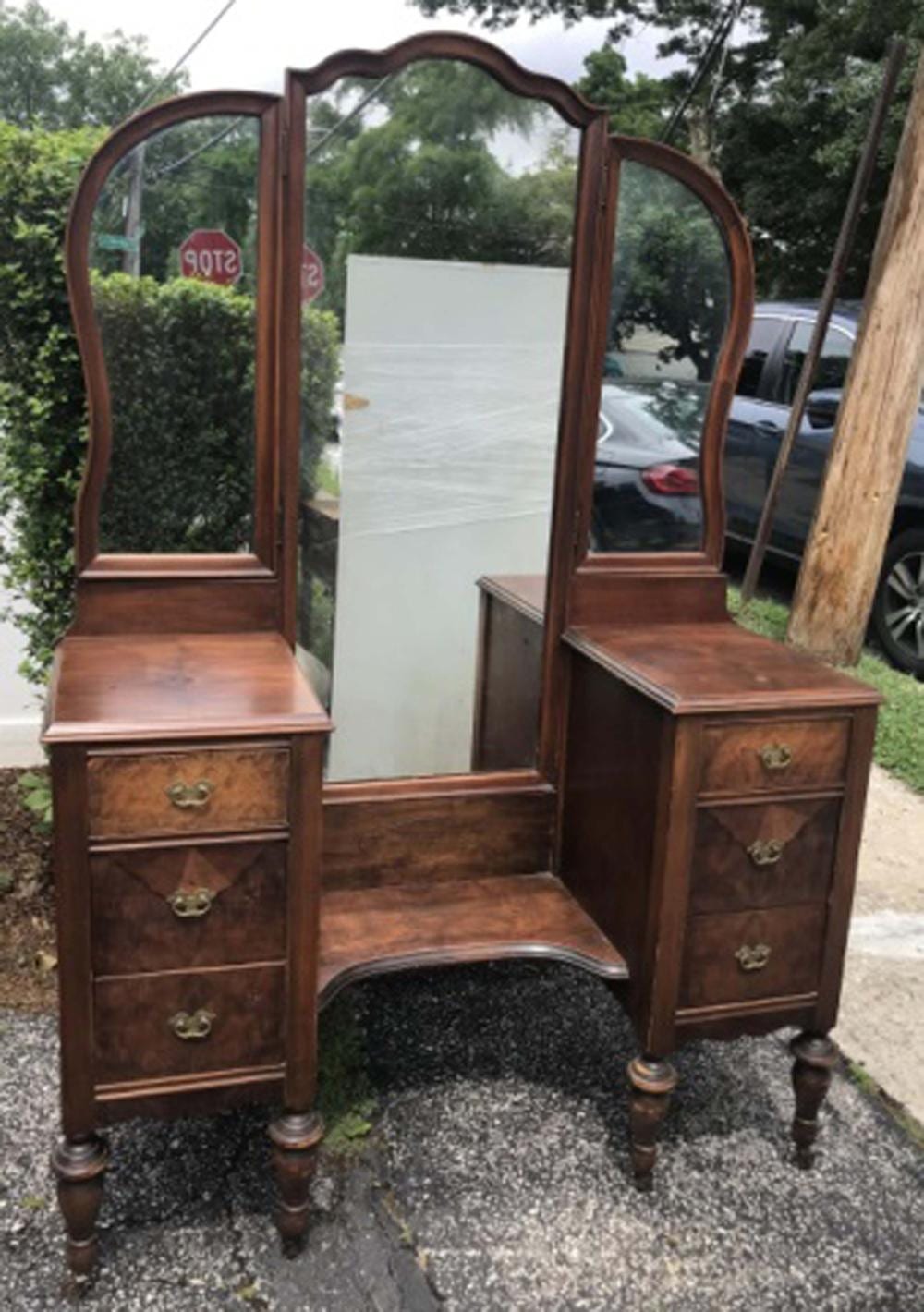
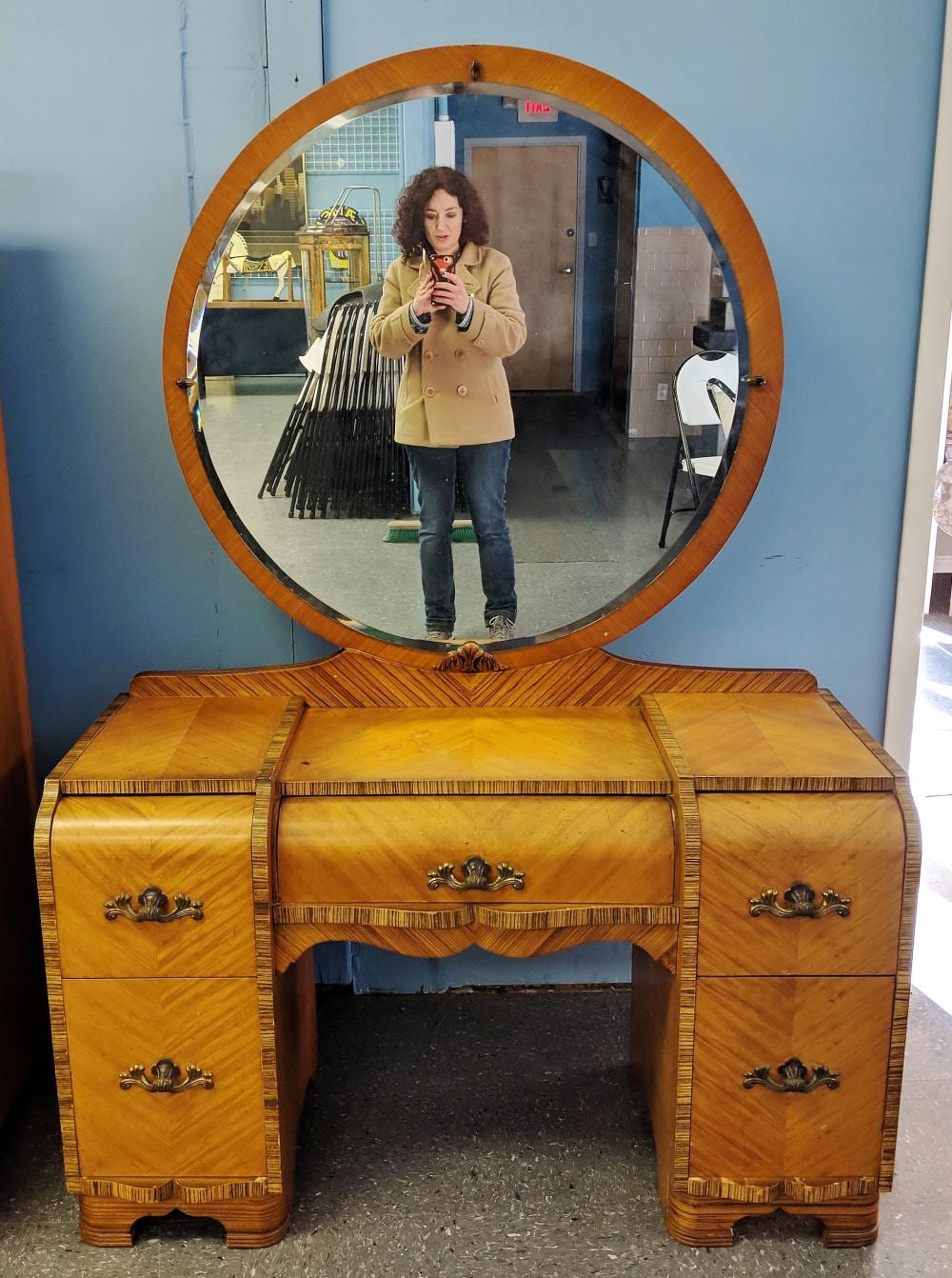
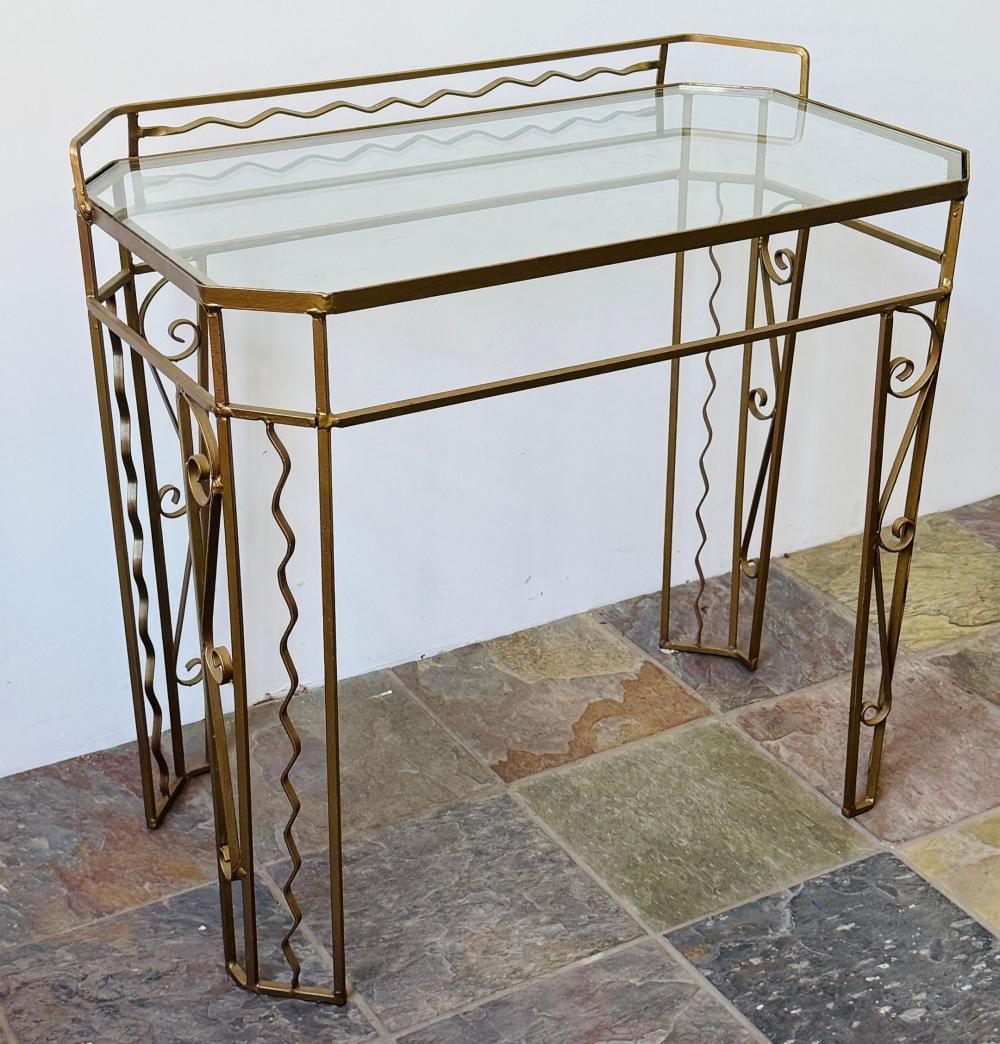
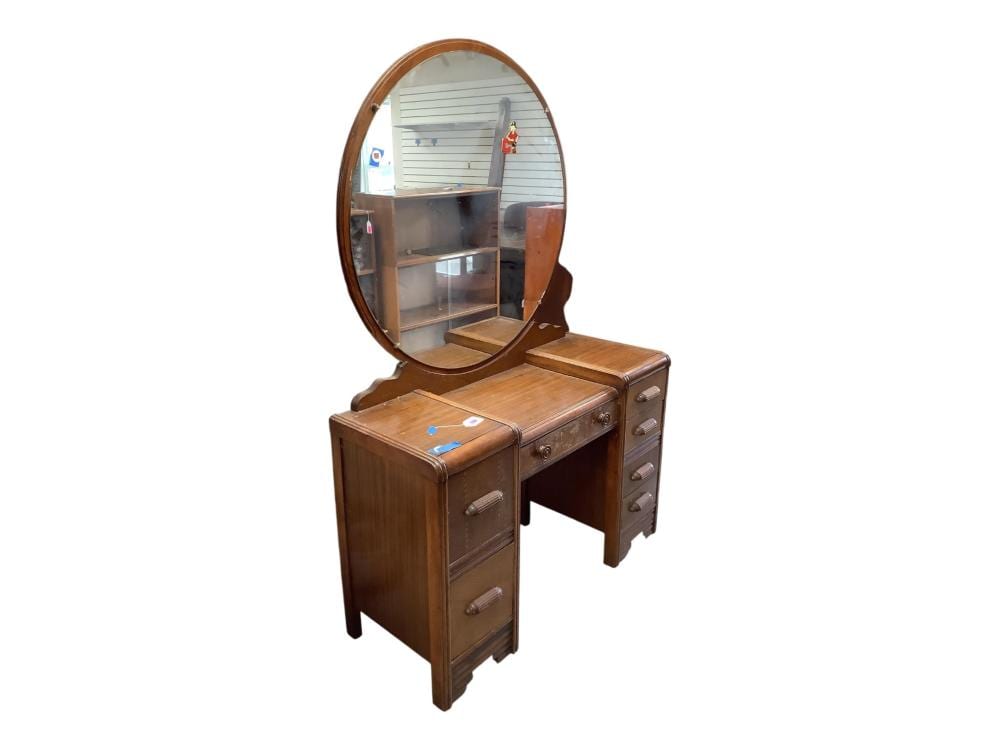
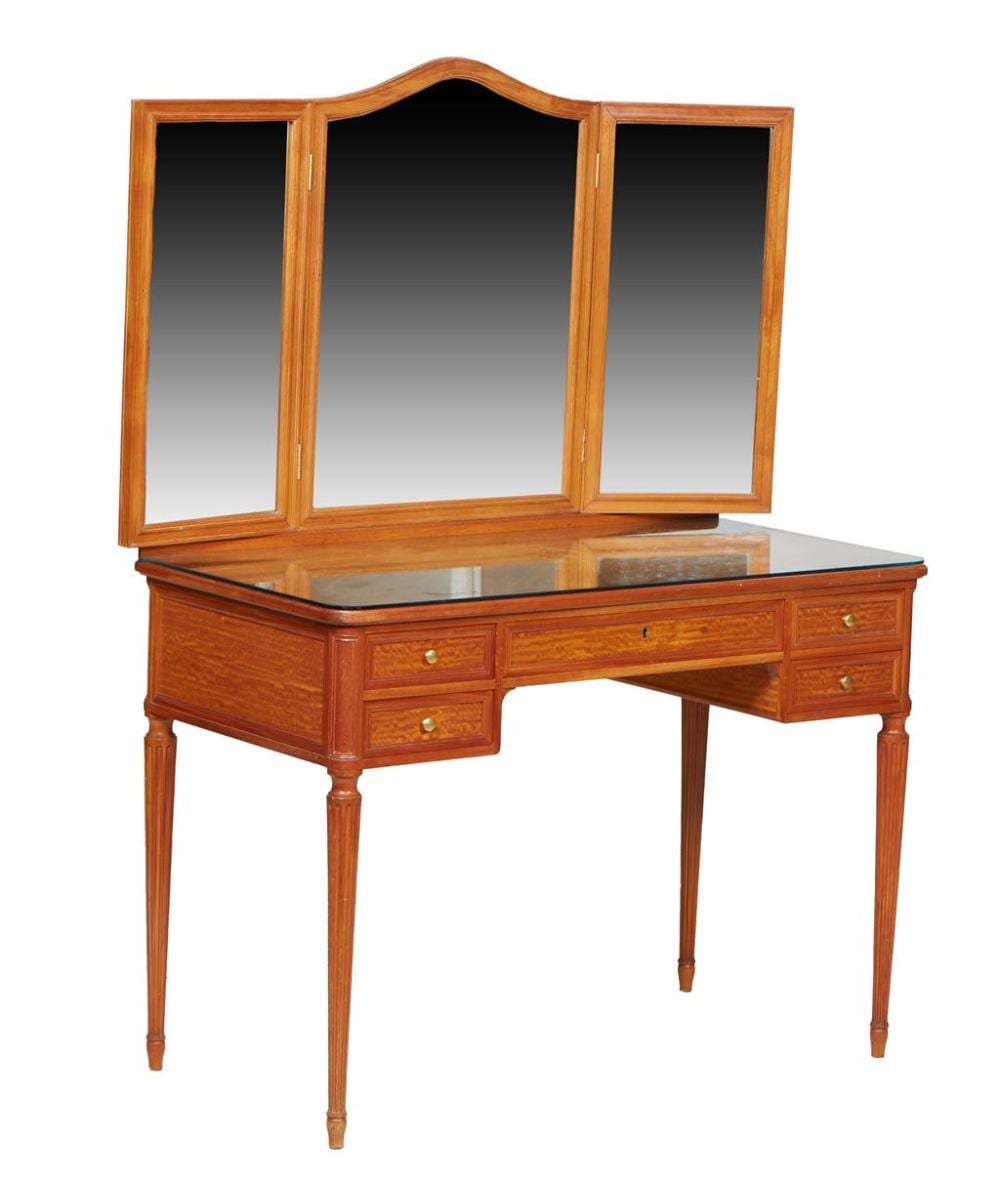
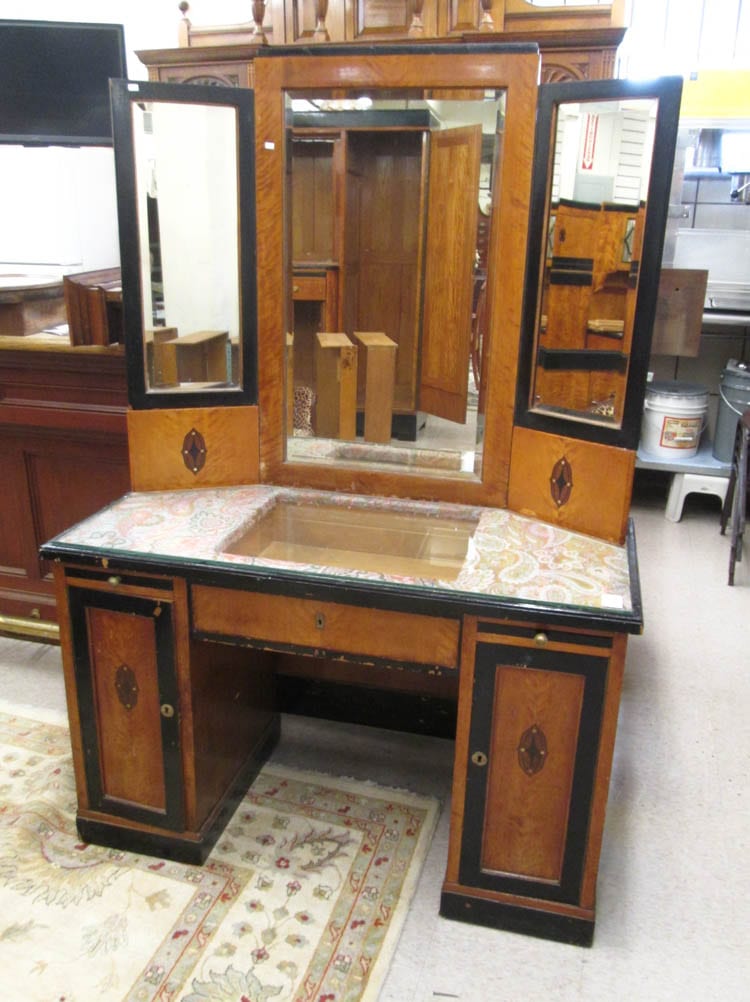
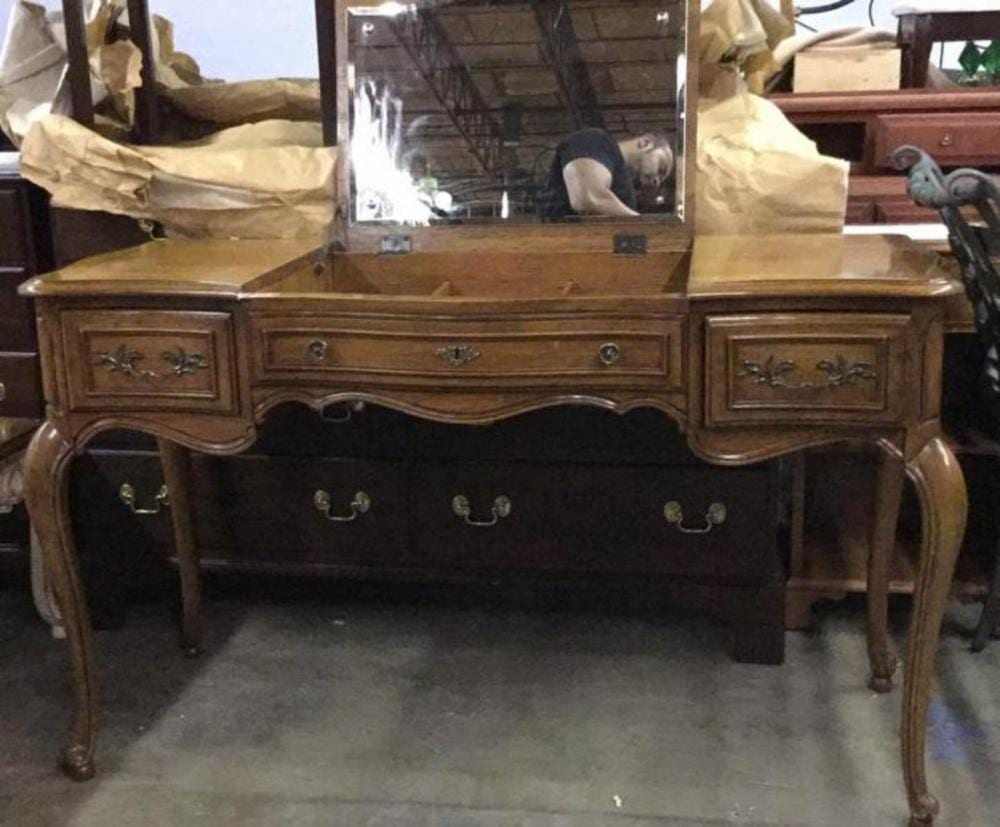
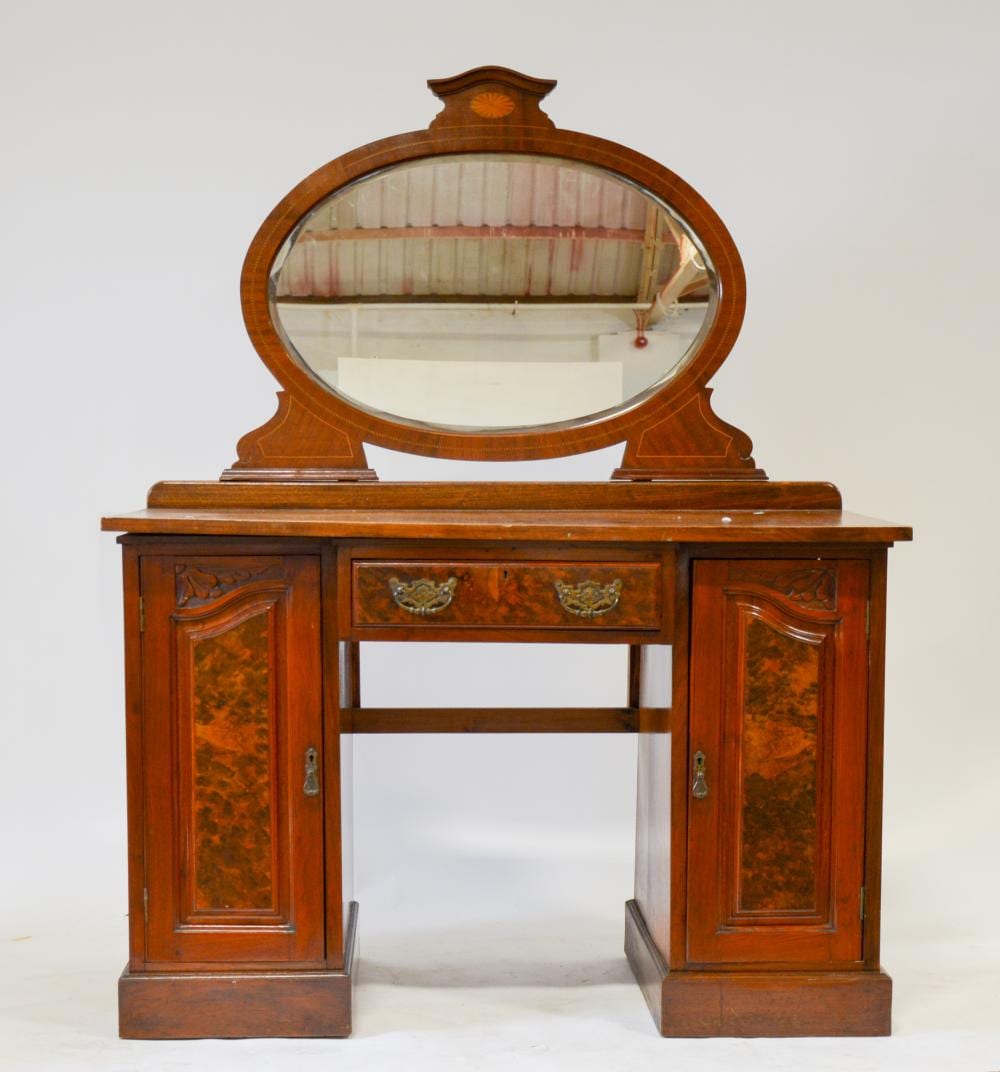
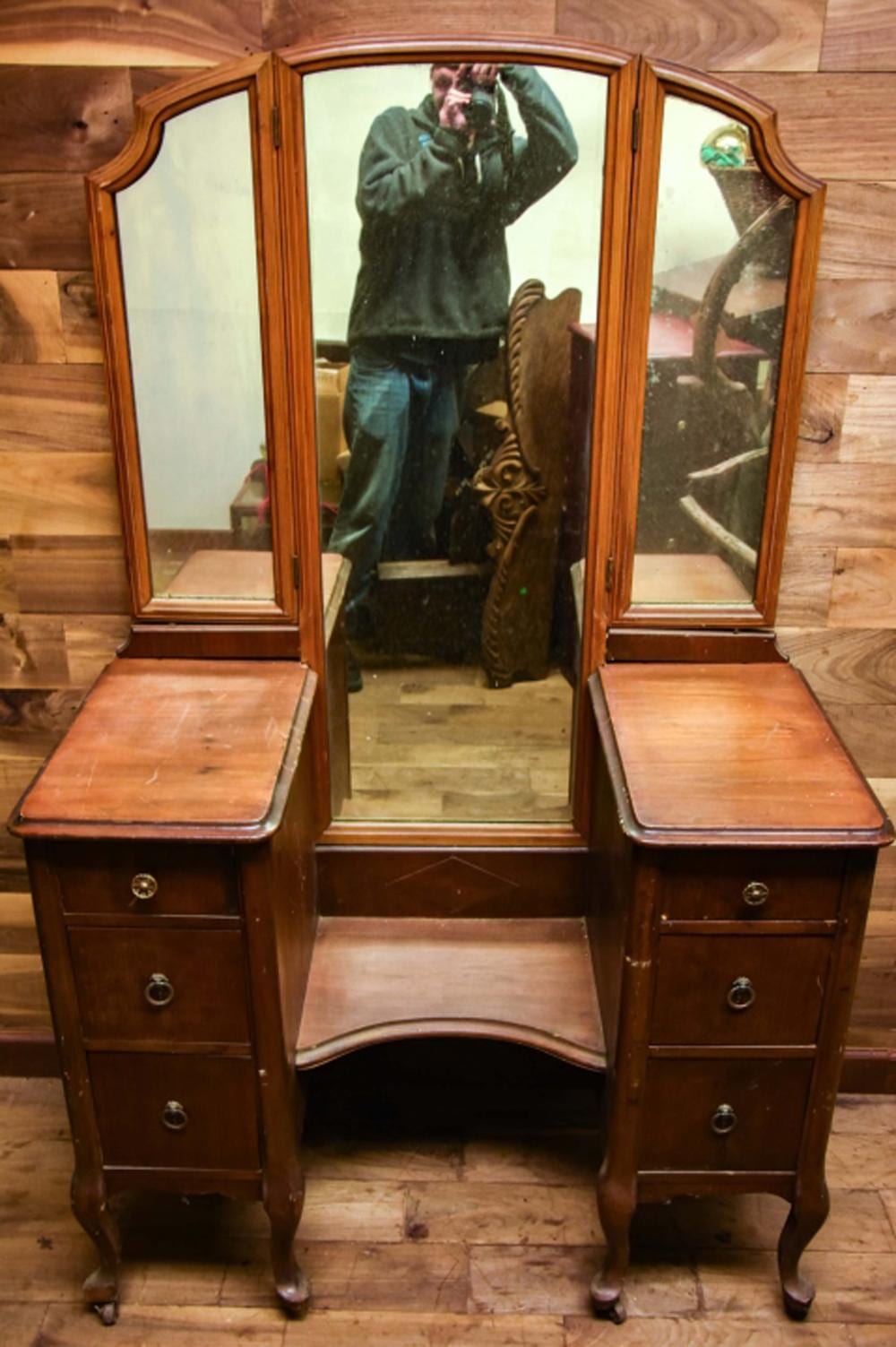
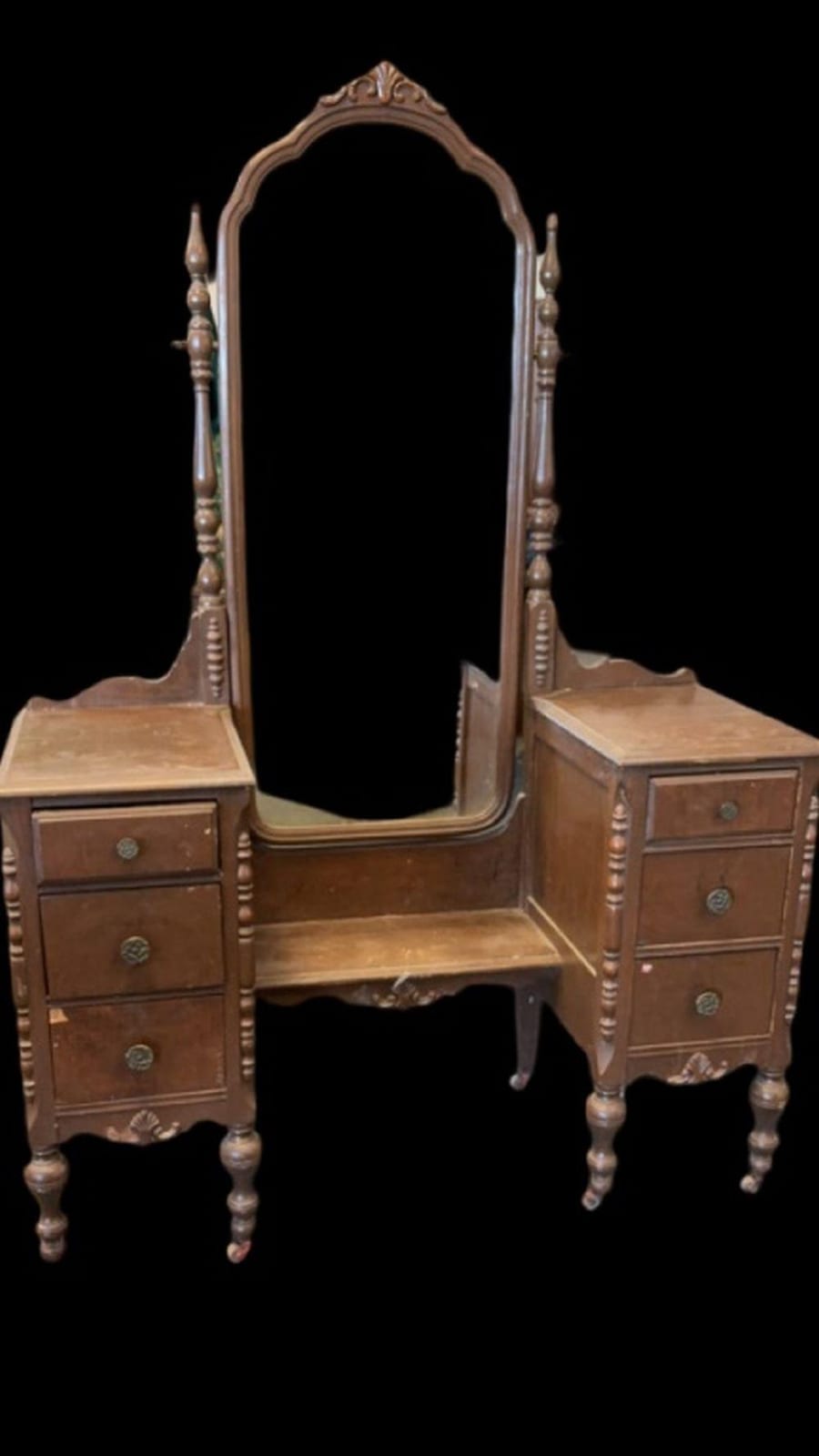
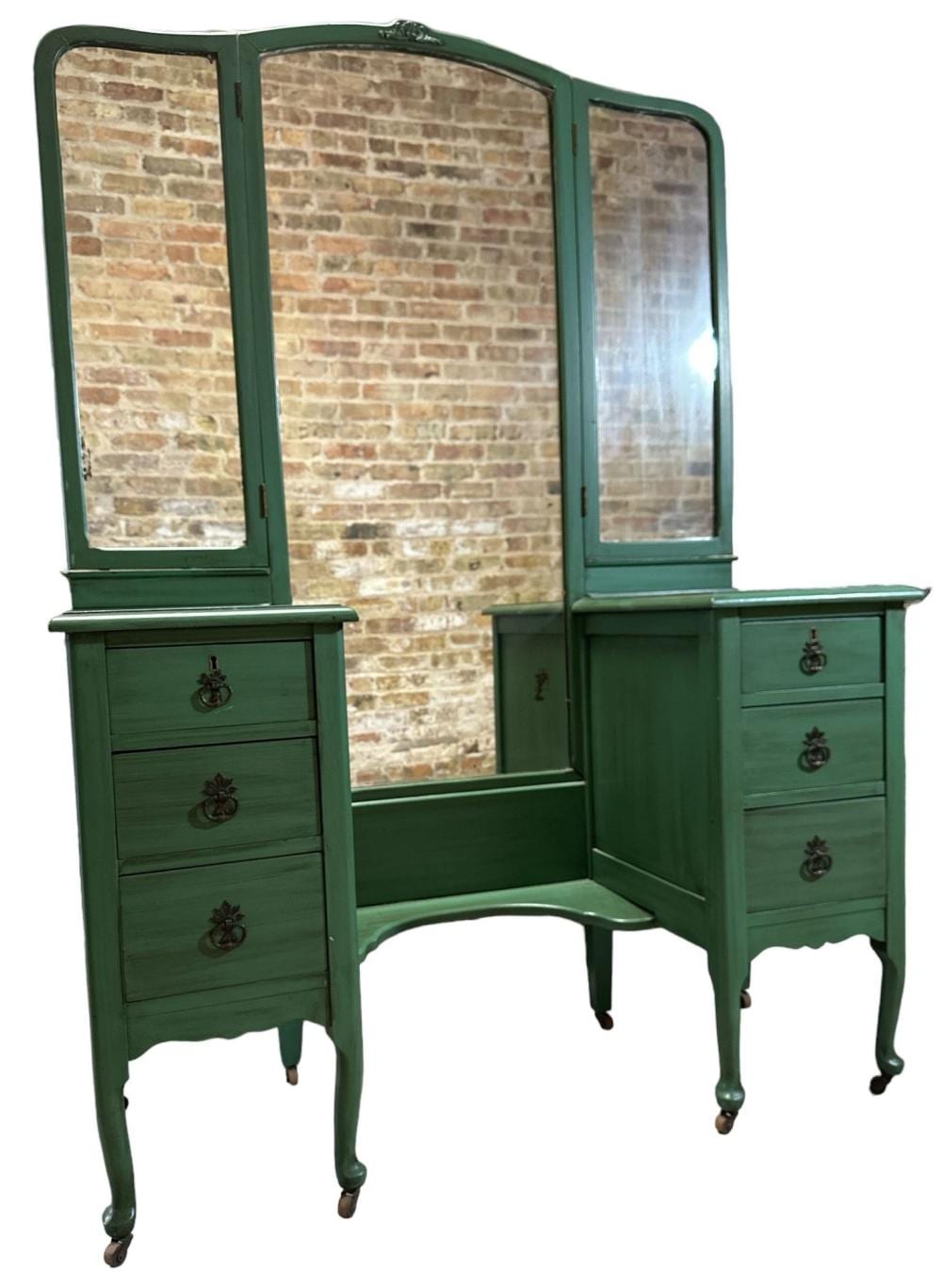
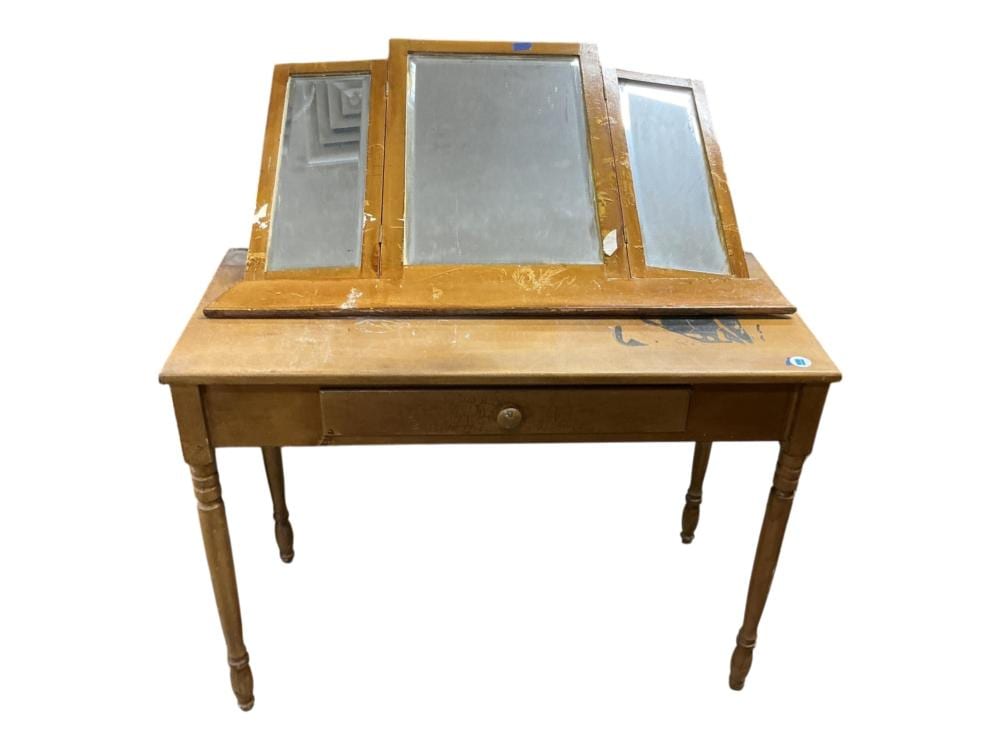
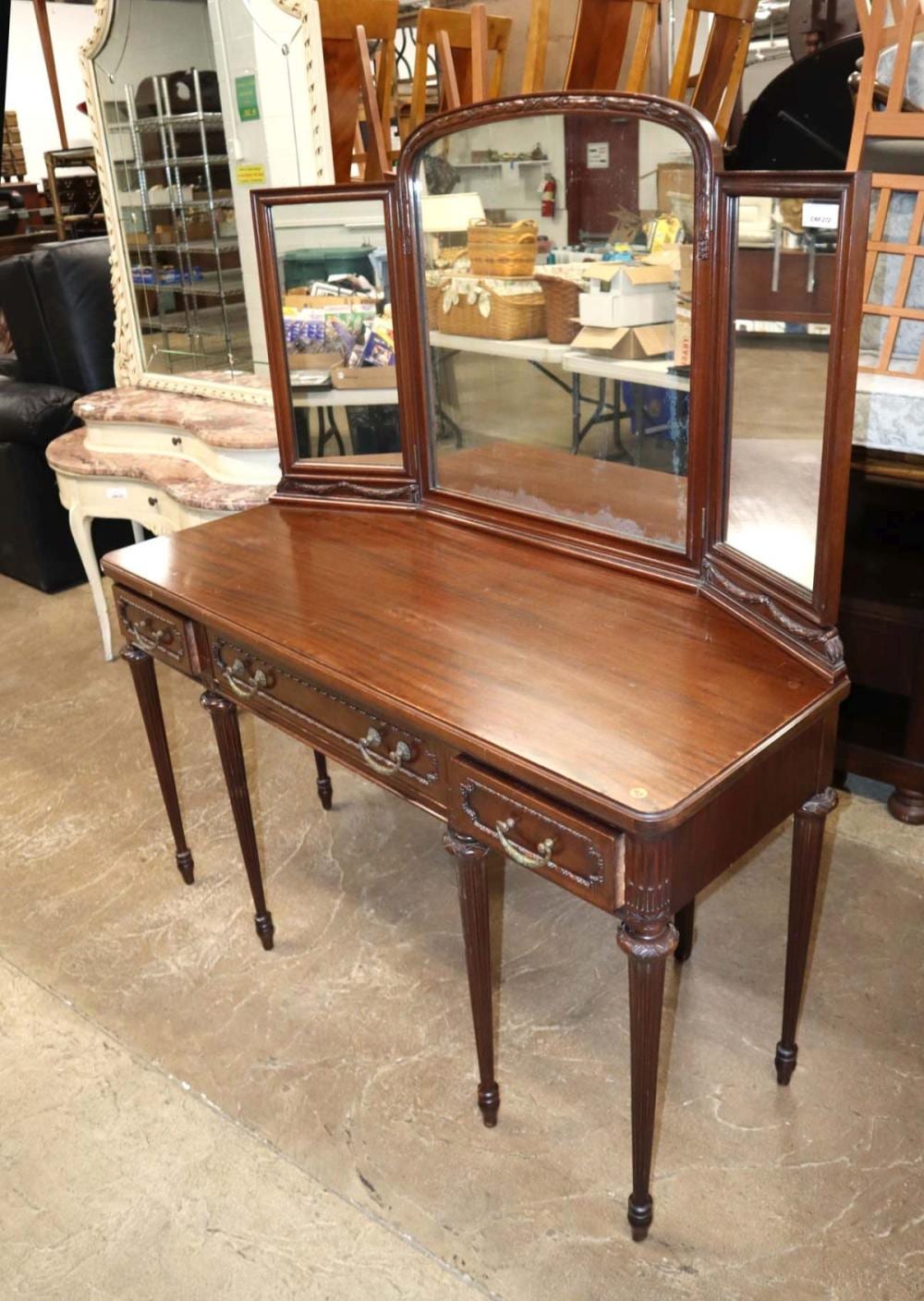
- Vanity (late 19th–mid-20th century): Usually a larger case piece designed for grooming, with an attached central mirror (often tri-fold), knee space, and flanking drawers. Common in bedroom suites.
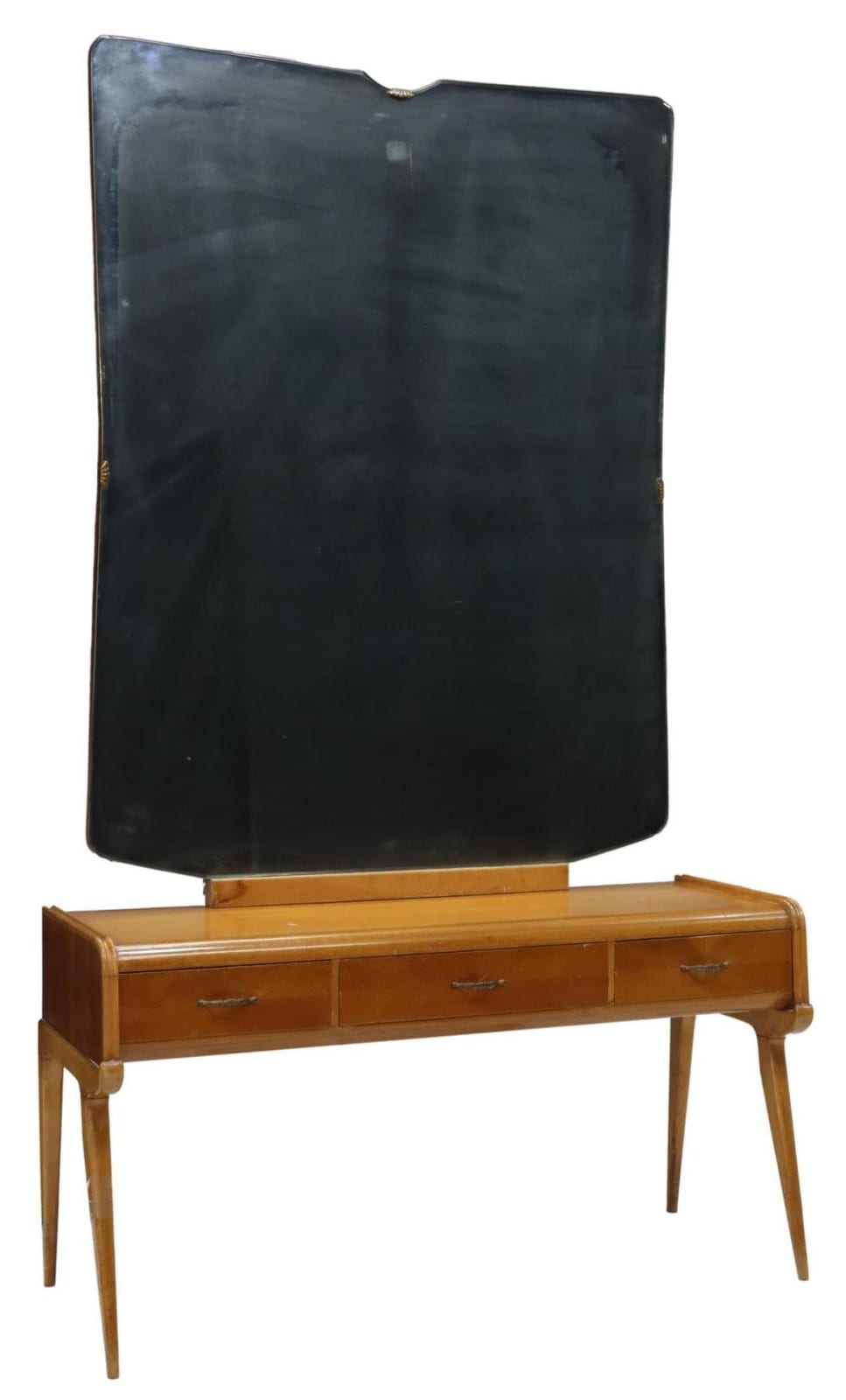
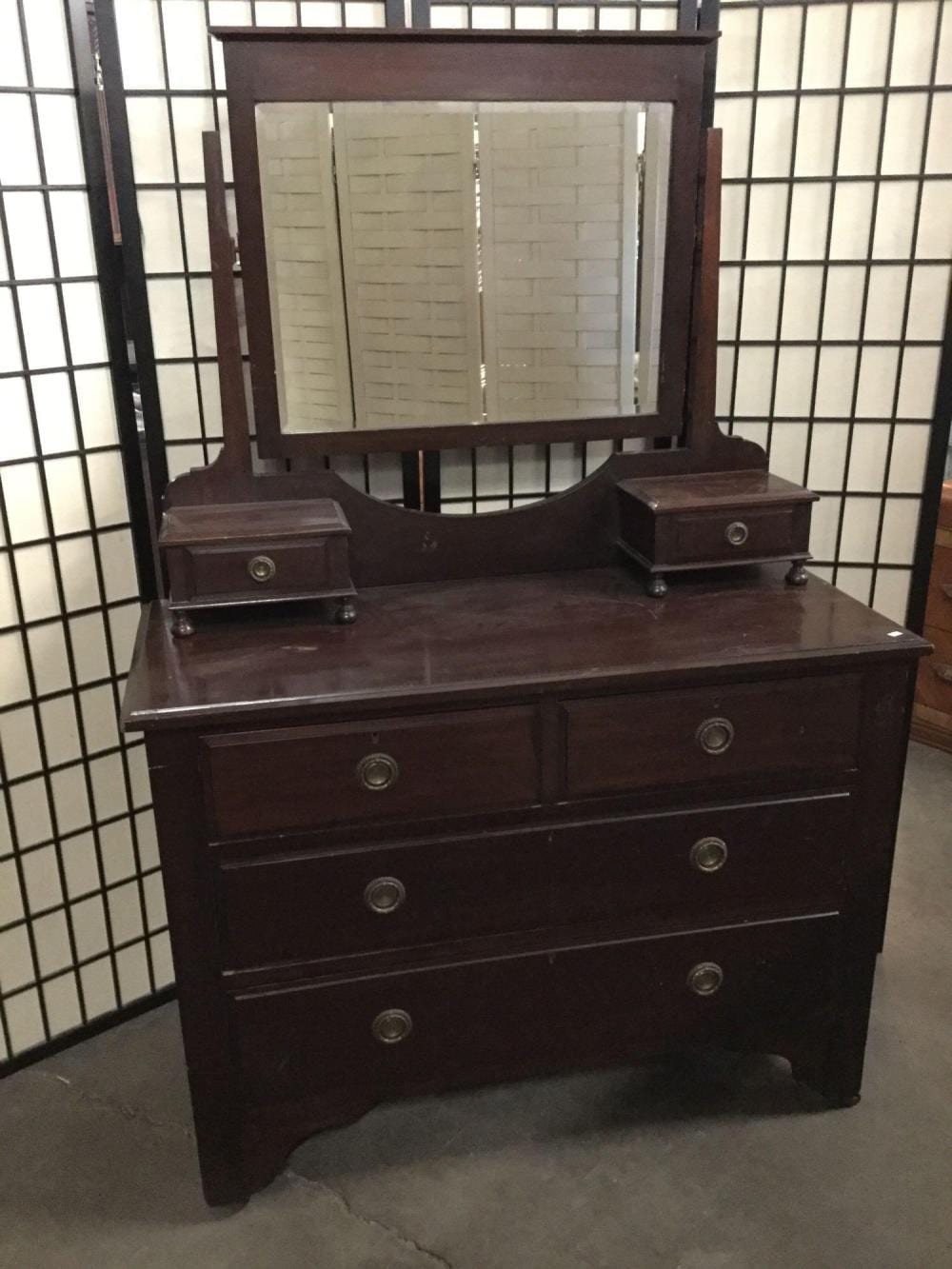
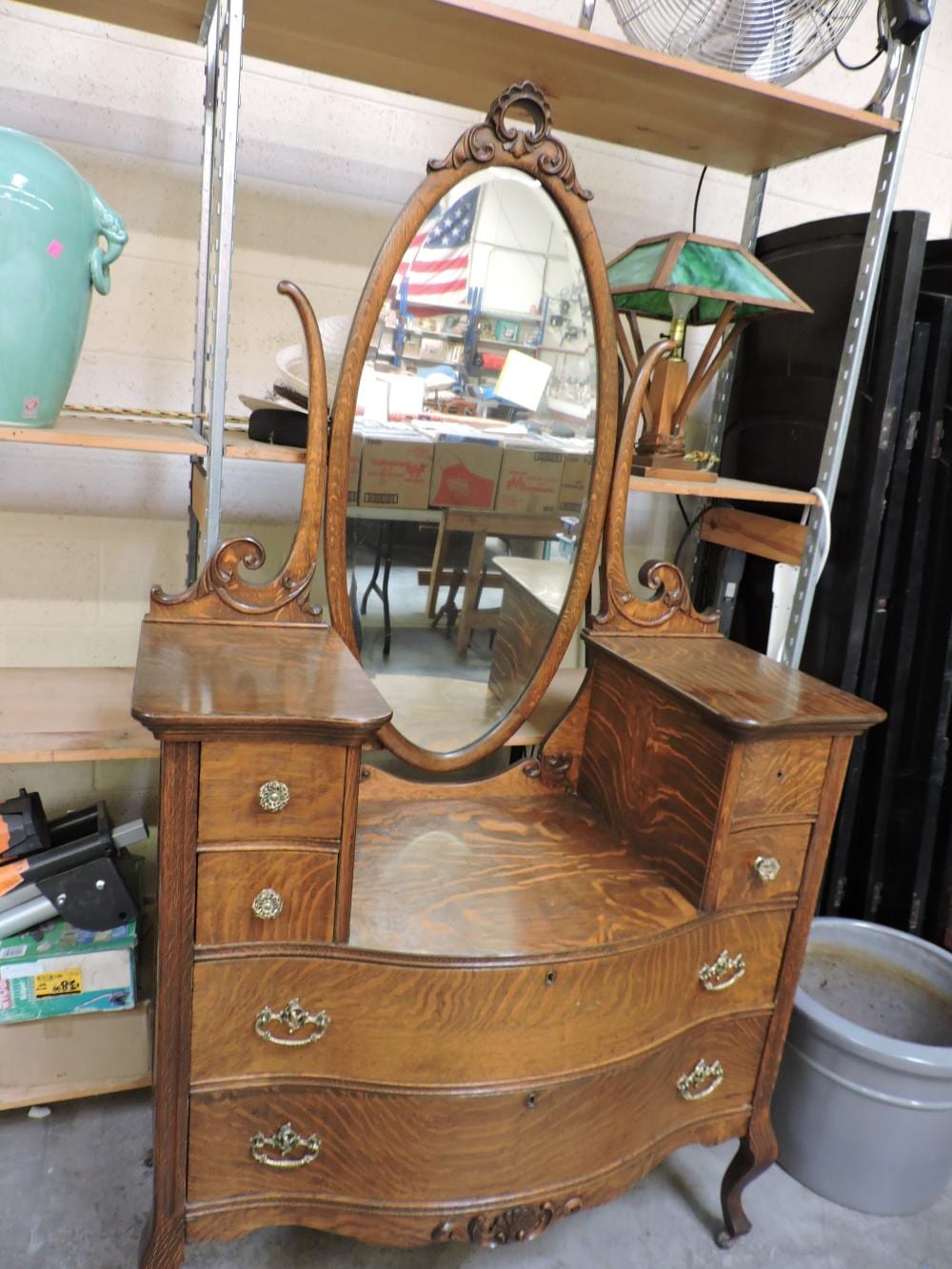
- Dresser with mirror: A chest of drawers topped with an attached mirror; often miscalled a vanity. True vanities generally include a seated knee space.
Look for completeness:
- Base cabinet or table, original mirror frame(s) and supports, backboards, casters or feet, original hardware (pulls, escutcheons), and sometimes a matching stool. Marble or stone tops appear on higher-style Victorian and Rococo Revival pieces.
Functional scale also affects value. Apartment-friendly widths and graceful proportions can bring a premium over bulky suite pieces, unless the latter carry designer or maker prestige.
Identify Period, Maker, and Materials
You’ll anchor value by first establishing when, where, and by whom it was made, and from what.
Construction clues by era:
- Joinery
- Hand-cut dovetails with variable spacing and tool marks: generally pre-1860s.
- Machine-cut dovetails with uniform small pins: post-1860s.
- Saw marks on hidden surfaces
- Irregular, straight “up-and-down” pit-sawn marks: typically pre-1840.
- Circular arcs: circular saw, mid-19th century onward.
- Even, straight band-sawn marks: late 19th century onward.
- Screws and nails
- Hand-wrought screws with off-center slots, irregular threads: 18th–early 19th century.
- Machine-cut screws with tapered shanks: early–mid 19th century.
- Fully machine screws with uniform threads: later 19th century onward.
- Cut nails (rectangular): pre-1880s; wire nails (round): post-1880s.
- Phillips-head screws: 1930s onward.
- Hardware and hinges
- Cast brass with hand-finishing: earlier; stamped steel/brass-plated: later.
- Eastlake incised pulls (1870s–80s). Bakelite or chrome pulls signal 1920s–40s.
- Finish
- Shellac (warm, crazed, dissolved by ethanol): 19th century into early 20th.
- Nitrocellulose lacquer: prevalent from the 1920s.
- Polyurethane or modern varnishes: late 20th–21st century restorations.
Mirror glass and silvering:
- Early “mercury” amalgam mirrors (18th–mid-19th century) can show subtle waviness, glittering highlights, and small dark spots or blisters. True mercury-backed glass is rare on vanities; most vanity mirrors (1890–1940) are silvered.
- Beveled edges were common on 1900–1940 vanities; wide, hand-ground bevels tend to be earlier/higher quality than narrow machine bevels.
- Evidence a mirror was replaced: fresh plywood backings, modern clips, safety-stamped glass, or a mirror too pristine for the piece’s age.
Wood species and veneers:
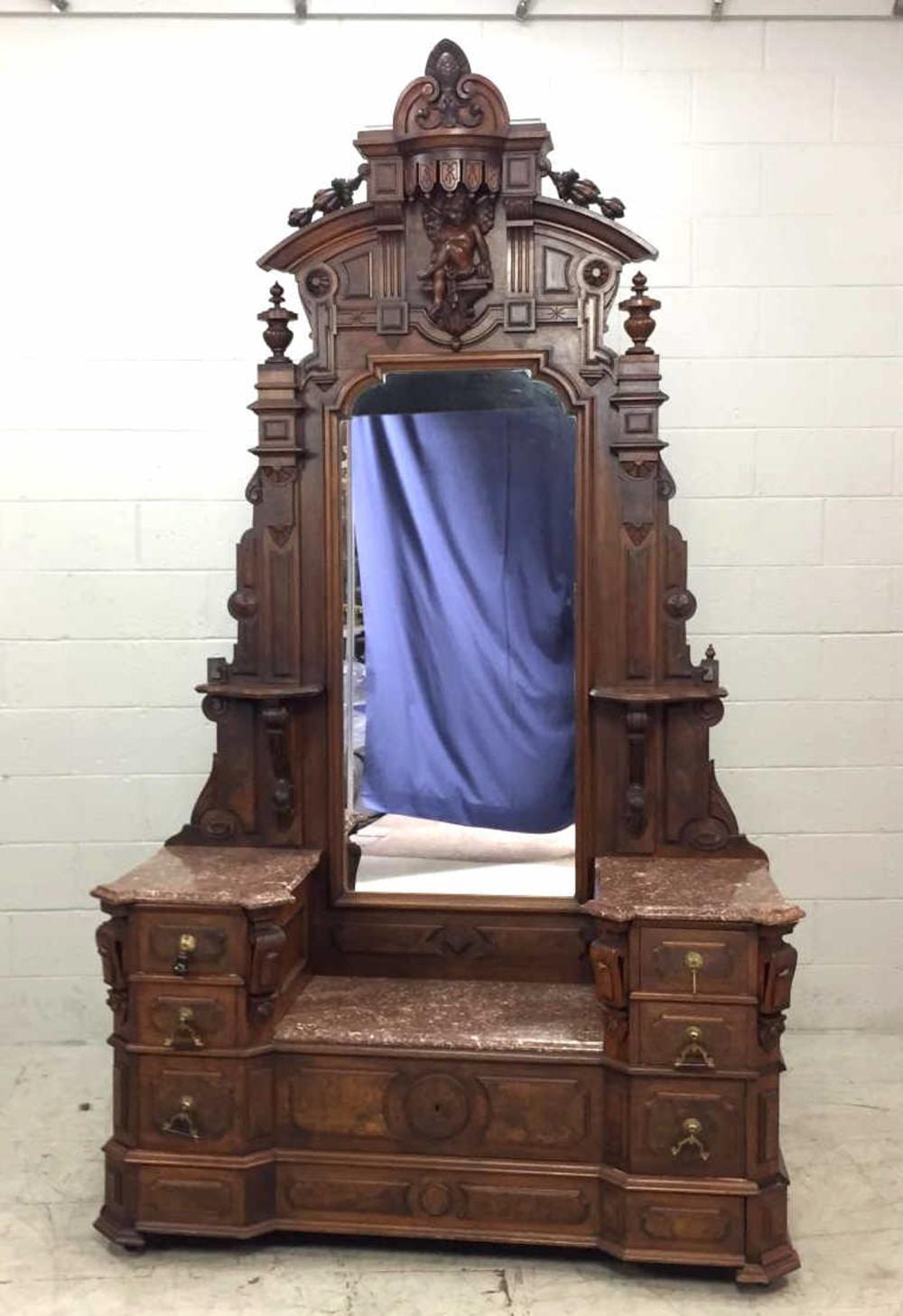
- High-style 19th century: walnut, mahogany, and rosewood veneers; marble tops on Rococo Revival examples.
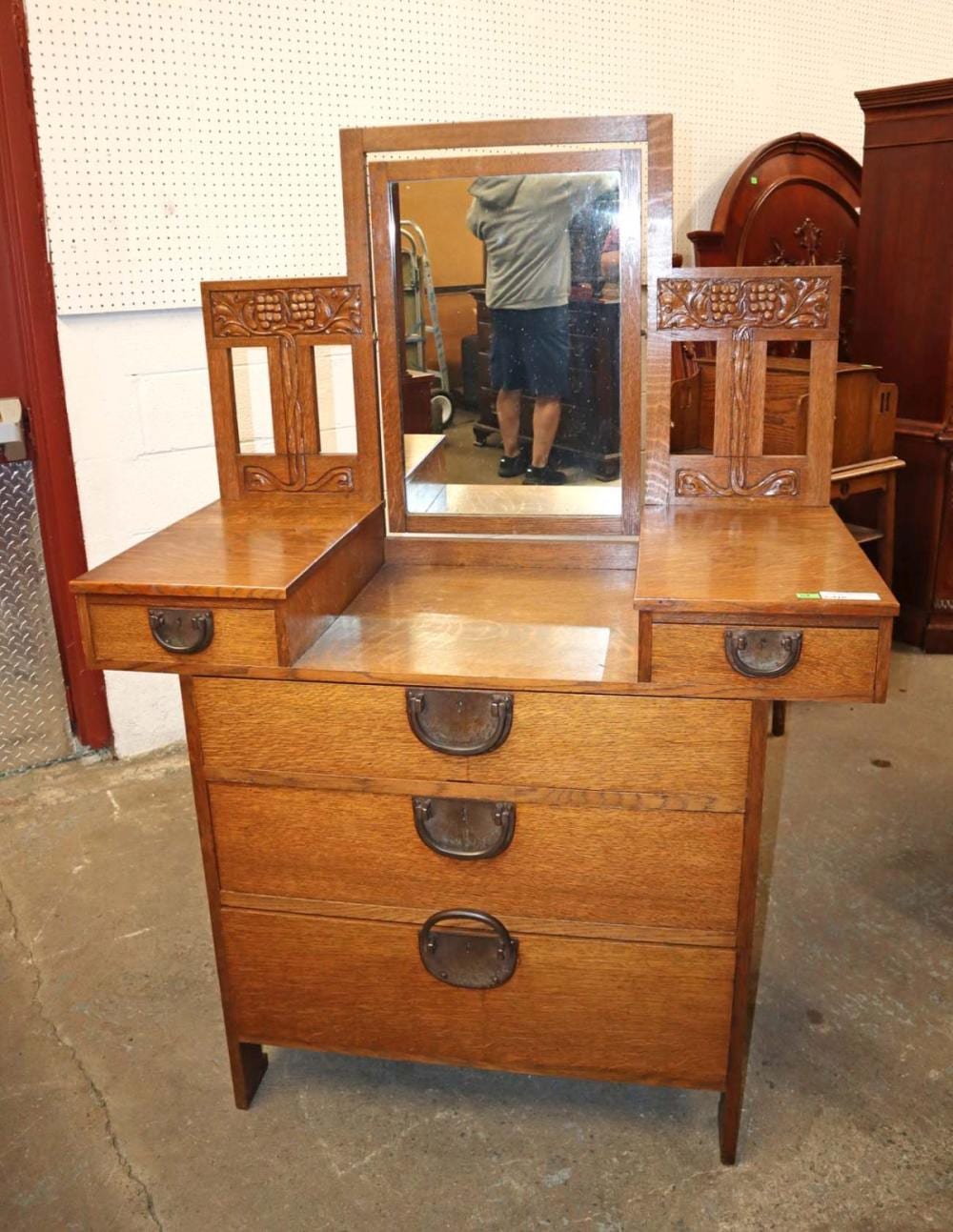
- Arts & Crafts: quarter-sawn white oak with prominent ray fleck; exposed joinery.
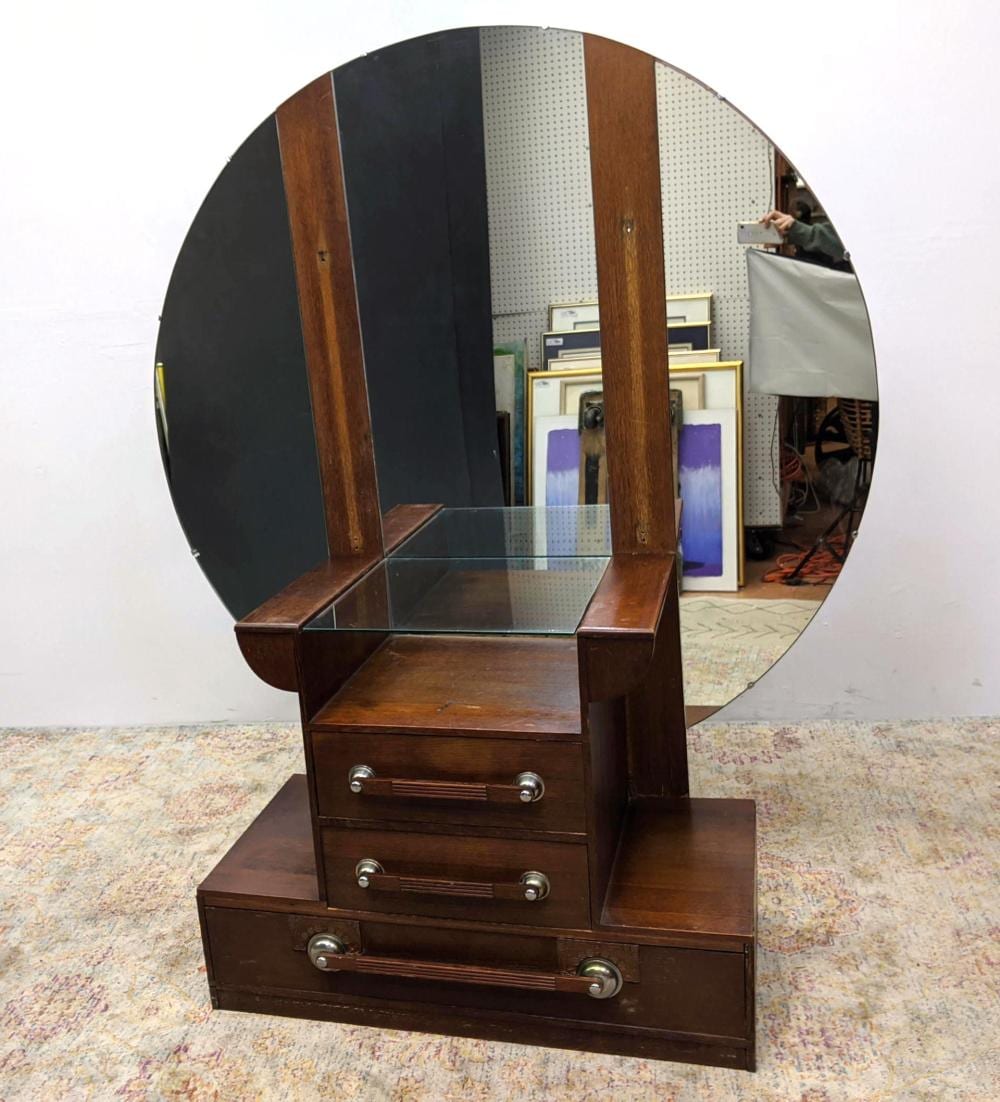
- Art Deco: walnut, mahogany, or exotic veneer panels (burl, bird’s-eye), strong geometry, book-matched patterns.
- Secondary woods (drawer sides and backs): poplar, pine, tulip poplar, or beech are common; plywood shows later manufacture.
- European vs American cues: European drawers often in beech; American secondary woods often poplar/pine.
Labels, stamps, and numbers:
- Paper labels, branded or stenciled marks under drawers, on backboards, or inside cases can identify factories or retailers.
- Chalk-inscribed assembly numbers and matching numerals across mirror supports and base confirm original pairing.
- Designer or high-quality maker marks (e.g., notable Arts & Crafts firms, premier Art Deco ateliers) can multiply value.
Condition, Originality, and Completeness
Condition and originality drive value adjustments more than any other factors once period and style are set.
Common issues and their impact:
- Refinished surfaces: Early patina is prized on 18th–19th century forms; a complete strip-and-recoat can reduce value substantially for those. For 1920s–40s vanities, a professional period-correct lacquer refinish may be neutral or even positive if the original was destroyed.
- Veneer losses, bubbles, or patches: Visible repairs lower value; missing or mismatched veneer on prominent surfaces can reduce value sharply. Properly executed veneer restoration recovers some loss.
- Mirror replacement: A sympathetic period replacement may reduce value somewhat; modern safety glass in a 19th-century frame is a larger hit. For 20th-century vanities, clean modern glass is often acceptable to buyers.
- Hardware replaced: Non-original pulls or escutcheons lower value, unless period-correct replacements are installed.
- Structural damage: Loose joints, missing moldings, cracked mirror supports, or compromised backboards need stabilization. Amateur glue jobs, visible screws/brackets, or epoxy smears detract significantly.
- Marble tops: Hairline fissures are common; full breaks with metal staples or epoxy lines impair value more than age-consistent etching.
- Pest and odor: Old worm holes (inactive) can be acceptable; fresh frass suggests active infestation—remediate before sale. Smoke and mildew odors are serious deterrents.
- Completeness: Original mirror supports, finials, back panels, and casters matter. A missing matching stool is a minor issue; missing mirror wings on a tri-fold vanity is major.
Document any prior restorations. Transparent, competent repair with reversible methods is preferable to untouched instability.
Style, Rarity, and Demand
Even within the same era and condition, style and current taste redirect value.
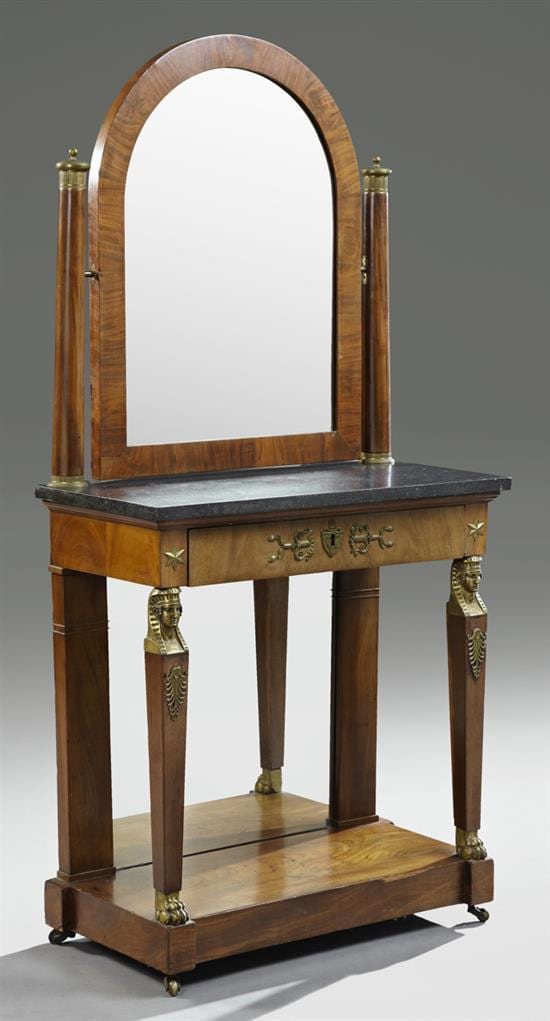
- Federal/Neoclassical (c. 1790–1820): True dressing tables with delicate inlay, tapered legs, and detached mirrors are scarce and valuable. Rarity and craftsmanship rule.
- Victorian
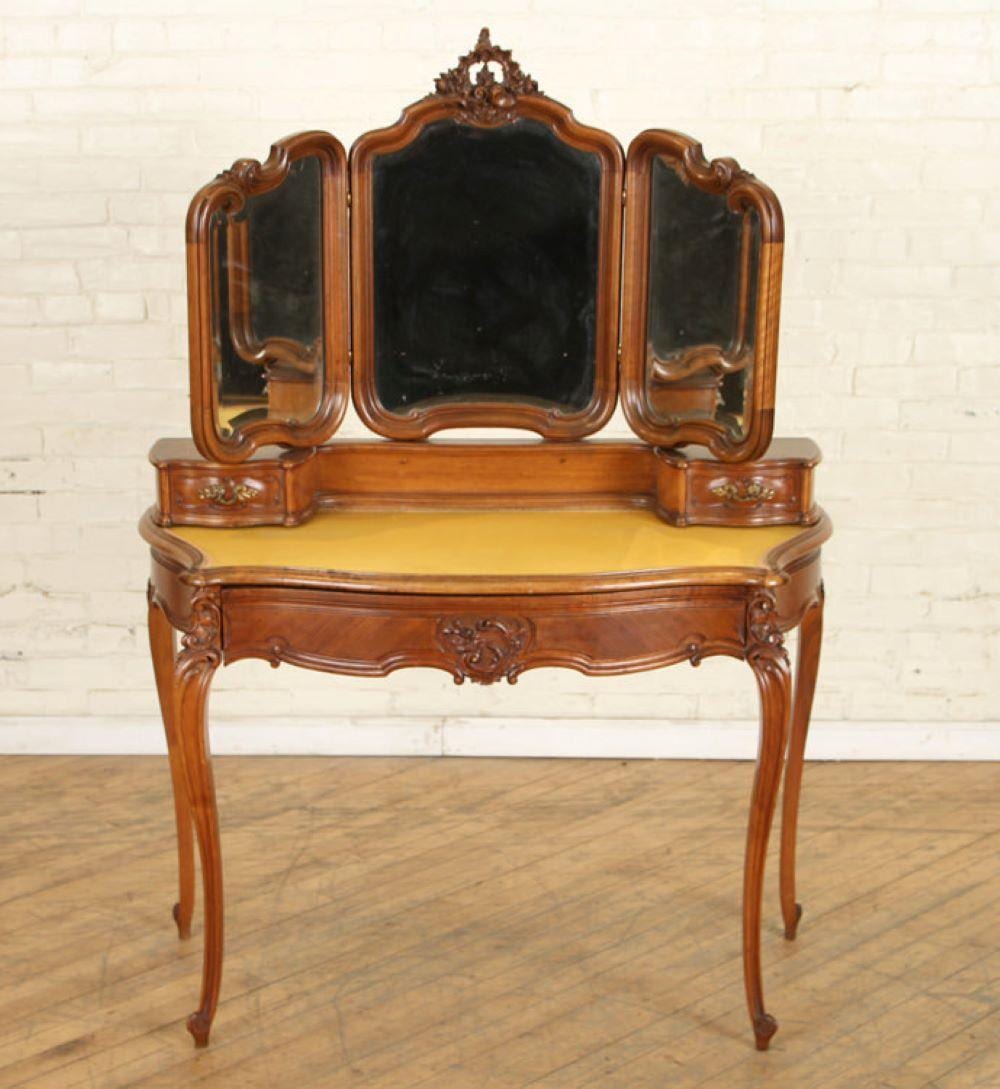
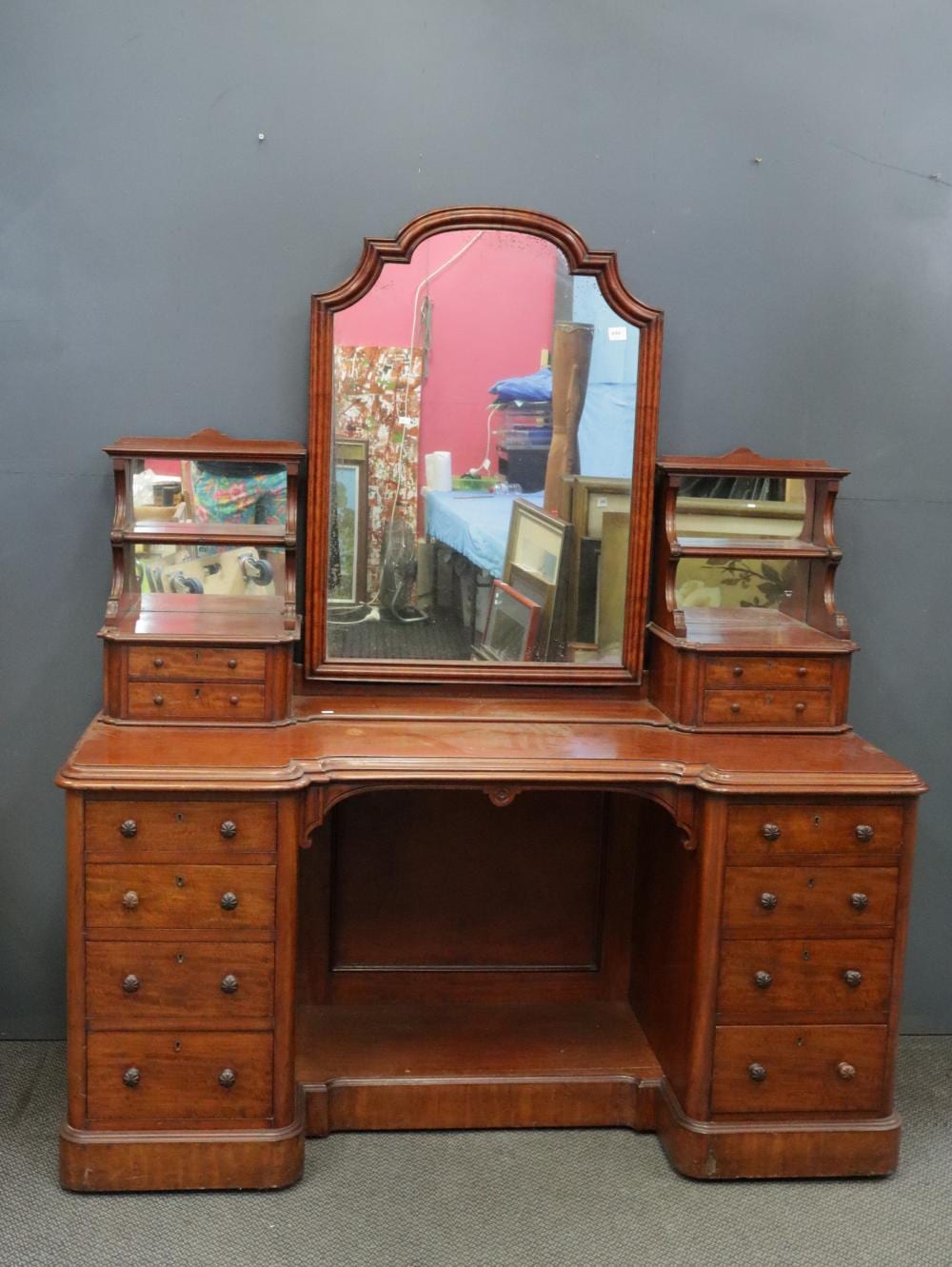
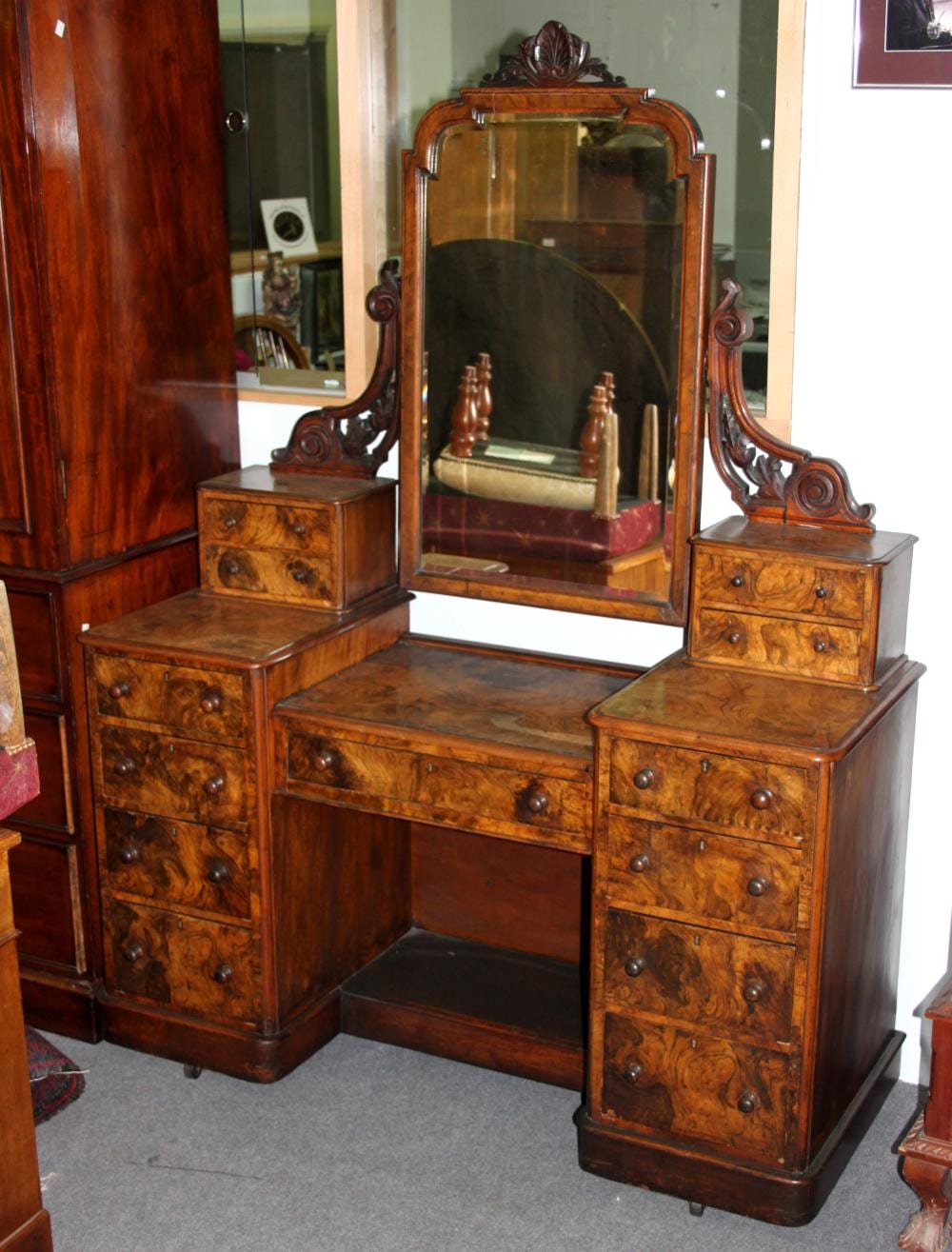
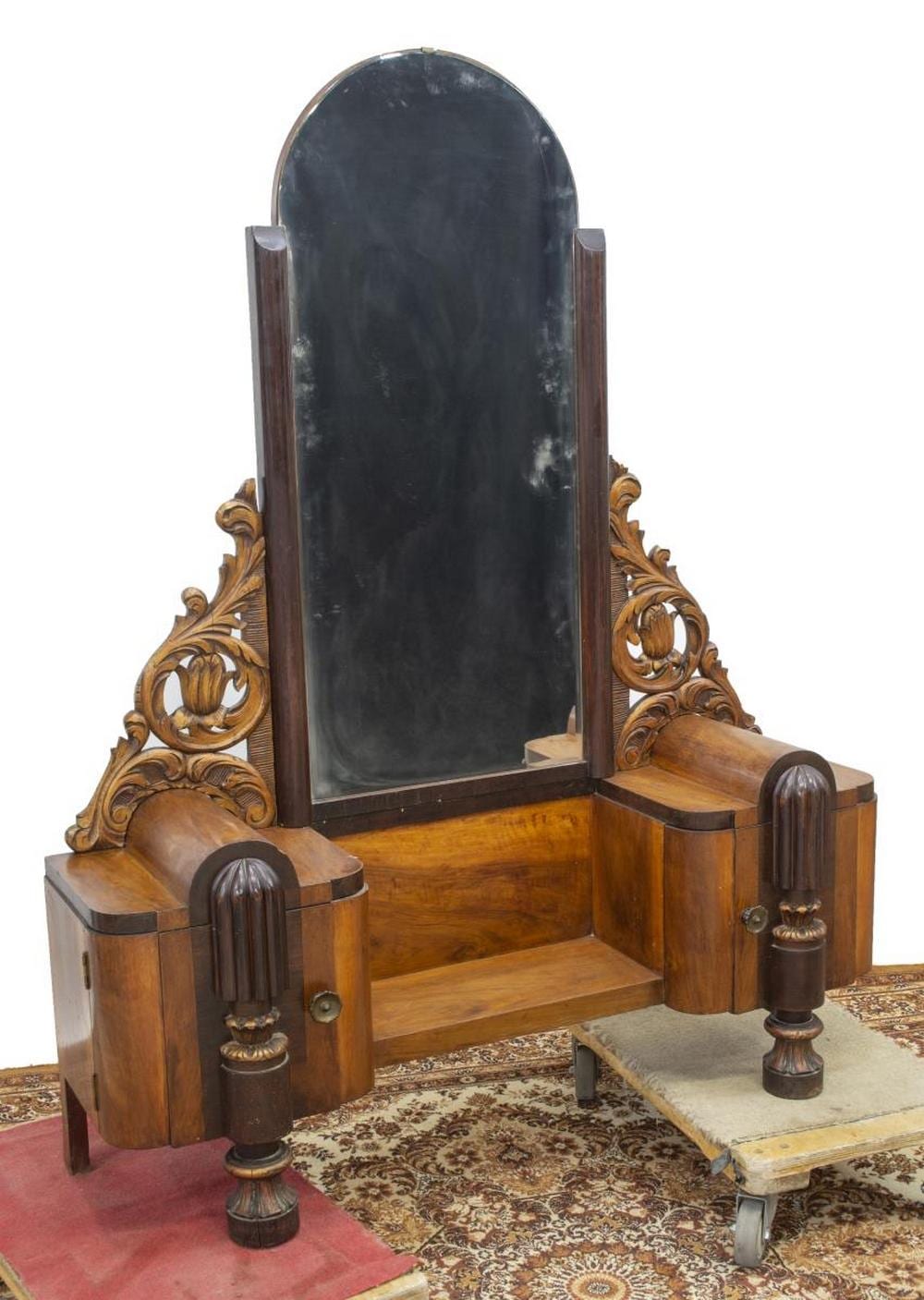
- Rococo Revival (c. 1850s): Carved walnut, serpentine forms, and marble tops. High-style examples command strong prices when crisp and original.
- Eastlake (c. 1870s–80s): Rectilinear profiles, incised decoration, ebonized accents. Clean examples sell consistently; overly darkened finishes can lag.
- Arts & Crafts (c. 1890–1915): Honest joinery, quarter-sawn oak, minimal ornament. Broad collector base; form and maker are decisive.
- Art Nouveau (c. 1890–1910): Organic, flowing lines. Scarcer in vanities; distinctive examples do well.
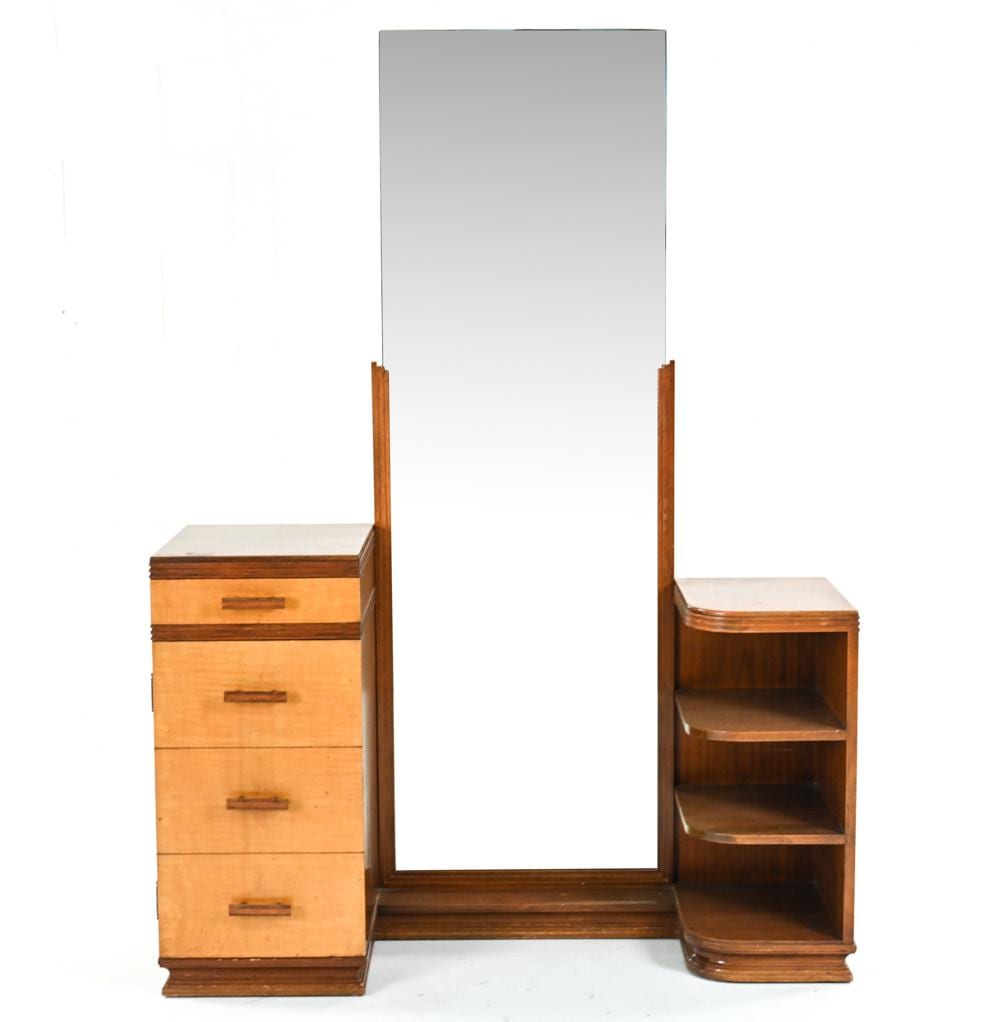
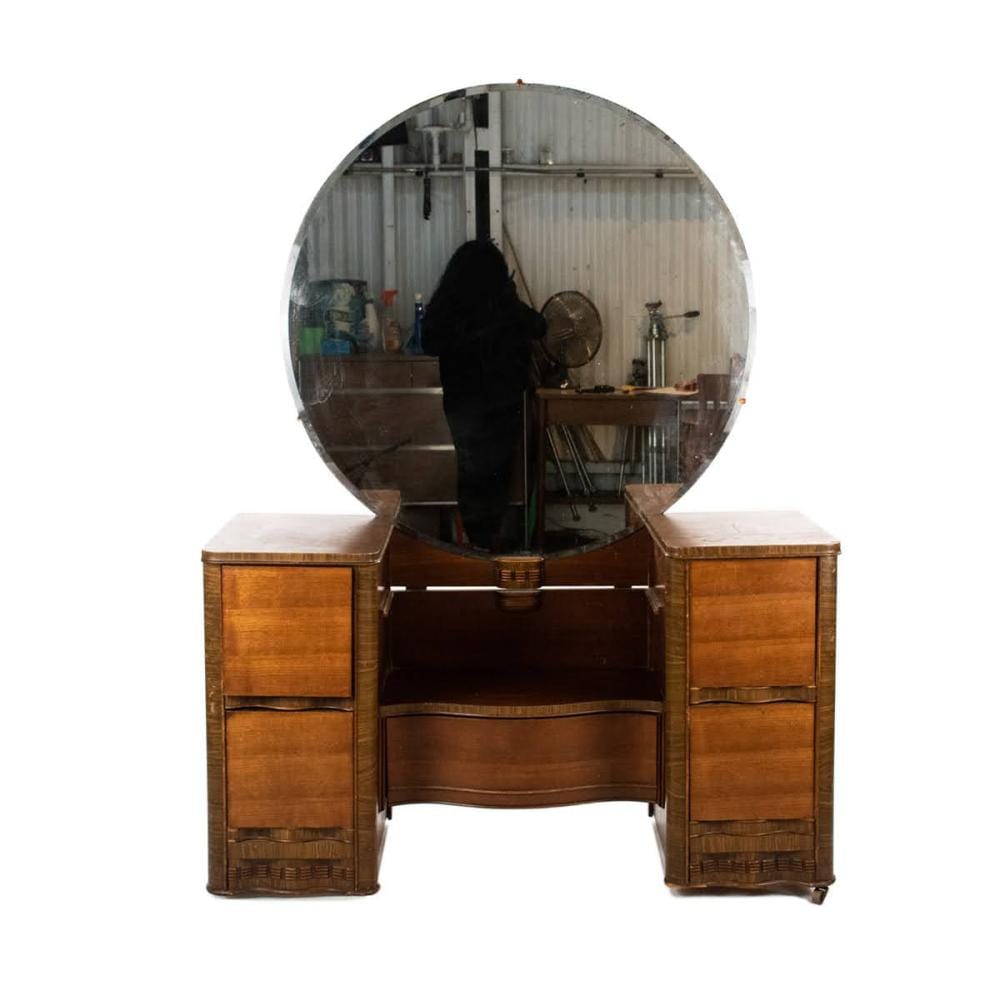
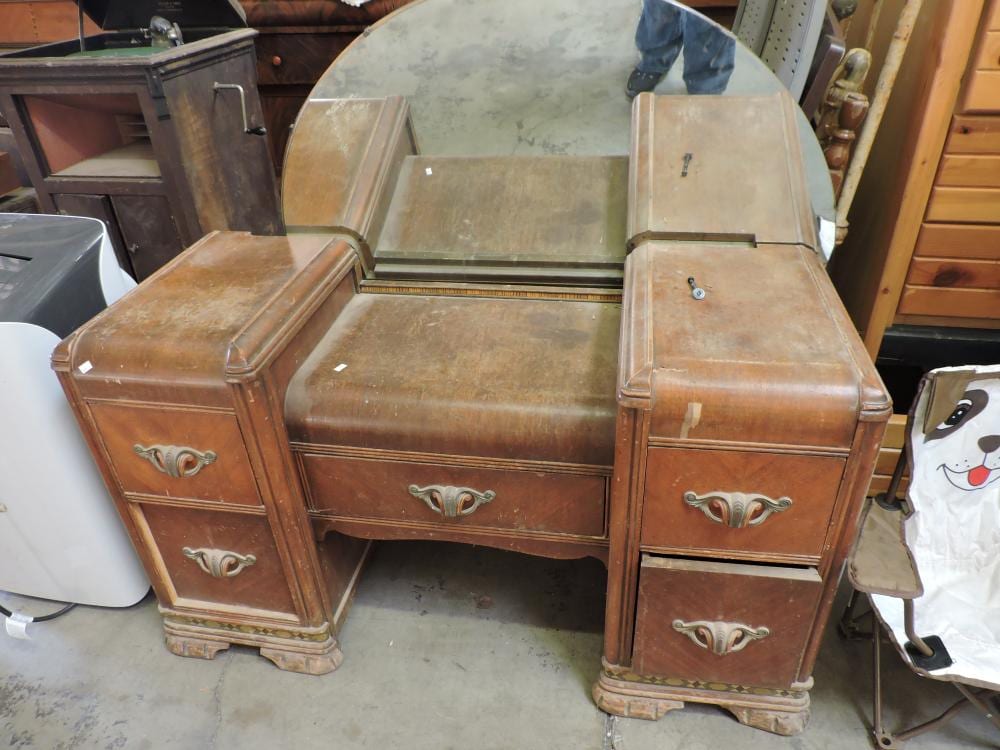
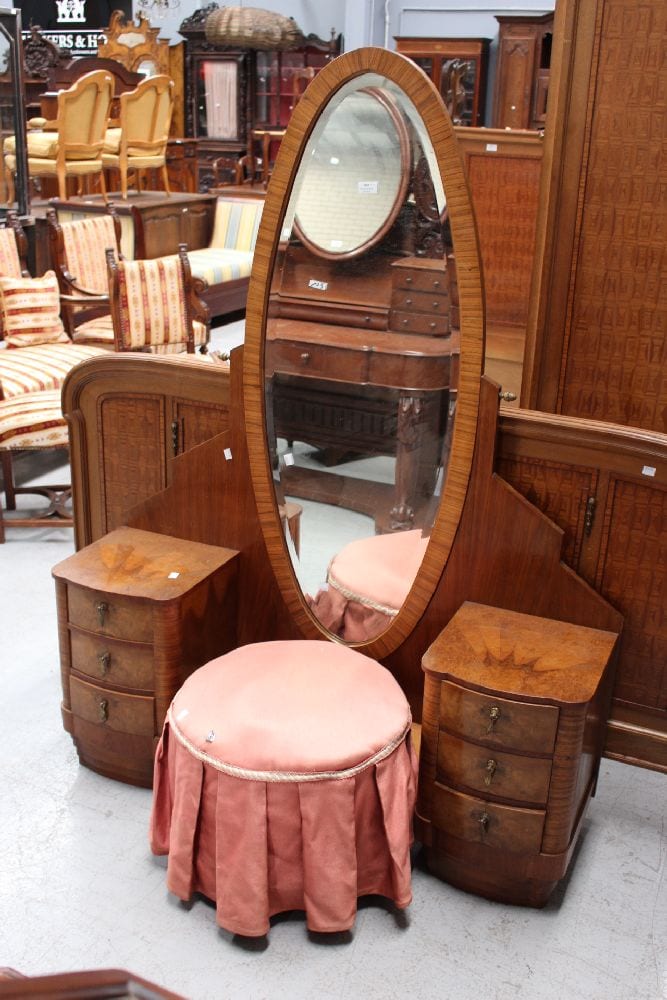
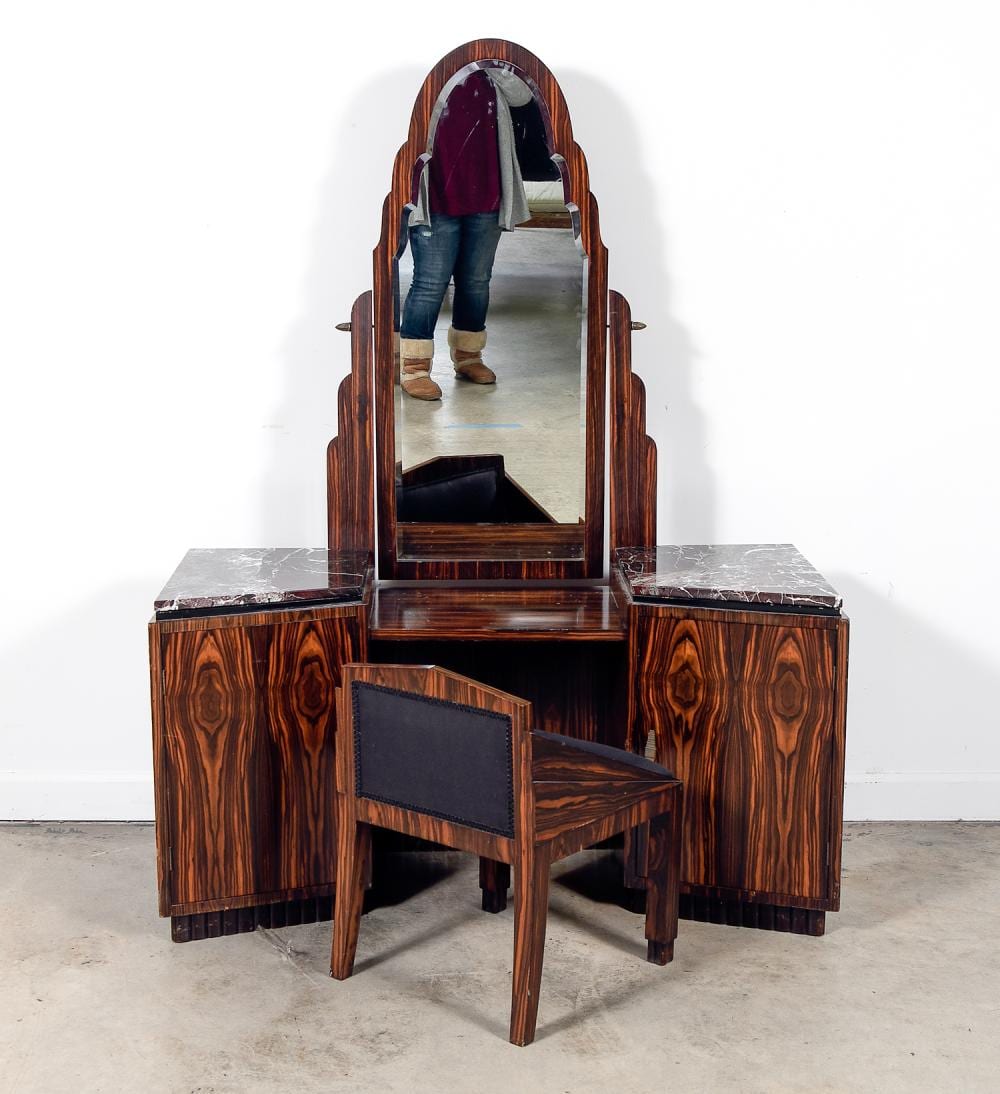
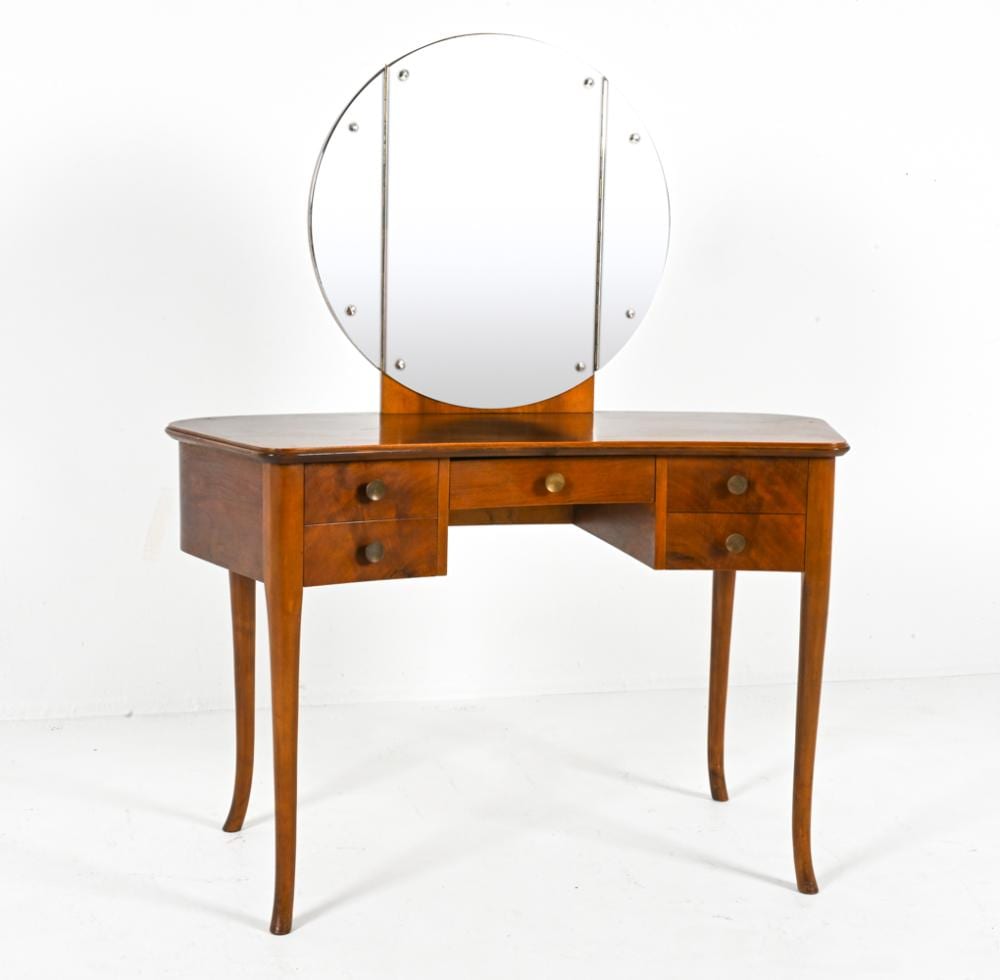
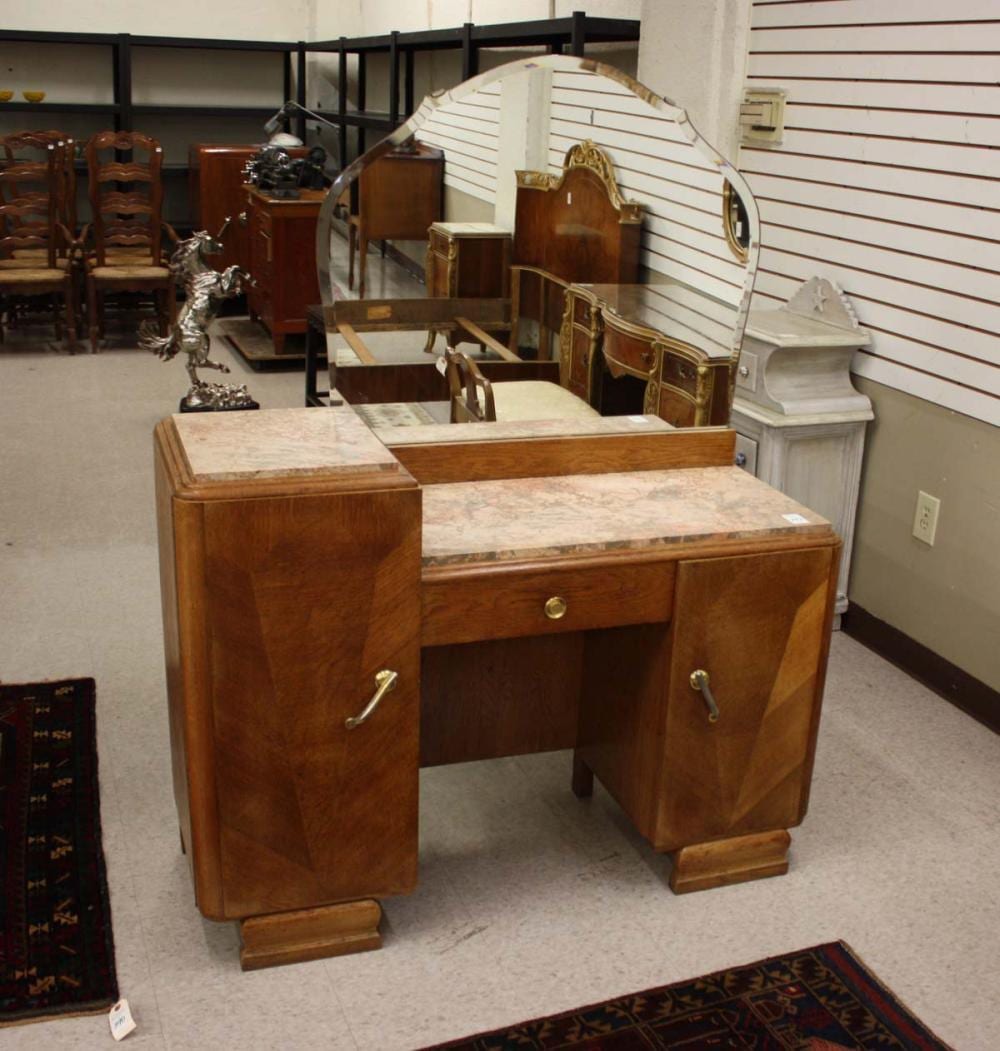
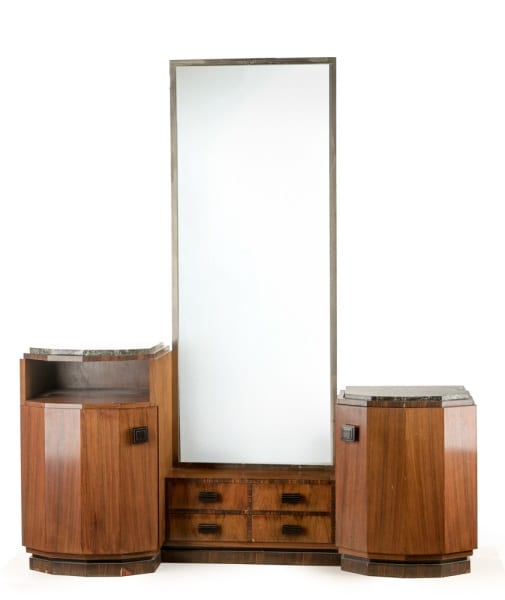
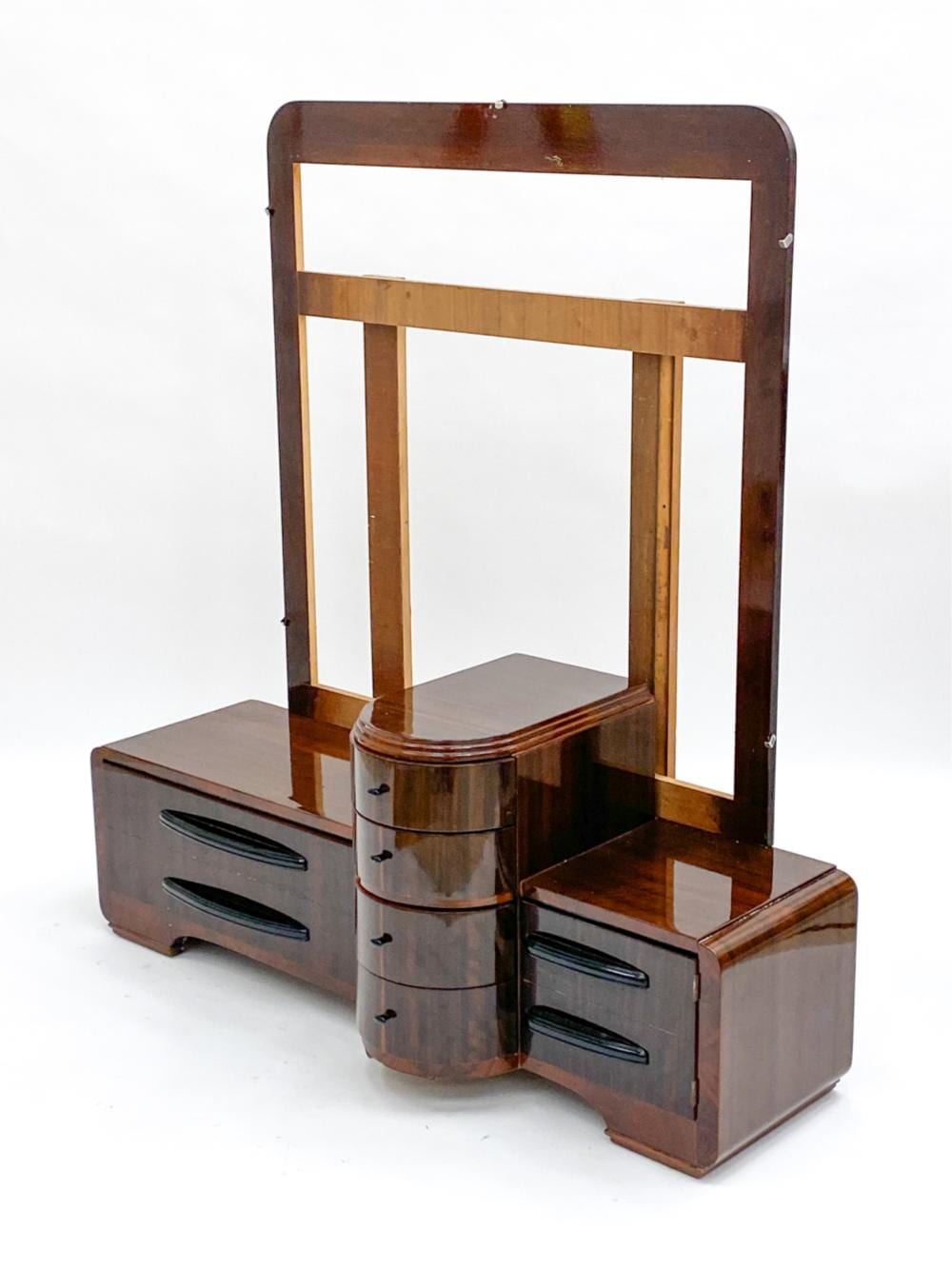
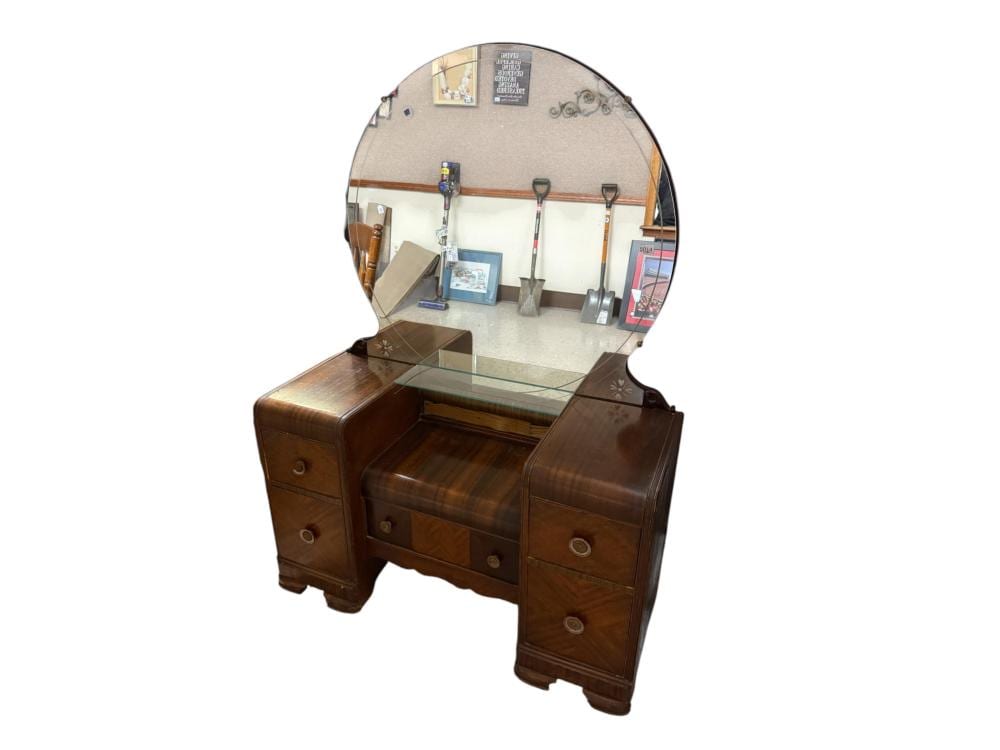
- Art Deco/Streamline (c. 1920s–40s): Veneered cabinets, stepped or waterfall forms, chrome or Bakelite pulls, tri-fold mirrors. Strong urban demand, especially for compact waterfall vanities and glamorous high-style European Deco.
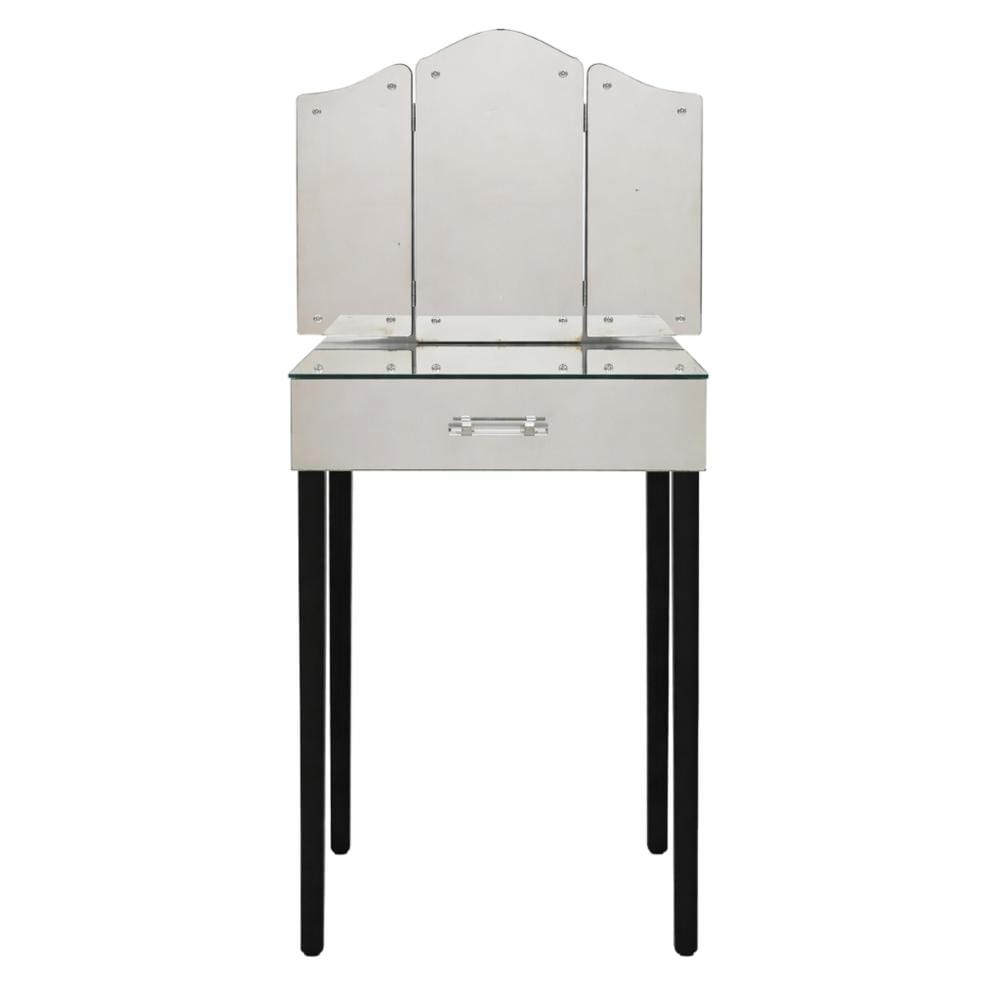
- Hollywood Regency/mirrored furniture (c. 1930s–50s, with later revivals): Mirrored panels over wood; still fashionable in interior design, with wide variance by build quality.
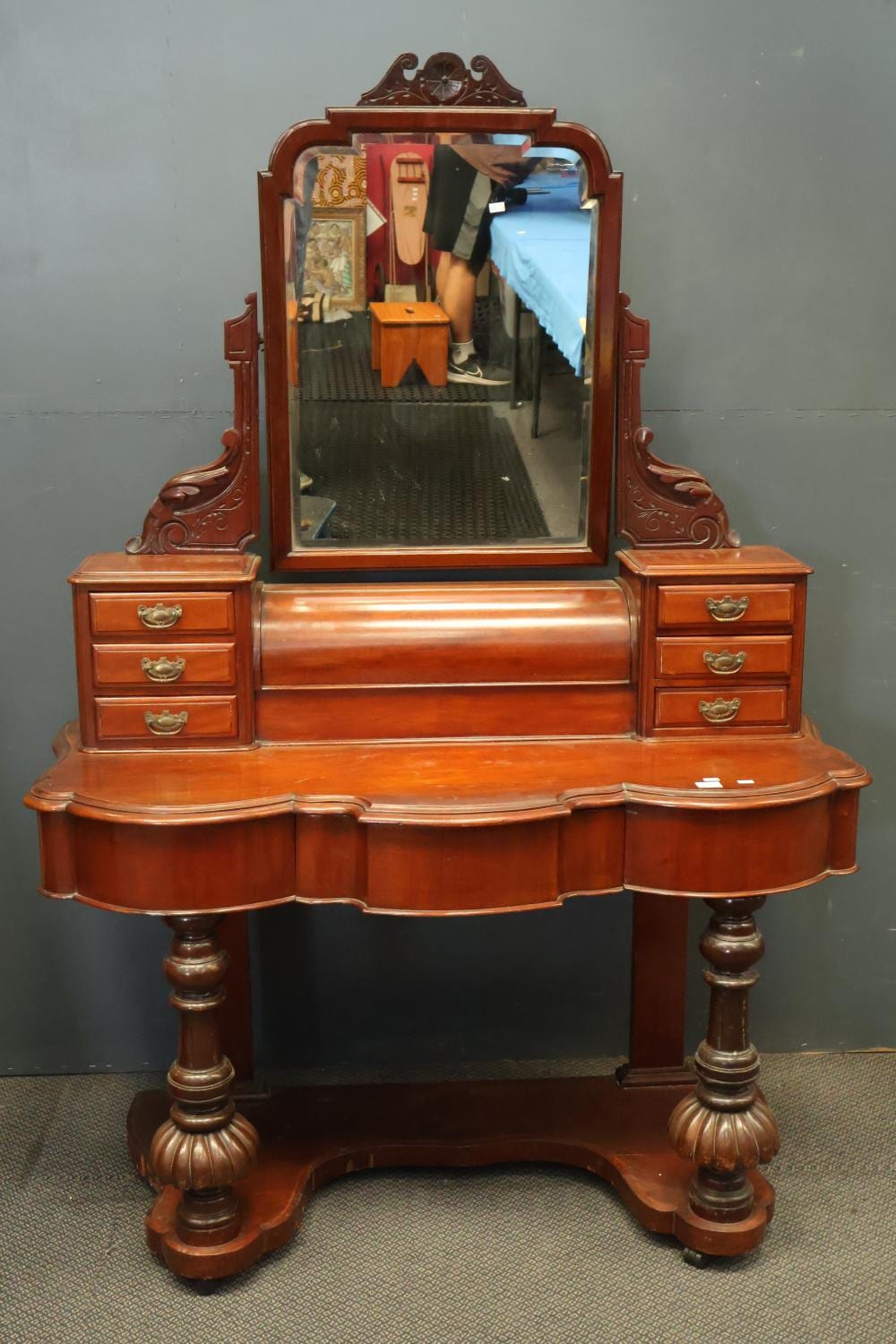
Regional taste influences appetite. Urban markets tend to favor Deco and high-style Rococo; country markets may be stronger for oak Arts & Crafts. Continental European pieces in exotic veneers can outperform common American suite vanities. Australian “duchess dressers” follow their own local market patterns.
Rarity amplifies everything: an uncommon form (e.g., an early 19th-century portable dressing table with original mirror) can outstrip values for more common 20th-century floor vanities, even in less polished condition.
Building a Defensible Value Range
Rather than hunting a single “magic number,” build a range by stacking comparable evidence and condition adjustments.
- Define the comparables set
- Match period and style first, then materials and form. A 1930s waterfall vanity is not directly comparable to a 1850s marble-top Rococo dresser with mirror.
- Keep geography in mind. Prices are location-sensitive due to shipping and demand.
- Separate venue types: dealer retail, auction hammer, and private-party sales differ due to fees, guarantees, and audience.
- Normalize for condition and originality
- Start with a clean, original example as a baseline.
- Adjust down for non-original mirrors, replaced hardware, veneer issues, and refinishing per the percentages noted earlier.
- Adjust up for maker provenance, exceptional size/proportions, or documented history.
- Weight current demand
- Scan recent sales trends for the style. Deco and high-style Rococo have been resilient; bulky mid-century suite vanities are softer unless designer-attributed.
- Synthesize the range
- Establish two numbers: likely trade/auction value and likely retail/insured value. Trade reflects what it brings in a competitive sale minus buyer’s premium; retail reflects what a specialist dealer would reasonably ask, including their curation and warranty.
How the main styles compare (heavily dependent on region, venue, and condition; check recent sales of the same style before pricing):
- Early dressing tables (late 18th–early 19th century) with original mirror and fine inlay: among the strongest results at auction, retail higher. If mirror replaced or piece refinished, reduce accordingly.
- High-style Victorian Rococo walnut with marble, crisp carving: solid auction demand; retail higher. Over-carved reproductions or muddy finishes sit lower.
- Arts & Crafts oak vanities (good maker, original finish): steady demand; retail above auction. Stickley-level attribution sells for considerably more.
- Art Deco/waterfall vanities (1930s) in strong veneer with tri-fold mirror: priced at auction on veneer quality and mirror condition; retail higher. Named designers or European Deco can climb well beyond.
- Hollywood Regency mirrored vanities: retail above auction, with top-tier designer pieces far higher.
Use these only as starting scaffolding. Your exact piece’s materials, maker, dimensions, and originality will swing the result.
Seasonality and timing:
- Demand for decorative furniture often rises in spring and early fall. The best results appear when interior designers are shopping and during major auction weeks in your region.
Preservation, Restoration, and Selling Strategy
Preserve first, then restore—only as much as the market rewards.
- Cleaning and conservation
- Begin with a gentle clean: vacuum dust, then use a mild wood cleaner or mineral spirits test patches to lift grime. Avoid water lingering on veneer seams.
- Feed shellac finishes sparingly with quality paste wax; avoid silicone polishes which complicate future repairs.
- For silvered mirrors, avoid ammonia-based glass cleaners at the edges; they accelerate desilvering.
- Structural stabilization
- Re-glue loose joints with hide glue (reversible) where feasible. Tighten mirror supports and backboards to prevent rattling that invites cracks.
- Mirror decisions
- Leave early mirror plates with attractive foxing; they add character and value. For 20th-century vanities, a clear plate is acceptable; resilvering can be worthwhile if the glass is original and the style demands crisp reflection.
- Veneer and finish
- Professionally repair lifted veneer with appropriate adhesives and clamps. Color-match patches. Avoid strip-and-refinish on earlier surfaces unless the finish is beyond salvage; stabilized original finishes often net better sales.
- Hardware
- Source period-correct hardware if missing. Even quality reproductions are better than obviously modern substitutes; disclose replacements.
Selling channels and logistics:
- Specialist dealer: Fast, lower effort; net proceeds are lower after the dealer margin.
- Auction: Transparent market test; expect a seller’s commission, which varies by house, so ask for the full fee schedule. Results vary by cataloging and audience.
- Direct sale (online marketplace or local): Highest potential net but demands excellent photography, measurements, condition honesty, and safe logistics.
- Shipping: Mirrors break; crate or double-box with rigid foam around the frame, and remove detachable mirror panels for transport. Local pickup may maximize net and reduce risk.
Photography that sells:
- Front, angled, side, and back views; close-ups of joinery, hardware, labels, and any flaws.
- Shoot mirrors slightly off-axis to avoid glare; use diffused light.
- Provide precise dimensions (overall, knee space height/width, mirror width/height), and the weight if known.
Practical Checklist
- Identify form: true vanity with knee space, dresser with mirror, or earlier dressing table.
- Record dimensions, including mirror and knee space.
- Inspect joinery, saw marks, screws, and nails to estimate period.
- Examine mirror glass: bevel, waviness, foxing, and backboard materials.
- Note woods and veneers; identify secondary woods.
- Search for labels, stamps, or stenciled numbers; photograph them.
- Test finish type (shellac vs lacquer) in an inconspicuous spot.
- Assess condition: veneer lifts, structural looseness, hardware completeness.
- Decide on minimal conservation vs. restoration needed to sell safely.
- Assemble 5–10 market evidence in the same style and region.
- Adjust for condition/originality; derive trade and retail value ranges.
- Choose venue and timing; plan safe packing or local pickup.
FAQ
Q: How can I tell if my vanity’s mirror is original? A: Look for age-consistent wear on the glass (subtle waviness, foxing), period backboards (old wood, hand-cut nails), and consistent oxidation on fasteners. Perfectly clear glass with modern clips or safety markings usually indicates replacement.
Q: Does refinishing always reduce value? A: Not always. On early surfaces (18th–19th century), original finishes are highly prized and stripping can hurt value. For 1920s–40s vanities with destroyed finishes, a skilled period-correct refinish may be neutral or positive, especially in retail settings. When in doubt, conserve rather than strip.
Q: What’s the difference between a vanity and a dresser with mirror? A: A vanity incorporates a seated knee space designed for grooming; a dresser with mirror is essentially a chest of drawers topped with a mirror. Collectors value the forms differently depending on style and period.
Q: Is it worth resilvering an old mirror? A: For early mirrors with attractive aging, keep them as-is; the patina is part of the value. For later vanities where function matters, resilvering the original plate (or a sympathetic replacement) can improve marketability, but factor in cost versus expected value gain.
Q: How do I spot a reproduction? A: Uniform machine-cut dovetails on a piece claiming 18th-century origin, modern Phillips screws, plywood in places where solid secondary woods are expected, sprayed polyurethane over “antique” distressing, and artificially consistent worm holes are all red flags. Always assess the whole system of clues, not just one detail.
With careful observation and methodical comparison, you can move beyond guesswork and present a professional, defensible value for your antique vanity with mirrors—one grounded in evidence, market reality, and respect for the object’s history.