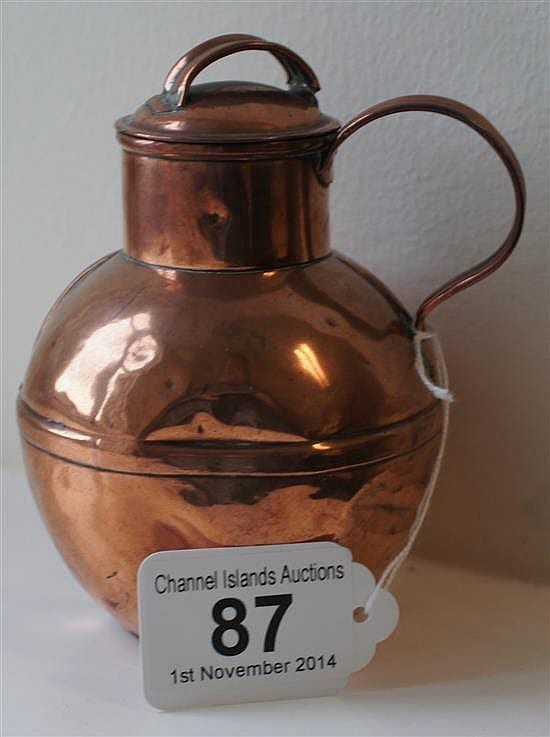
Unlocking the Worth the Surprising Value of Vintage Milk Cans: appraisal and value basics
Unlocking the Worth the Surprising Value of Vintage Milk Cans research should start with identification, condition, provenance, and item-specific market evidence. Use this guide to compare the signals that matter before paying for a formal appraisal or deciding whether to sell.
Vintage milk can appraisal checklist
Vintage milk cans have moved from barn rooms to living rooms, from utilitarian farm tools to prized pieces of dairy and design history. For appraisers and collectors, they offer a surprisingly rich mix of regional lore, graphic appeal, and industrial-age craftsmanship. Yet their values can swing widely depending on details that are easy to overlook. This guide explains the types, marks, and condition cues that drive price, how to document originality originals from reproductions, and how to conserve and market cans without erasing what makes them valuable.
A quick typology and brief history
Purpose and form: The classic American “milk can” is a lidded steel or tinned-steel vessel with shoulder rings and two side handles, designed to protect raw milk during transport from farm to creamery. In the UK and parts of Europe, similar vessels are commonly called “milk churns,” with many mid-20th-century examples made from aluminum.
Materials and construction timeline:
- Late 19th to early 20th century: Heavy-gauge steel or tinned steel, often with soldered seams; earlier examples can show hand-formed seams, peened rivets, and thicker rings.
- 1930s–1950s: Galvanized steel becomes prevalent; forms become more standardized, and lids typically fit with a satisfying, precise action.
- 1940s–1960s (especially UK/Europe): Aluminum cans/churns appear—lighter weight and less prone to corrosion, often with more utilitarian, plain finishes.
Typical sizes:
- 10-gallon cans (U.S. standard shipping size): roughly 24–26 inches high, 12–13 inches in base diameter.
- 5-gallon “cream cans”: typically around 18–20 inches high, easier to display.
- 1–2 gallon sample or farm-use cans: scarcer, sometimes more decorative per inch due to size appeal. Dimensions vary by maker and region.
Lids and handles: Popular lid styles include domed “mushroom” lids and flatter domes; some have locking or clamping collars to prevent spills in transit. Side handles are usually forged or rolled, attached with riveted “ears” or welded tabs.
Markings you’ll see:
- Embossed or stamped dairy names, town names, route numbers, and capacity marks.
- Painted stenciling—often black, red, or cream—with dairy names, logos, or route info.
- Manufacturer information on the shoulder or body (e.g., large creamery supply firms), though the dairy branding usually carries more collecting appeal than the can maker.
Not to confuse: Open-top milk pails (no lids) and butter churns are different categories; values and markets are not interchangeable with lidded shipping cans.
What drives value
Condition and completeness:
- Original lid: A matching, well-fitting lid adds clearly to value versus lidless examples.
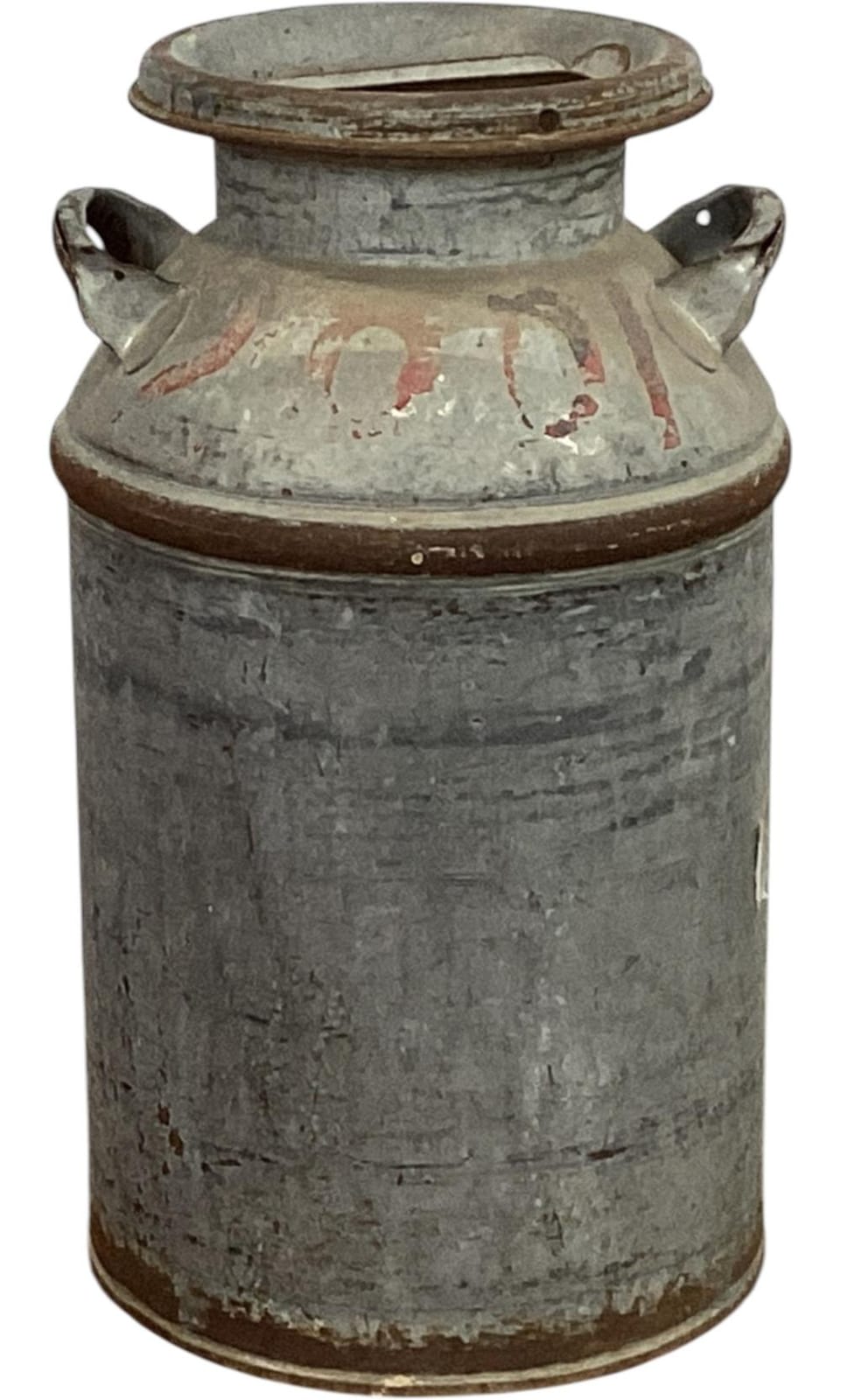
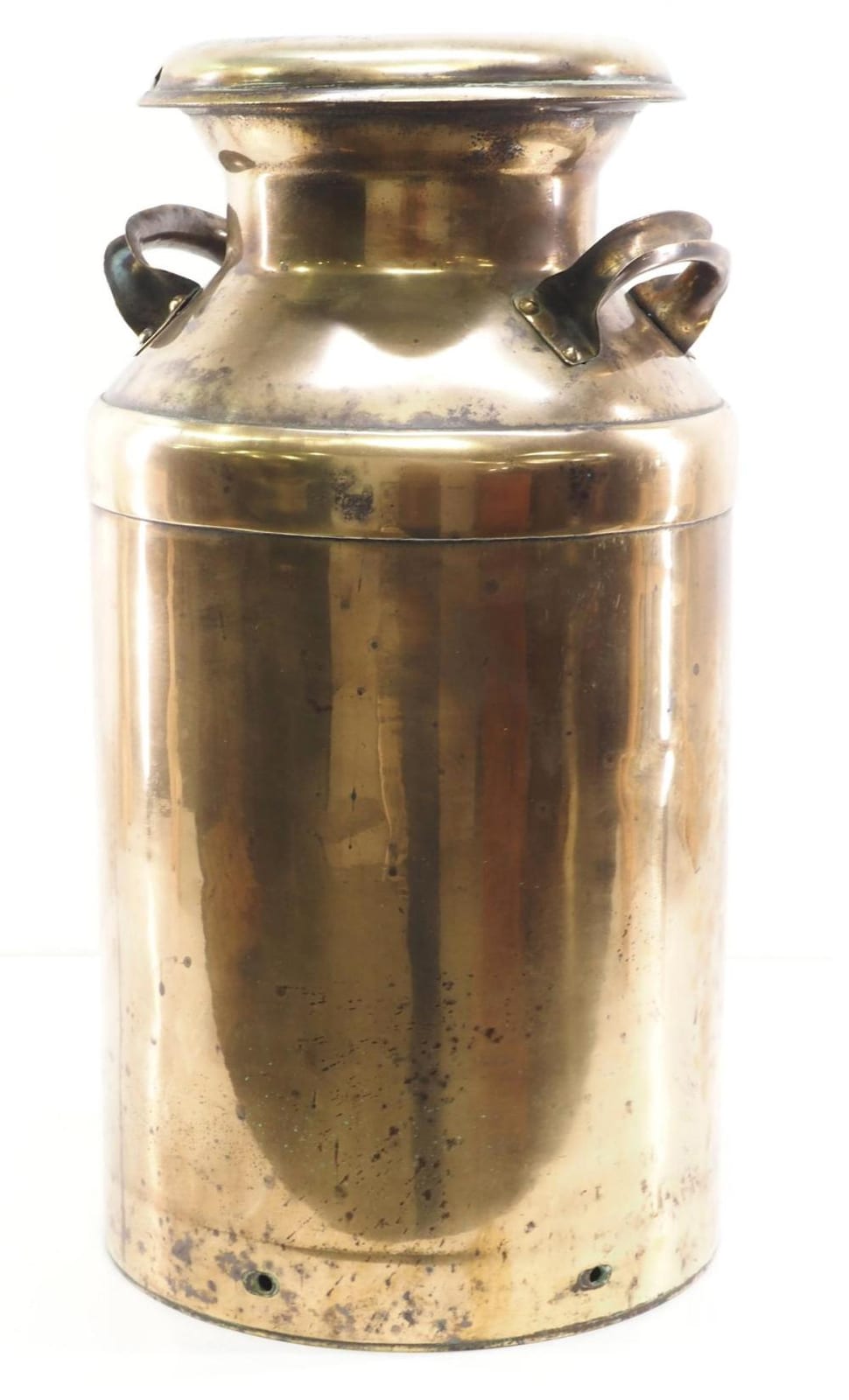
- Surface: Stable patina is welcome; active flaking rust, pinholes, or bottom loss are not. Original paint and stenciling are strong value multipliers; over-painting or aggressive polishing usually reduces value.
- Structure: Sound seams and handles command more; repairs, especially poorly executed welds, tend to diminish.
Graphics and markings:
- Embossed dairy names, towns, and route numbers draw bids—especially if associated with a defunct or locally beloved creamery.
- Clear, legible stencil paint nearly always increases price, even if the can is otherwise work-worn.
- Railway service tags or agency stenciling can be desirable context where documented, though original shipping tags are often missing.
Rarity and form:
- Early, heavy-gauge, riveted or hand-formed seams signal age and scarcity.
- Seldom-seen sizes (very small samples, or unusual capacities) can outperform common 10-gallon cans on a per-piece basis because of display practicality.
- Folk-art painted examples (period paint, not modern craft-store “distressing”) attract crossover collectors.
Region and story:
- Local interest matters. A can from a long-gone hometown dairy can sell for more nearby than it will online to a general audience.
- Verifiable provenance—farm photos, invoices, or surviving route tags—adds credibility and premium.
Market context:
- Decor trends have a strong influence. Farmhouse and rustic design helped lift values; demand has cooled in some regions but remains resilient for graphic, original examples.
- Shipping costs temper online prices for heavy steel cans, often making local sales more attractive.
How common types compare (guidance, not guarantees):
- Plain, unmarked galvanized steel, lidless but solid: the most common and least expensive
- Plain, complete with matching lid and good patina: a step up from lidless cans
- Embossed with dairy/town marks, complete: above plain cans, especially for local buyers
- Strong original stenciling, vivid graphics, or standout regional appeal: among the stronger sellers
- Early riveted, unusual forms, exceptional provenance, or documented railway service: the top of the market
- Common mid-century aluminum churns (UK/Europe): generally modest
- Period folk-art painted or store display conversions (verified period work): valued on the quality of the decoration
Values vary widely by region, condition, and timing; use these as starting points and adjust for your market and the specifics of your example.
Attribution review: original vs reproduction
Reproductions and decorator pieces are common. Distinguishing characteristics:
Weight and wall thickness:
- Original steel cans are heavy. A full-size 10-gallon steel example often feels unexpectedly dense in hand; aluminum versions are lighter, but still feel rigid and well-made.
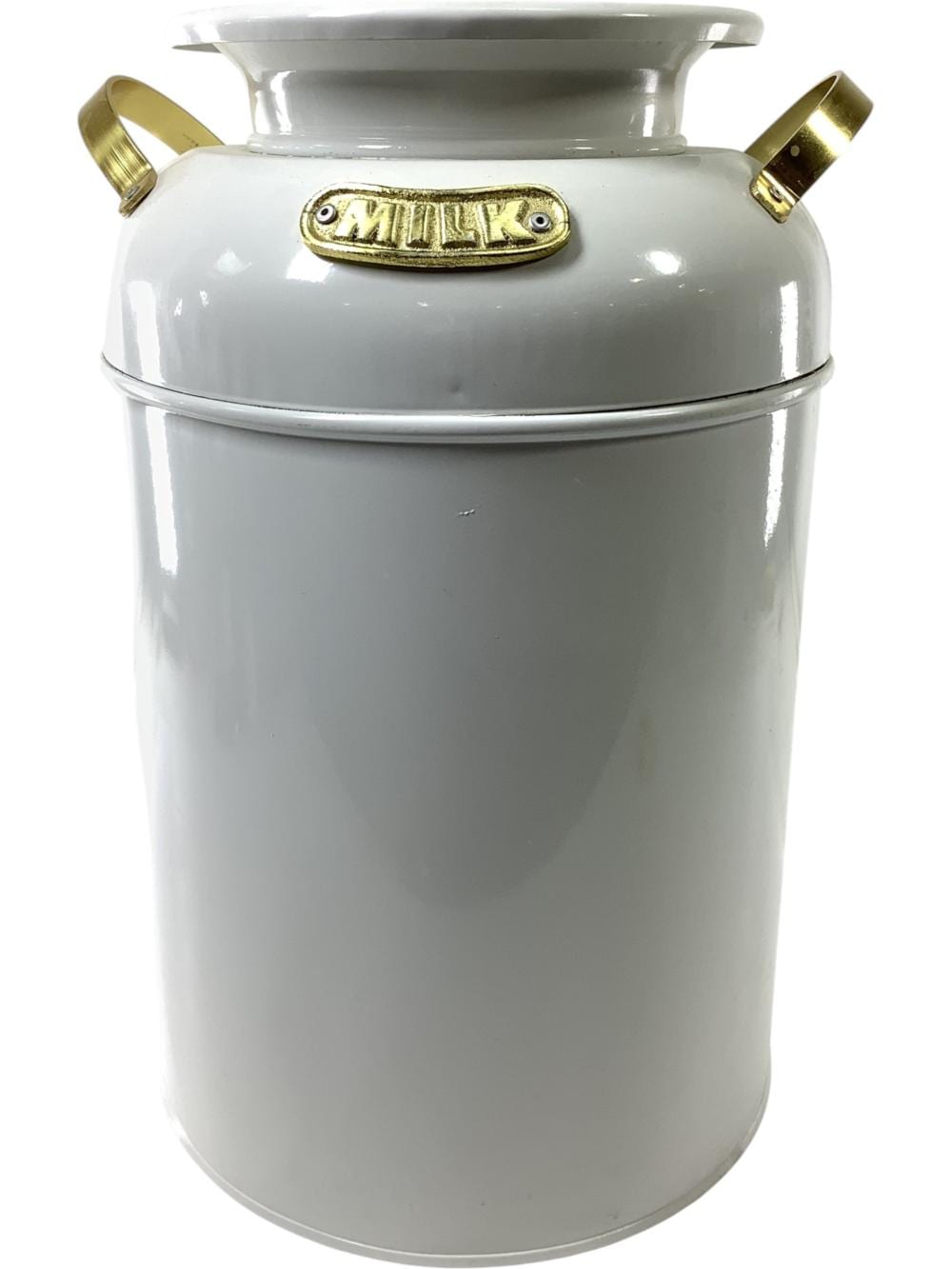
- Reproductions are frequently thin-gauge and “ring” tinny when tapped; handles may flex.
Seams, welds, and hardware:
- Period cans show hammered seams, solder lines, or consistent factory welds. Rivets are peened, not pop-riveted.
- Modern decorative pieces may have uniform machine welds in unlikely places, loose pop rivets, or visible shortcuts (e.g., single-spot welds where originals used multiple fasteners).
- Handle “ears” on originals fit tight to the body; reproductions sometimes show sloppy gaps or misaligned attachments.
Lids and fit:
- Original lids sit square, with a snug, smooth action. Reproduction lids can wobble, bind, or feel too loose.
- Mismatched period lids are common in the wild; note that a non-matching lid usually reduces value, but remains acceptable if disclosed.
Embossing and stenciling:
- Original embossing is crisp and deep; the interior shows a reverse ghost where stamped.
- Fake embossing is shallow and looks “soft.”
- Painted graphics on originals display layered, uneven wear at edges and around handles; artificially aged paint often shows uniform scuffing or contrived “drips.”
Surface and patina:
- True age shows variable oxidation, small dents in practical zones (shoulders, lower body), and grime in seams.
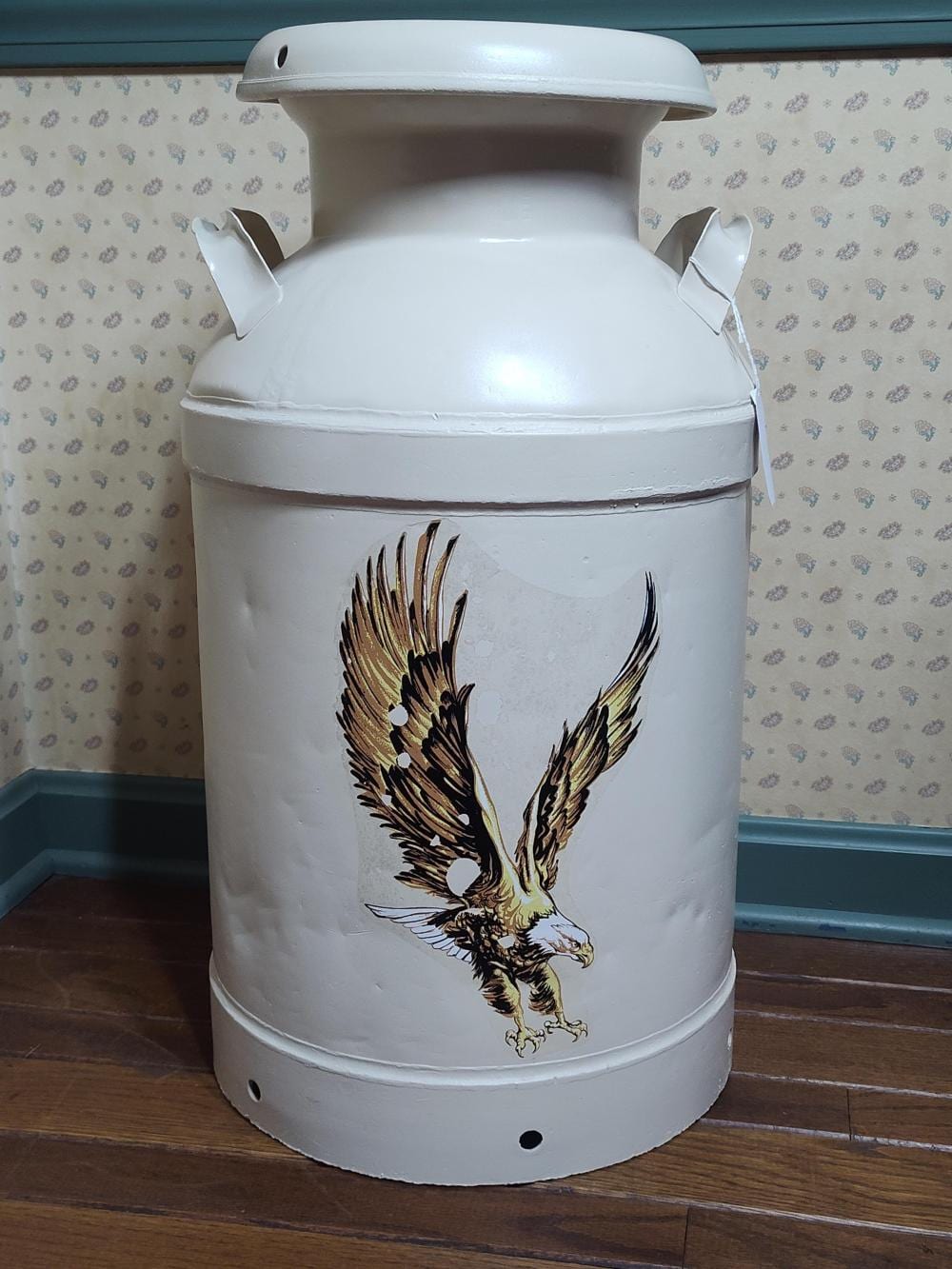
- Reproductions may have even, powder-coated finishes or theatrical rust with no grime in crevices.
Materials and magnetism:
- Steel attracts a magnet; aluminum does not. Many UK churns are aluminum by design, so lack of magnetism there is not a red flag—look to construction quality and wear.
Olfactory and residue:
- Old dairy cans can retain a distinctive sweet-sour odor and milkstone residue on the interior. While not proof on its own, it’s consistent with age and use.
Paper trails:
- Surviving route tags, dairy receipts, farm photos, or family provenance all help, especially for premium examples.
Common misidentifications:
- Open-top pails labeled as shipping cans.
- Contemporary craft-store “milk cans” passed as vintage.
- Sandblasted, freshly painted originals represented as “mint”—a state that rarely survives a century of farm work.
Conservation, restoration, and selling strategies
Cleaning (least invasive first):
- Dry brush to remove loose dust.
- Wash with mild soap and water; dry thoroughly. Avoid soaking seams.
- For greasy buildup, a light wipe with mineral spirits on a soft cloth; avoid graphics and stenciling.
- Preserve with a microcrystalline wax or a light coat of conservation-grade paste wax. Avoid clear polyurethane or heavy lacquers that can trap moisture and change the look.
Protecting graphics:
- Never sand or wire-brush over painted stencils or decals; that erases value.
- If you must stabilize flaking paint, consult a conservator; amateur fixes often leave visible halos or discoloration.
Rust management:
- Address active red rust with gentle mechanical methods (Scotch-Brite pad, not power tools), then wax. Chemical rust converters can stain surfaces—test in an inconspicuous area and avoid near graphics.
Lead paint caution:
- Pre-1978 paint can contain lead. Use a test swab if you suspect original paint. Wear gloves and a mask when cleaning or handling deteriorating finishes. Do not prepare food in or on vintage cans.
Repairs:
- Tighten loose handles with appropriate peened rivets or period-appropriate hardware; avoid bright modern bolts.
- Leaky seams can sometimes be re-soldered by a professional; amateur welding is conspicuous and devalues.
- Replacement lids should be disclosed; fit and finish matter for price.
Storage:
- Keep dry and elevated off concrete floors; use wood blocks or felt feet.
- Maintain air circulation; avoid damp basements or unconditioned outbuildings.
- Tag with acid-free labels noting measurements, marks, and provenance.
Photography for sale or appraisal:
- Shoot in indirect natural light; capture front, back, both sides, top, bottom, interior.
- Close-ups of embossing, stenciling, seams, and handle attachments.
- Include a ruler or tape in one image to communicate scale.
- Accurately describe: capacity (approximate), material, presence/absence of matching lid, all marks, and condition flaws.
Pricing and selling strategy:
- Use market evidence adjusted for region and season. Expect higher prices in dairy regions with strong nostalgia.
- Heavy shipping for a single steel can eats into net proceeds. Local pickup can yield better margins.
- When listing, lead with high-value attributes: “Embossed,” “Original stenciling,” “Matching lid,” “Route number,” “Galvanized,” “Early riveted.”
Buying tips:
- Lift it—weight and feel reveal a lot.
- Run a finger around the bottom rim; pinholes and edge loss are common and costly.
- Check lid fit and handle integrity on the spot; replacements can be hard to source.
Practical checklist
- Identify material: steel (magnetic) or aluminum (non-magnetic).
- Measure height and diameter; note capacity (approximate 10, 5, or 1–2 gallons).
- Confirm lid presence and fit; note if it appears original to the can.
- Photograph all embossing, stenciling, and numbers; record town/dairy names.
- Inspect seams, handles, and bottom rim for cracks, gaps, or pinholes.
- Assess surface: stable patina vs active flaking rust; avoid removing original paint.
- Sniff test and interior look: residue consistent with age is a plus; heavy corrosion is not.
- Evaluate any repairs: solder vs obvious modern welds; note replacements.
- Document provenance: tags, family history, farm photos, bills of sale.
- Estimate market route: local pickup vs shipping; factor packing costs into pricing.
FAQ
Q: How can I quickly tell if my milk can is old or a modern decorator piece? A: Weight and construction are your best first checks. Originals feel dense, have peened rivets or tidy factory seams, and lids fit smoothly. Many modern pieces are thin, have loose pop rivets, or powder-coated finishes and lack documented wear in stress points.
Q: Are aluminum milk churns less valuable than steel cans? A: Often, yes—common mid-century aluminum churns are plentiful and typically bring lower prices. That said, great graphics, unusual forms, or compelling provenance can still lift them above baseline.
Q: Should I restore or repaint a rusty milk can? A: Avoid repainting if there’s any original stenciling or period paint. Stabilize rust gently and preserve with wax. Repaints aimed at “decor” can look nice but usually reduce collector value and should be disclosed when selling.
Q: Where do I find maker or dairy marks? A: Check the shoulder and upper body for embossed names or town marks, the lid for capacity stamps, and the sides for stenciling. Some cans carry route numbers near handles or on the lid collar.
Q: Why do some cans bring more in one town than another? A: Local nostalgia is powerful. A can from a defunct regional dairy can be worth more near its original service area than in a distant market. Shipping costs also skew online prices; local pickup can support stronger realized values.
With careful identification, respectful conservation, and honest presentation, vintage milk cans can transcend rustic decor and become well-documented artifacts—objects with both story and value.