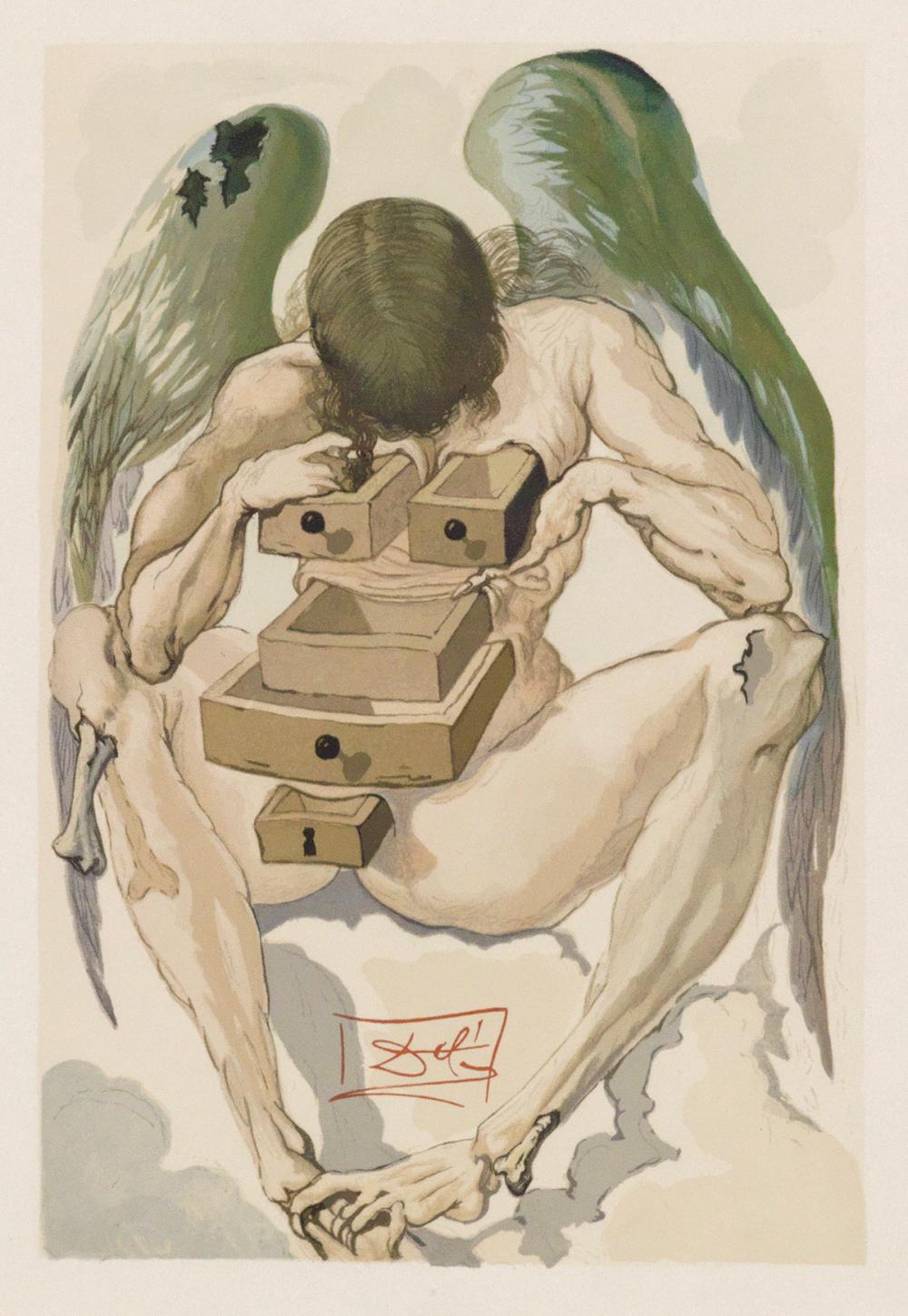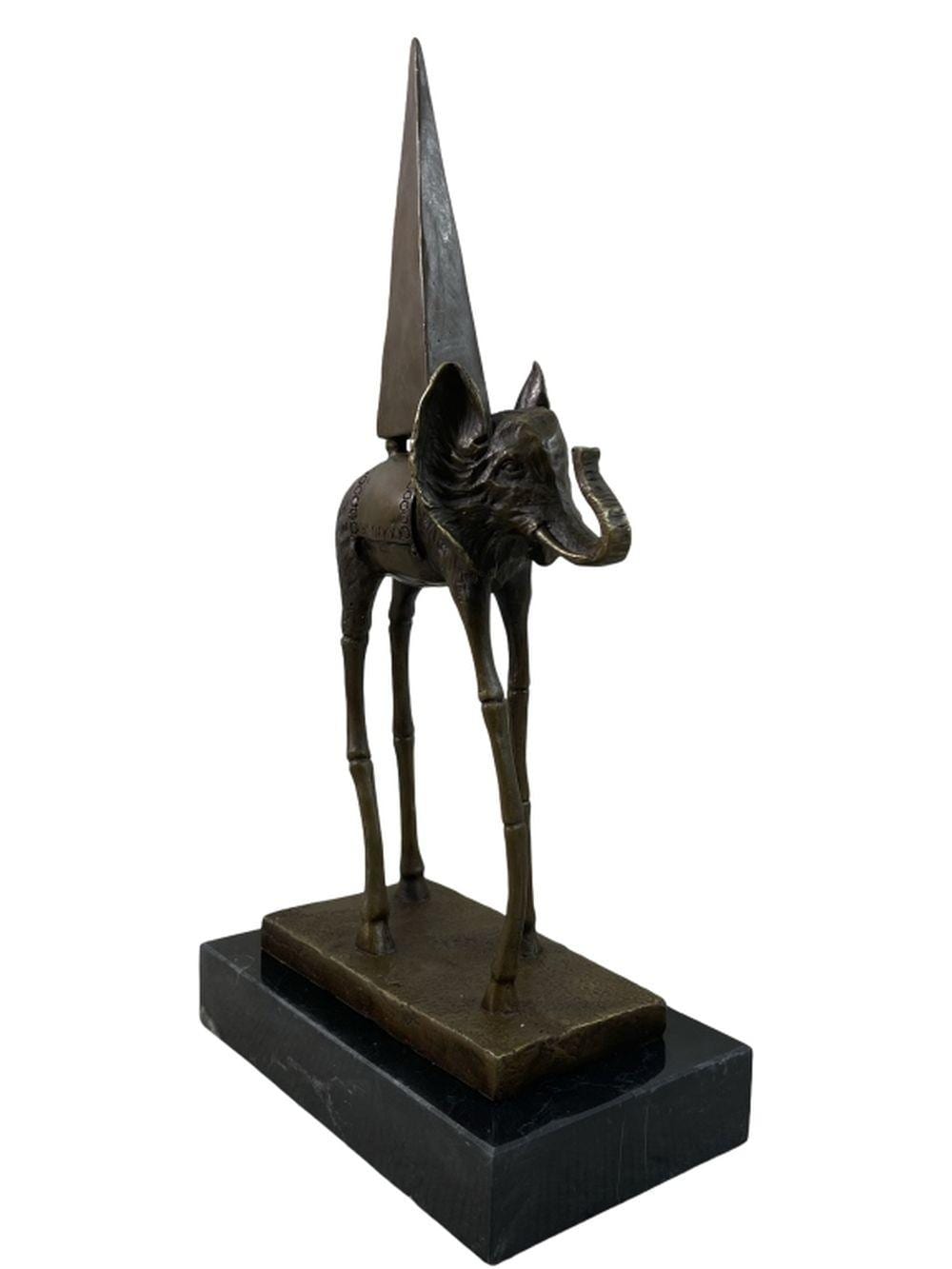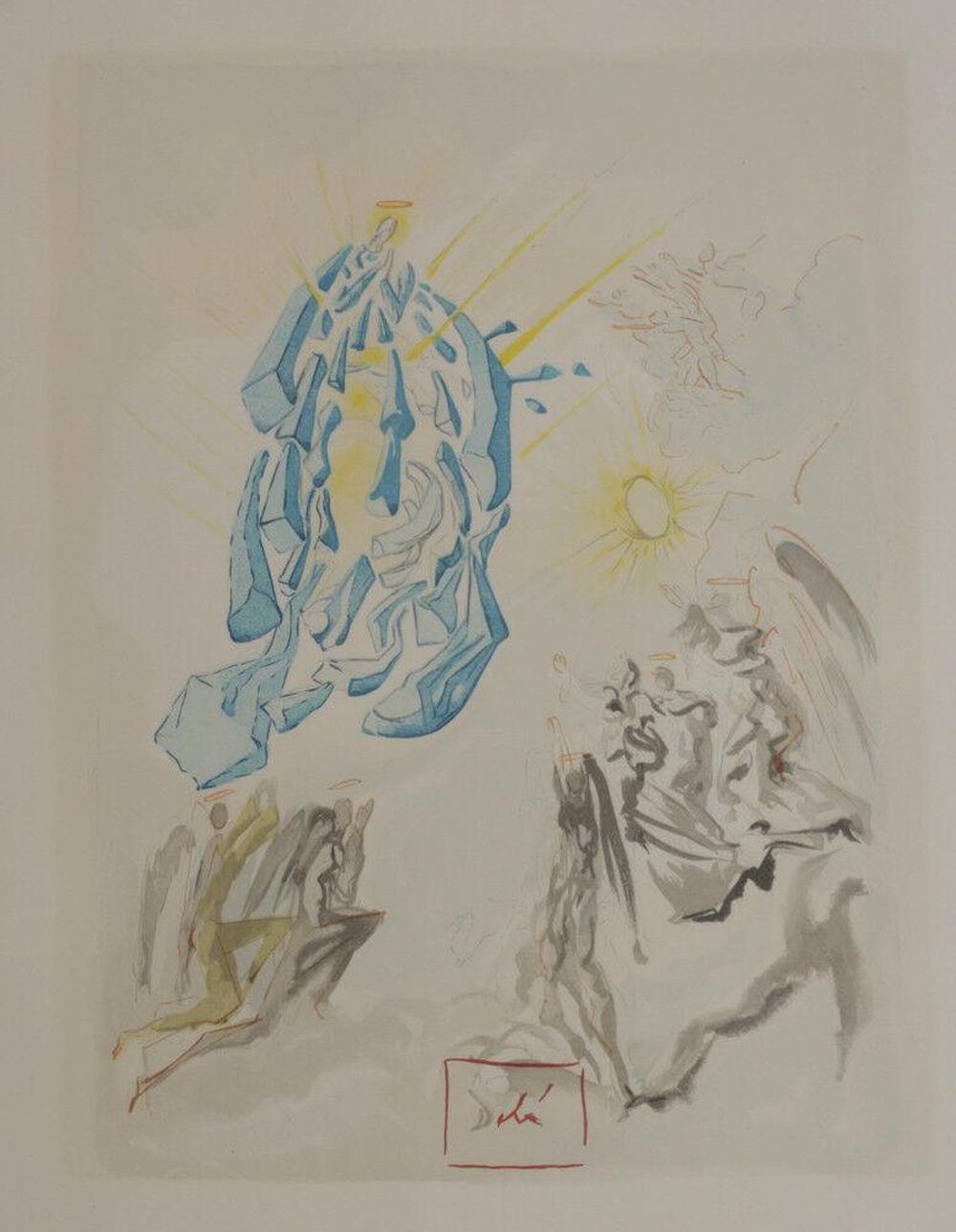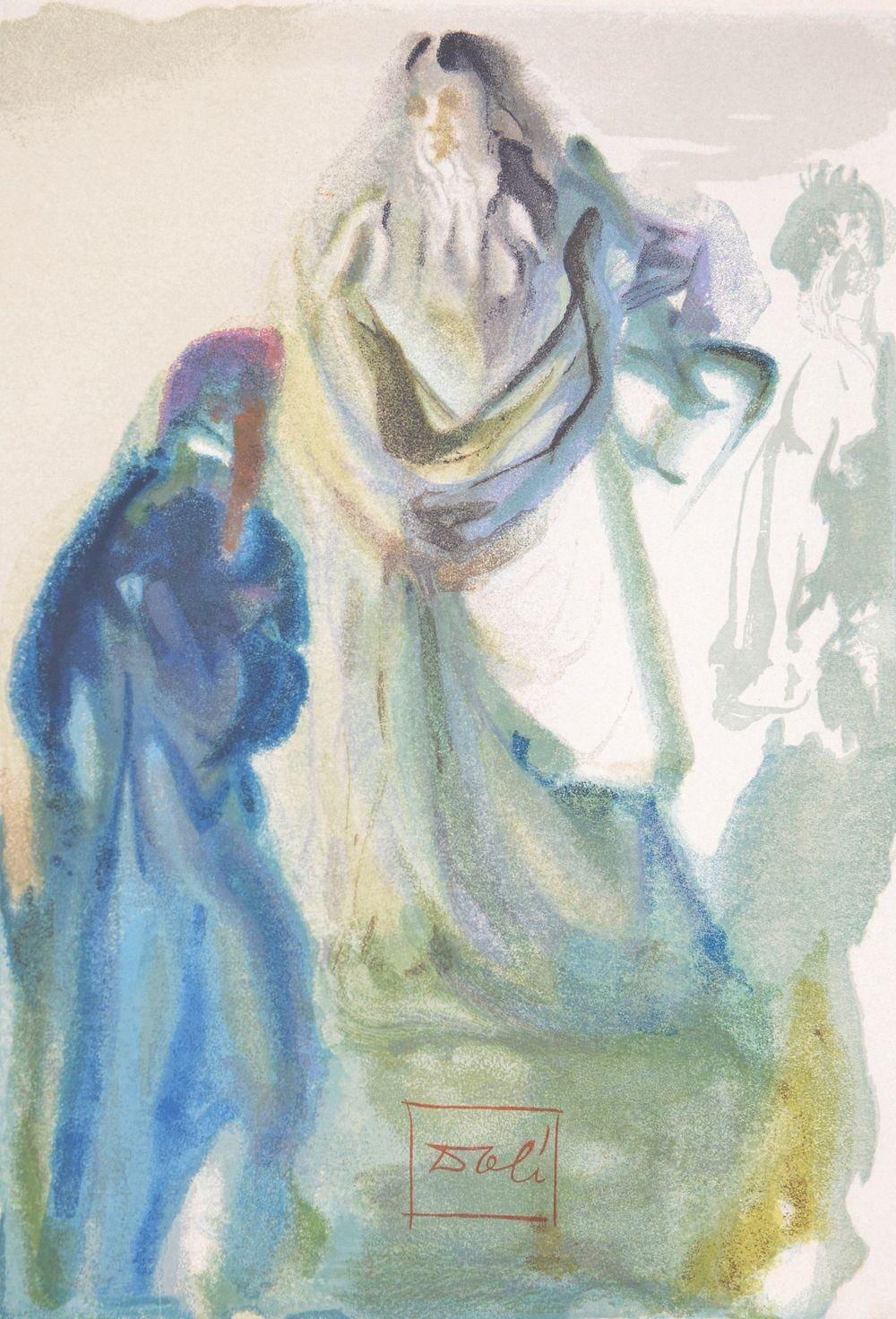
Salvador Dali Spanish 1904 1989 Limited Edition Print Dante: appraisal and value basics
Salvador Dali Spanish 1904 1989 Limited Edition Print Dante research should start with identification, condition, provenance, and recent comparable sales. Use this guide to compare the signals that matter before paying for a formal appraisal or deciding whether to sell.
Dali Dante print appraisal checklist
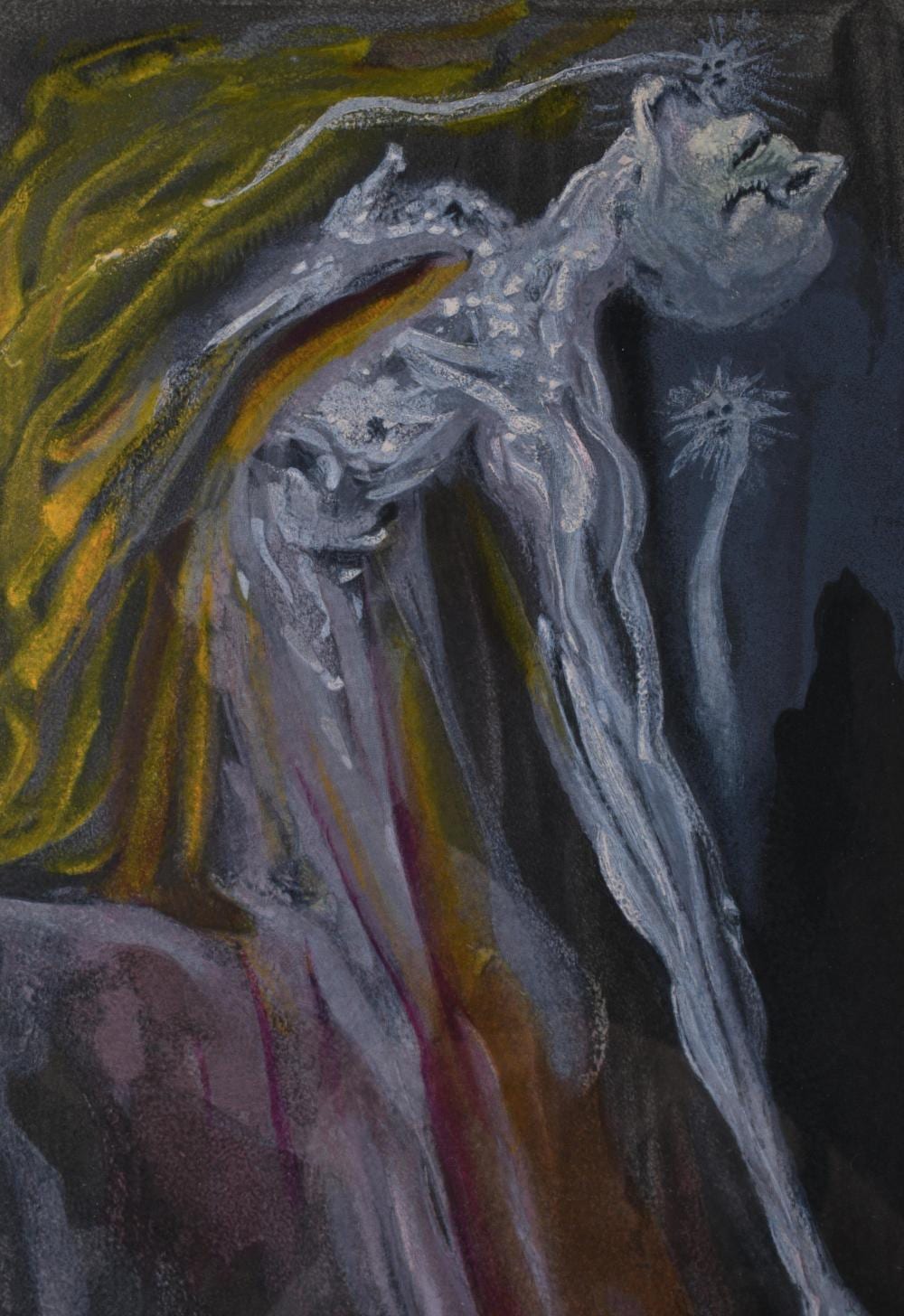
Salvador Dalí (Spanish, 1904–1989) created one of the 20th century’s most ambitious illustrated suites for Dante Alighieri’s Divine Comedy. If you’re evaluating a “Dalí Dante” limited edition print, this guide will help you identify the work, distinguish original wood engravings from later reproductions, understand edition variants, and assess condition and market factors.
What exactly is the Dalí “Dante” limited edition?
Project origin: Dalí was commissioned around 1949 to illustrate Dante’s Divine Comedy. Although the Italian state withdrew the commission after public controversy, Dalí completed 100 watercolor/gouache designs—one for each canto—and the project moved forward with a French publisher.
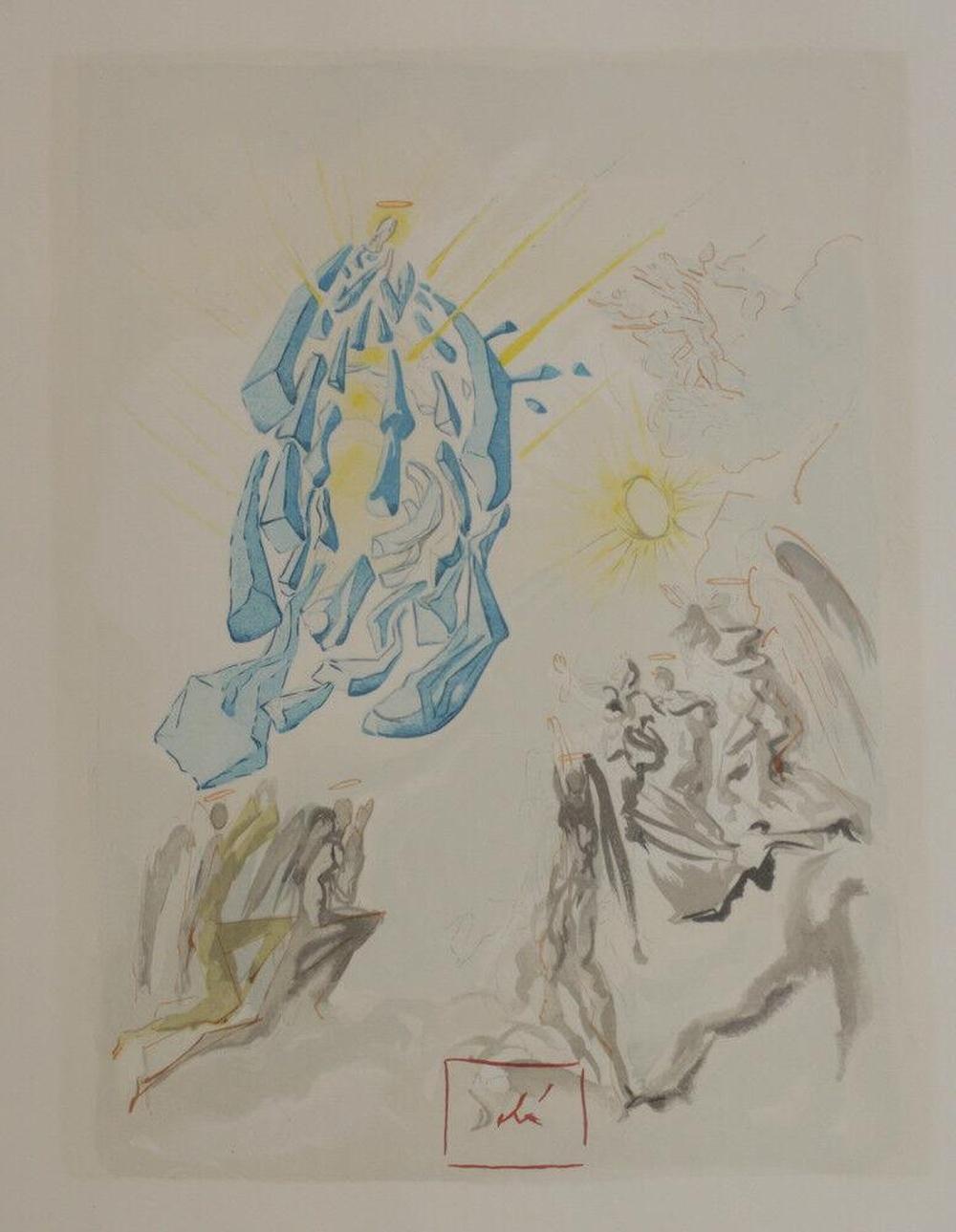
Print medium: The recognized fine-art limited edition is a suite of color wood engravings (xylographs) after Dalí’s watercolors. Multiple blocks were cut for each image (often 20–35 or more), printed in layered colors to achieve painterly effects.
Publisher and dates: Les Heures Claires (Paris), supervised by publisher Jean Estrade, issued the suite in parts between circa 1960 and 1964. A team of master wood engravers (including Raymond Jacquet and Jean Taricco) translated Dalí’s imagery into wood blocks.
Scope: 100 plates corresponding to the Divine Comedy’s structure: Inferno (34), Purgatorio (33), Paradiso (33). Suites were issued as portfolios/volumes; complete sets contain all 100 plates, sometimes accompanied by text volumes.
Typical sheet sizes: Most sheets fall roughly in the mid-30 x mid-20 cm range (about 13–15 x 10–12 inches), with ample margins. Sizes vary slightly by paper and issue; always measure the sheet and the platemark/printed area.
Common mislabel: These are frequently described as “lithographs” in dealer listings. The fine-art originals are wood engravings executed in color from multiple blocks, not offset or photolithographic prints.
Editions, papers, and how they were made
Editioning for the Divine Comedy suite is more complex than a single run. Understanding the hierarchy helps with valuation.
Standard vs. deluxe: The publisher issued multiple paper variants and edition levels. Standard sets are typically on Rives or BFK Rives wove; deluxe sets appear on finer papers (e.g., “Chiffon de Mandeure,” “Velin,” or specially watermarked sheets). Deluxe issues often have smaller edition sizes and enhanced features (e.g., signed frontispiece or signed colophon).
Watermarks: Expect quality mould-made papers. Common watermarks include “BFK RIVES,” “ARCHES,” or a specific Les Heures Claires watermark; some sheets also carry a Dalí watermark. Watermarks help distinguish original wood engravings from later photomechanical reproductions.
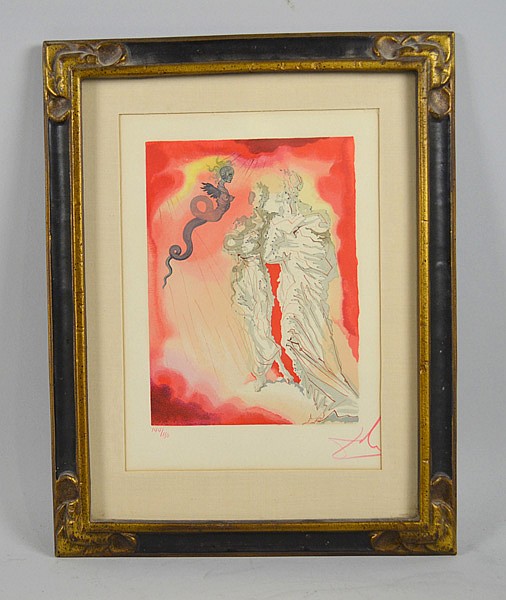
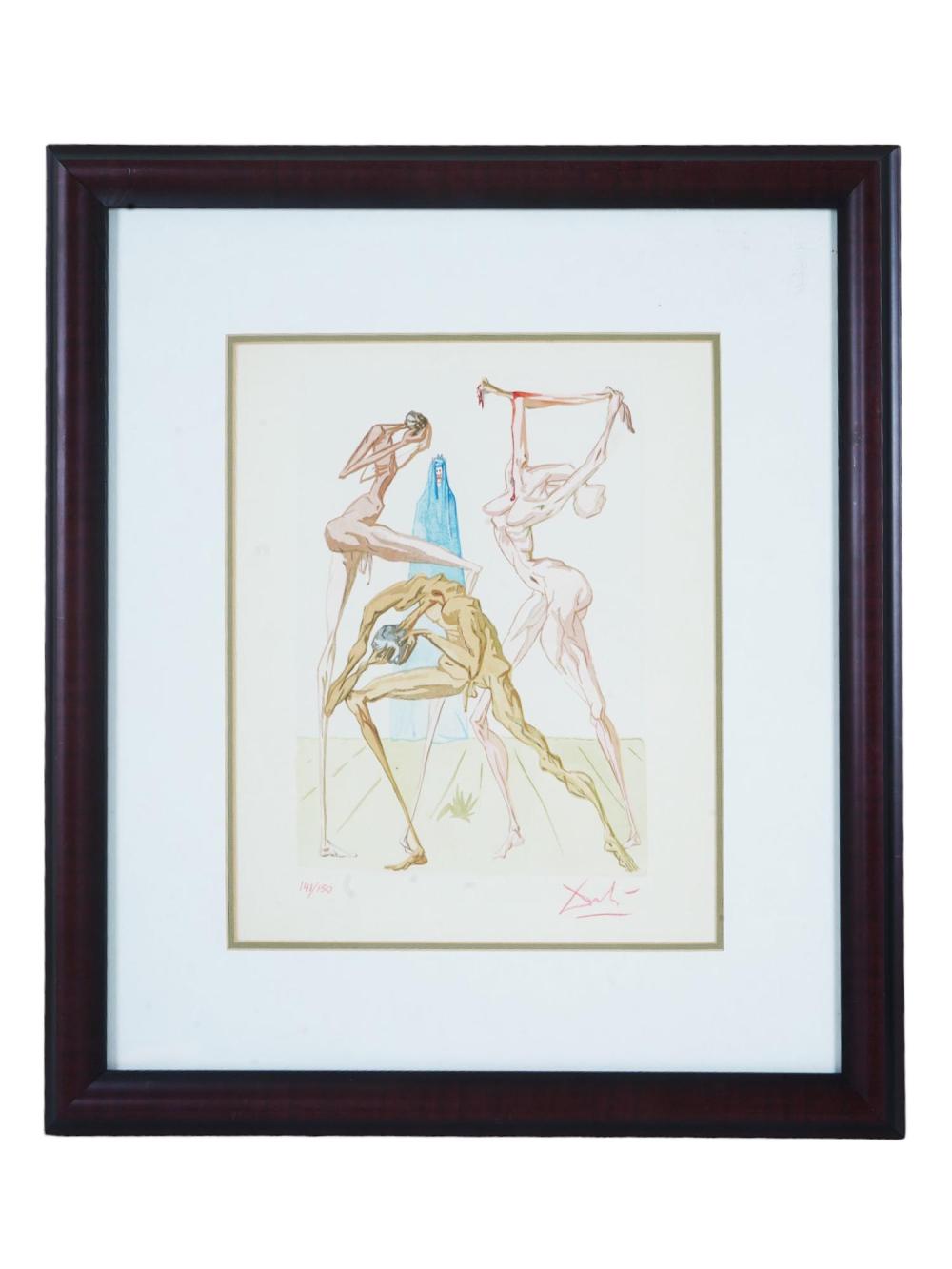
In-image signature: Most plates display Dalí’s signature reproduced within the design (a block-printed, not pencil-applied, signature). This is normal for the suite and should not be mistaken for a hand signature.
Pencil numbering: Original Les Heures Claires wood engravings are typically numbered in pencil at the lower left margin (Arabic numerals for standard editions; deluxe issues may use Roman numerals). Not every impression is numbered in the same way—verify against a reliable colophon when available.
Pencil signatures: Hand-signed Dalí impressions from this suite exist, but they are the exception, not the rule. Pencil signatures usually appear on a title page, frontispiece, or colophon; only certain deluxe subsets include plates signed by Dalí. Treat pencil signatures on individual plates with caution and vet carefully.
Blindstamps and chops: Depending on subset, you may find a Les Heures Claires blindstamp in the lower margin, printer’s chops, or embossed marks. Presence and location vary; lack of a blindstamp is not an automatic red flag, but it merits closer scrutiny.
Printing complexity: Each color required its own block; some plates used dozens of blocks, totaling several thousand blocks across the project. Registration overlaps and subtle color separations are part of the original aesthetic.
Other “Dante” printings:
- Textbook or book-plate editions, and later photomechanical reproductions (including those distributed by commercial publishers), exist. These are not the original color wood engravings even when they reproduce the same images.
Signatures, numbering, and publisher marks: what to expect
Pencil numbering: Typically at lower left (e.g., “123/…” in Arabic numerals). Roman numerals (e.g., “XX/…”) often indicate a deluxe or hors commerce variant. If the number is printed rather than written in pencil, investigate further.
Pencil signature: If present at lower right, it should be clean graphite with pressure overlap into paper fibers under magnification. Be alert for printed or stamped facsimiles, suspicious uniformity across multiple plates, or signatures on questionable paper.
In-image Dalí signature: A stylized “Dalí” often appears within the printed composition. This is normal and not evidence of a pencil signature.
Colophon: Complete volumes originally included a colophon page describing the edition, printer, and paper. A signed/numbered colophon substantiates the set. Missing colophons complicate authentication but are common when portfolios were broken.
Watermarks and blindstamps: Examine the sheet held to light for watermarks. Check for publisher/printer blindstamps in margins. Compare to known examples of Les Heures Claires marks used in the early 1960s.
Titles and captions: Suite plates may bear printed titles or plate numbers on tissue guards or accompanying text leaves rather than on the sheet. Absence of a caption on the sheet itself is not uncommon.
Authentication: originals vs. later reproductions
Magnification and paper examination are your best tools.
Original Les Heures Claires color wood engravings typically show:
- Solid fields of color with slight wood-grain or block-edge character.
- Overlaps and minute misregistrations where colors meet.
- Crisp, tactile ink on high-quality wove paper with a watermark.
- Pencil-applied numbering (and, if applicable, signature) that sits in the fibers.
- Ample margins; many sheets have at least one deckle edge.
Common reproduction traits:
- Halftone dots or rosette patterns (offset lithography) visible under 10x magnification.
- Uniform, glossy ink with no relief and no wood-grain character.
- No watermark; thinner, poster-like paper; trimmed or narrow margins.
- Printed edition numbers/signatures or “plate-signed” only; no legitimate pencil additions.
- Book-plate trimmings where image edges run unusually close to the sheet edge.
Red flags:
- “Signed in the plate” presented as “hand-signed.”
- Certificates of authenticity from non-specialist sources claiming hand signatures on otherwise standard Rives impressions.
- Uniform pencil style across dozens of unrelated Dalí prints from the same seller.
- Claims that all 100 plates in a standard set bear pencil signatures.
When in doubt, consult a Dalí graphics reference and compare your plate’s image, size, and editioning details. The Dalí Divine Comedy wood engravings are catalogued in standard print references (e.g., Field; Michler–Löpsinger). Cross-referencing plate titles and known sheet sizes helps rule out reproductions.
Condition, conservation, and value drivers
Condition heavily influences price in the Dalí Divine Comedy market.
Watch for:
- Light exposure and fading: Sensitive pastel tones can fade; check beneath an old mat for color shift.
- Mat burn and acid migration: Brown lines at the window opening, brittle paper in margins, tape stains.
- Foxing and humidity stains: Reddish-brown spots or tide lines.
- Trimming: Reduced margins or loss of deckles lowers desirability, especially for collectors assembling complete sets.
- Abrasions and skinning: From overhandling or tape removal.
- Printer’s creases: Minor handling bends may be forgivable if unobtrusive; heavy creases are not.
Value drivers:
- Plate desirability: Certain Inferno images (dramatic or iconic compositions) attract stronger bidding than less distinctive plates.
- Edition level: Deluxe papers, low edition numbers, signed colophons, or scarce variants command premiums.
- Completeness: Matched, complete sets with original folders, text volumes, and colophon are far more valuable per plate than broken sets.
- Provenance: Clear chain of ownership, purchase receipts from reputable galleries, or inclusion in noted collections adds confidence.
- Conservation: Archival hinging, untrimmed margins, and expert framing preserve value.
Market orientation (for appraisal context only):
- Individual standard-edition plates often sell in the low-to-mid four figures depending on subject, condition, and venue.
- Deluxe or hand-signed components bring more.
- Complete, well-preserved sets can reach high four to mid-five figures, with exceptional deluxe sets higher. Always anchor estimates to recent, like-for-like comparables.
A concise checklist for appraising a Dalí “Dante” print
- Identify the plate: Inferno, Purgatorio, or Paradiso; verify the image matches a known canto.
- Measure the sheet and image: Compare to known ranges; note margins and any trimming.
- Examine the medium under 10x: Look for color wood engraving characteristics; rule out halftone dots.
- Check paper and watermark: Rives/BFK/Arches or Les Heures Claires watermarks are expected.
- Locate edition marks: Pencil numbering at lower left; note Arabic vs. Roman numerals.
- Distinguish signatures: In-image signature is normal; verify any pencil signature carefully.
- Look for blindstamps/chops: Record location and type, if present.
- Inspect condition: Fading, mat burn, foxing, tears, tape, creases; photograph issues.
- Review provenance: Portfolio case, colophon pages, invoices, prior appraisals.
- Compare comps: Use recent sales for the same plate and edition tier; adjust for condition and completeness.
Short FAQ
Q: Did Dalí hand-sign every Divine Comedy print? A: No. Most original Les Heures Claires wood engravings bear a printed signature within the image but are not hand-signed. Some deluxe components (e.g., a colophon or select plates) were pencil-signed; these are comparatively scarce.
Q: How can I tell if my print is an original wood engraving, not a later reproduction? A: Under magnification, originals show solid color fields from carved blocks, slight overlaps, and rich ink on quality wove paper with a watermark. Reproductions typically display halftone dots, thinner paper, and printed (not pencil) numbering/signatures.
Q: Where should the edition number appear? A: Typically in pencil at the lower left margin. The format varies by edition tier: Arabic numerals are common for standard sets; Roman numerals appear on deluxe or special issues. Some impressions also carry publisher blindstamps.
Q: Do all sheets have captions or text on them? A: Not necessarily. Many portfolios included separate text volumes or tissue guards. The plates themselves usually present only the image, margins, and editioning marks.
Q: What framing is safest for these prints? A: Use 100% cotton rag matting, UV-filtering glazing, and reversible wheat-starch or Japanese paper hinges. Keep works out of direct sunlight and high humidity; avoid pressure-sensitive tapes.
By focusing on medium, paper, editioning, and condition, you can confidently identify and appraise a Salvador Dalí Divine Comedy limited edition print. For high-value examples, corroborate your observations with catalog references and comparable sales, and consider a specialist’s written appraisal to support insurance or sale.