An Original Painting Mountain Lake Circa Mid 20th Century: appraisal and value basics
An Original Painting Mountain Lake Circa Mid 20th Century research should start with identification, condition, provenance, and recent comparable sales. Use this guide to compare the signals that matter before paying for a formal appraisal or deciding whether to sell.
An Original Painting Mountain Lake Circa Mid 20th Century
Mid-20th-century mountain lake paintings sit at the crossroads of fine art and decorative culture. They can be original oils by regional landscape painters, studio pieces made for hotels and furniture stores, or later reproductions designed to satisfy demand for tranquil, escapist scenery after the Second World War. If you have a canvas of a mirrored lake framed by snowy peaks and firs, this guide will help you determine whether it is an original, when and where it was likely made, what condition issues matter, and how to approach valuation.
What “Mid 20th Century” Looks Like in Mountain-Lake Landscapes
The phrase “circa mid 20th century” generally covers the period from the late 1940s through the 1960s. In that era, mountain lake compositions drew from both traditional realism and modernist simplification.
Common traits:
- Composition: A calm body of water reflecting peaks, with a diagonal shoreline, foreground foliage, and atmospheric perspective softening distant ranges. Many include a small chalet, dock, or canoe for scale.
- Palette: Titanium white gives crisp snowcaps; phthalo blues and greens (introduced in the 1930s, popular by the 1950s) create saturated skies and waters. Warm ochres and umbers anchor rocks and tree trunks.
- Brushwork: Varied. You’ll see palette-knife impasto for snow and rocks, choppy impressionistic strokes in trees, and smoother glazes in the water. Studio pieces often show consistent, efficient knife work designed for speed.
- Formats: 16x20 and 24x36 inches are common retail-friendly sizes, though larger hotel lobbies favored 30x40 or 36x48 inches.
- Frames: Mitred, mass-produced frames with gold or silver metallic finishes and a white linen liner are frequent. “Made in Italy” or “Spain” export stickers show up on 1950s–70s frames.
Regional flavors:
- Alps/Tyrol: Steep, jagged peaks; chalets; bellflower meadows; narrow lakes. Signatures may be Germanic or Italianate.
- Rockies/Sierra: Broader pine forests, granite, glacial lakes. California Scene and Western painters favored bolder color blocks and light effects.
- Canadian West: Turquoise lakes under slate-blue mountains; Group-of-Seven influence still visible in stylized trees, though the heyday of that group was earlier.
These stylistic cues help anchor your painting in time and place, but physical evidence is stronger for dating and authenticity.
Determining Original vs Reproduction
Before digging into artist attribution or market value, confirm the work is an original painting rather than a print or later reproduction.
Tells for an original painting:
- Surface topography: True impasto rises above the weave irregularly and follows the logic of the brush or knife. Raking light should reveal ridges and valleys, not a uniform sheen.
- Painted edges: Paint usually wraps around the canvas edge. Drips, scumbles, or color changes should continue naturally over the tacking margins.
- Underpainting and pentimenti: Look for faint changes beneath the final layer—moved trees, adjusted shoreline—all signs of handwork.
Signs of a reproduction:
- Dot patterns: A repeating rosette or dot matrix under magnification indicates photomechanical printing.
- Uniform texture: Giclée on canvas has an even, shallow texture that does not correspond to image features. “Impasto” may just be printed shadows with a clear textured gel applied uniformly.
- Margins: Factory-stretched canvas prints sometimes have printed “gallery wrap” edges showing mirrored or blurred imagery rather than hand-painted edges.
- Paper prints: On paper, check for plate marks (intaglio), uniform stippling (offset lithography), or screen pattern (serigraphy). A mountain lake scene sold as a “lithograph” might be an offset reproduction rather than a hand-pulled print.
If you’re stuck, examine the back. A hand-stretched canvas with tacks or staples, stretcher keys, and age-consistent dust shadows supports originality. Pre-printed SKU stickers and barcoded labels suggest later mass production.
Dating and Materials: Clues in Supports, Pigments, and Varnish
Physical materials provide reliable signals for a “circa mid 20th century” date.
Supports and attachment:
- Canvas: Cotton duck became standard in the mid-century. Linen appears but is less common in mass-market work. Factory stamps on the reverse (e.g., Fredrix, Grumbacher) can be date-referenced by logo style.
- Hardboard (Masonite): Popular from the 1930s; mid-century painters used both smooth and textured sides. Warped or unsealed edges indicate age and storage conditions.
- Staples vs tacks: Staples for attaching canvas to stretcher bars became widespread in the 1950s–60s; cut tacks more common pre-1950. A staple-only edge often points post-1955, but regional practices vary.
- Stretcher bars: Machine-made, with slotted corners for wooden keys, predominate postwar. Bars may carry size stamps in inches.
Medium and pigments:
- Oils vs acrylics: Acrylic polymer paints entered fine-art use in the early 1950s and gained broad popularity by the 1960s. Acrylic films appear more plastic and level than oil and generally lack yellowed linseed exudates on the surface. Water on a cotton swab will not pick up color from a cured acrylic; a solvent like mineral spirits will not dissolve a fully cured acrylic but may affect oil.
- Whites: Titanium white (bright, opaque) supplanted lead white in general use by mid-century. A very cool, bright white is consistent with mid-century practice.
- Blues/greens: Phthalocyanine blue and green (introduced 1930s) became staples after WWII. Their intense chroma in water and sky can be a dating clue.
- Fluorescent paints: Appear in the 1950s; neon highlights under UV can indicate post-1950s embellishment or later touch-ups.
Varnish and surface:
- Natural resin varnishes (dammar, mastic) fluoresce a dull green under long-wave UV; synthetic varnishes (ketone, acrylic) have a subtler or patchy response. A uniform green fluorescence that stops at the very edge can suggest an older varnish with a later frame change.
- Craquelure: Natural age cracking in oils forms irregular networks; “alligatoring” with cupping around impasto can appear in mid-century oils stored in heat. Perfectly smooth surfaces with no age markers can still be mid-century if acrylic on hardboard.
Labeling and marks:
- Art store labels: Styles of brand labels and price codes change over decades. A mid-century canvas panel label can anchor the date range to within a decade.
- Export/import stickers: “Made in Italy” frame stickers surged in the 1950s–60s on ready-made frames.
No single clue is definitive, but three or more consistent signals (staples, titanium-heavy palette, mid-century brand label) make a solid case.
Signatures, Labels, and Provenance Trails
Attribution drives value. Even a modestly known regional painter can outperform a generic decorative work.
Signatures:
- Placement: Commonly lower right, sometimes lower left to sit against a dark mass of foliage or rock for contrast. Palette-knife works may show signatures scratched through wet paint rather than applied on top.
- Medium: A signature done in a different medium or color (e.g., black marker on varnish) may be later. Use raking light to see if the signature sits above or below varnish.
- Monograms and partials: Expand photos on-screen and adjust contrast to tease out letters. Compare letterforms across any other works by the same name if you can access sales catalogues or local exhibition history.
Verso information:
- Titles and dates: Pencil or crayon inscriptions like “Lake Scene 1958” help, but treat them cautiously; dealers and later owners sometimes add titles.
- Gallery and frame shop labels: Independent frame shops often date their work via address formats and telephone numbers (two-letter exchanges in the 1950s, all-numeric later). A mid-century gallery label on the stretcher adds credibility.
- Inventory numbers: A consistent numbering system on multiple works from the same hand indicates a studio practice rather than one-off decorative painting.
Provenance:
- A chain of ownership, even if brief (e.g., “Purchased at X Gallery, Denver, 1962”), matters. Keep bills of sale, exhibition brochures, or period photographs showing the work in situ.
Condition, Conservation, and Framing
Condition affects both aesthetics and value, especially in textured landscapes where impasto is prone to loss.
Typical issues:
- Surface grime and nicotine: Mid-century household exposure leaves a yellow film that dulls blues and whites.
- Craquelure and cupping: Particularly over thick white snow passages; heavy impasto can lift if canvas slackens.
- Stretcher bar impressions: Lines telegraphing through from the back due to tension loss and humidity shifts.
- Abrasion: Along frame edges where liners have rubbed the paint surface.
- Overpaint: Amateur “touch-ups” often fluoresce unevenly; colors may look too fresh compared with surrounding paint.
Care guidelines:
- Dust dry with a clean, soft brush. Avoid feather dusters, which can snag impasto.
- Do not use water, household cleaners, or oils. Cleaning should be done by a conservator using appropriate solvents or aqueous systems tailored to the paint and varnish.
- Maintain stable humidity and temperature. Avoid direct sunlight; UV can embrittle varnish and fade some pigments.
- Reframe using archival spacers or a linen liner that doesn’t contact the paint surface. If glazing is used for protection in high-traffic areas, opt for UV-filtering acrylic with sufficient spacing to avoid contact.
Conservation triage:
- Flaking paint, active lifting, or a blistered varnish needs attention soon to prevent loss.
- Tear repairs and relining are specialized tasks. Poor repairs reduce value; good, reversible conservation preserves it.
Market Value: Decorative vs Listed-Artist
Values for mid-20th-century mountain lake paintings range widely based on authorship, quality, size, and condition.
Decorative studio works:
- Anonymous or shop-signed pieces (initials or common surnames with no research trail) typically sell in the low hundreds. Expect higher prices for larger canvases in clean, ready-to-hang condition.
- Indicators: Repetitive compositions, consistent palette-knife textures across multiple works by different “names,” and retail-friendly sizes.
Regional or listed artists:
- Recognizable painters with exhibition history or auction records can bring mid to high hundreds, into the low thousands for superior works, larger scale, or iconic vistas.
- Indicators: Strong composition, confident brushwork, cohesive color, and corroborated signature. Presence of a period gallery label or exhibition history is a plus.
Comparables:
- When searching for comps, match as many variables as possible: artist (or school), size, medium, subject (lake-and-peak scenes), quality, and condition. Adjust expectations for regional demand; Western subjects may perform better in Western markets.
- Condition discounts: Visible overpaint, heavy yellowed varnish, or structural issues can reduce price by 20–50% relative to clean, original-surface examples.
Remember that retail gallery prices, auction hammer prices, and private sale prices differ. An appraisal for insurance uses replacement value (often the higher retail figure); fair market value (typical secondary market price) is generally lower.
Quick Appraisal Checklist
- Photograph front, back, signature, and any labels in daylight.
- Confirm originality: check surface texture in raking light and edges for continued paint.
- Note supports and attachments: canvas vs board; tacks vs staples; stretcher keys present.
- Assess medium: oil or acrylic; look for titanium white and phthalo colors typical of mid-century.
- Inspect under UV for varnish fluorescence and potential overpaint.
- Record dimensions without frame; note frame type and any stickers.
- Document condition issues: grime, craquelure, flaking, stretcher marks.
- Capture any inscriptions, titles, dates, and gallery or frame shop labels.
- Research signature and regional style; assemble 3–5 comparable sales by similar artists or school, size, and quality.
- If value or condition appears significant, consult a qualified conservator or appraiser for a written opinion.
What similar items actually sold for
Real auction sales of items like your mountain lake painting. Open a sale to see the original listing.
Shown USD range: USD 50-USD 400. Median of these 6 USD examples: USD 212.50.
| Comparable | What sold | Auction house | Date | Lot | Source-reported amount |
|---|---|---|---|---|---|
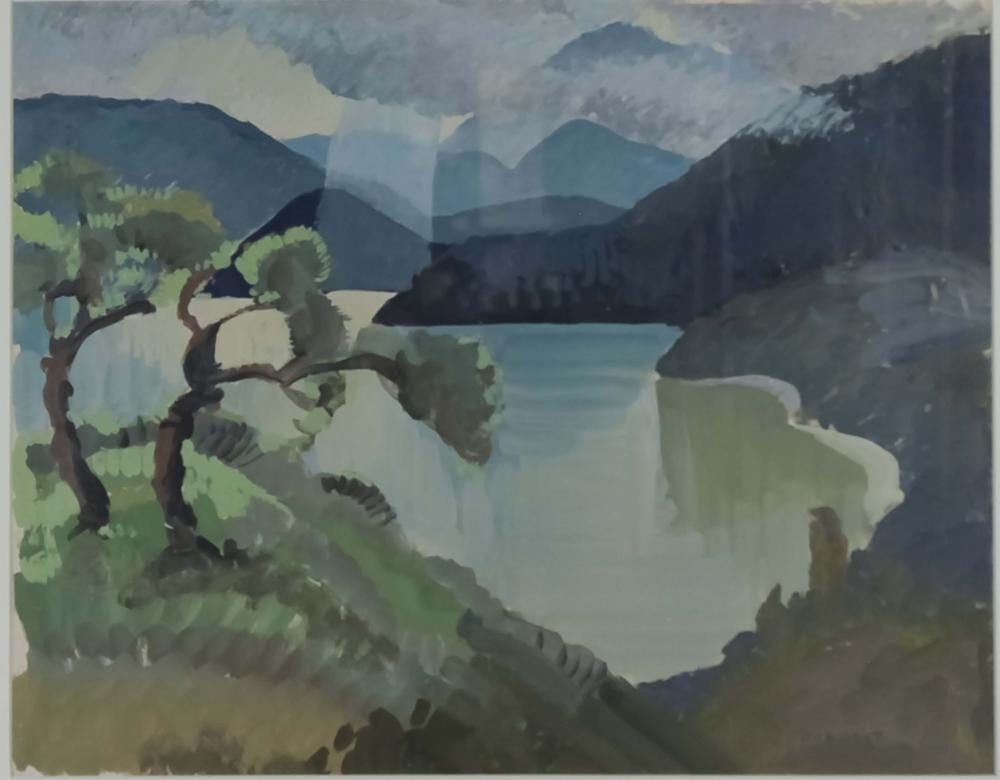 |
Bessie Christie Lake & Mountain Landscape Painting | Hill Auction Gallery | 2018-12-12 | 254 | USD 50 |
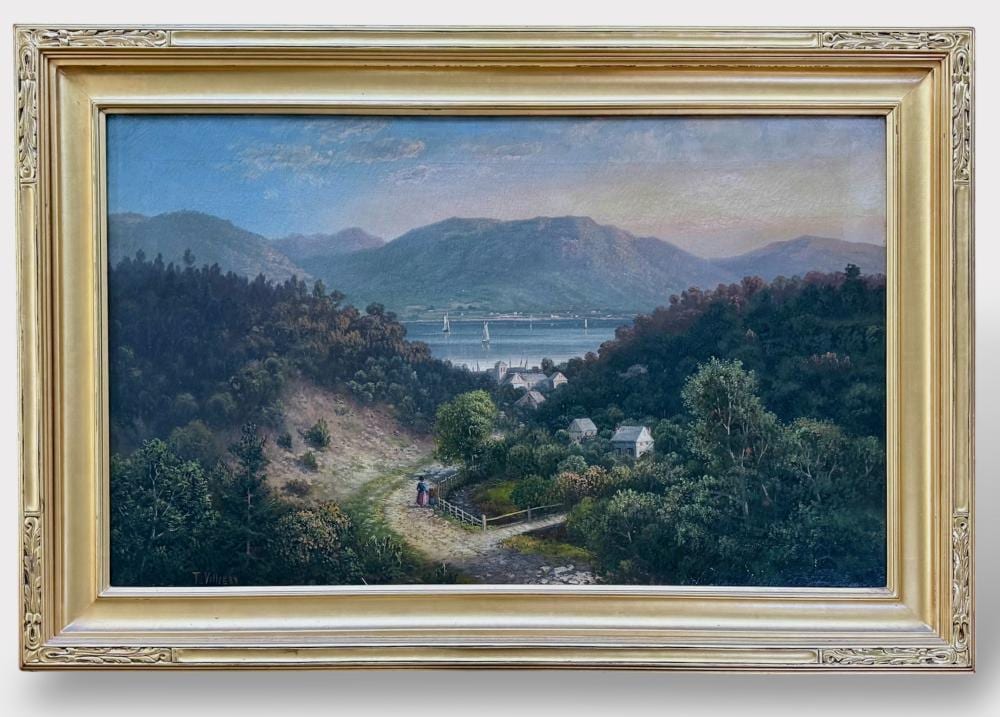 |
19th C. Mountain Lake Landscape Oil Painting, Signed | Kensington Estate Auctions | 2026-02-23 | 98 | USD 400 |
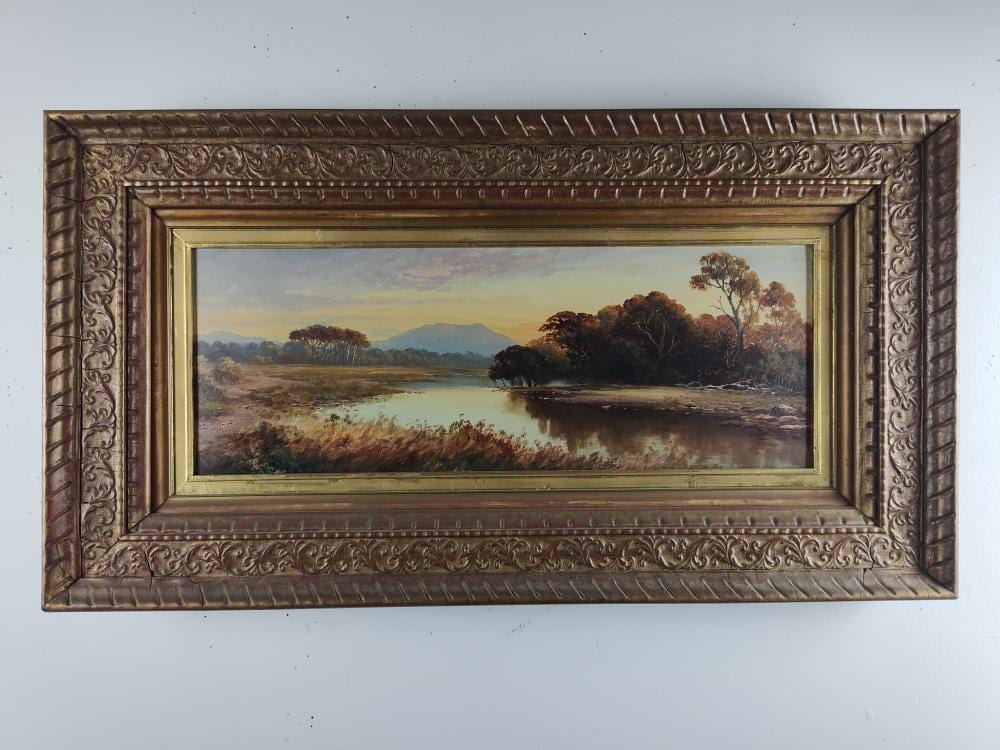 |
AUSTRALIAN SCHOOL C1900 OIL PAINTING "Lake and Mountain Landscape". | Phillip Caldwell Auctioneers | 2025-10-26 | 84 | AUD 340 |
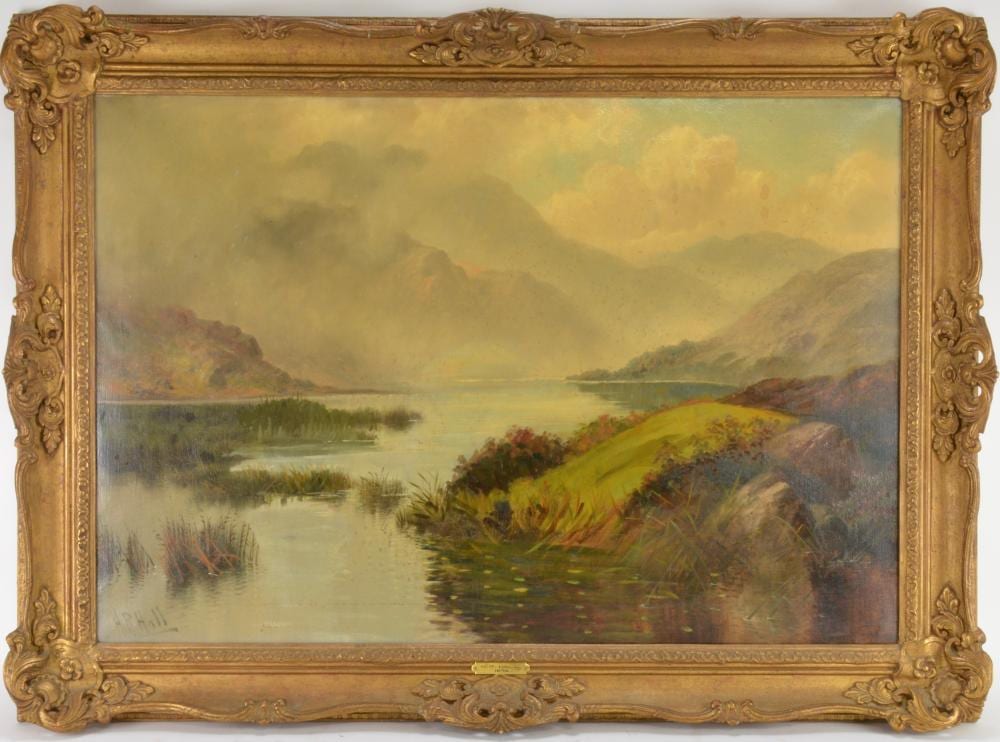 |
Oil Painting By Harald R. Hall Sutherland Mountain Lake Scene | Mebane Antique Auction | 2019-06-07 | 363 | USD 270 |
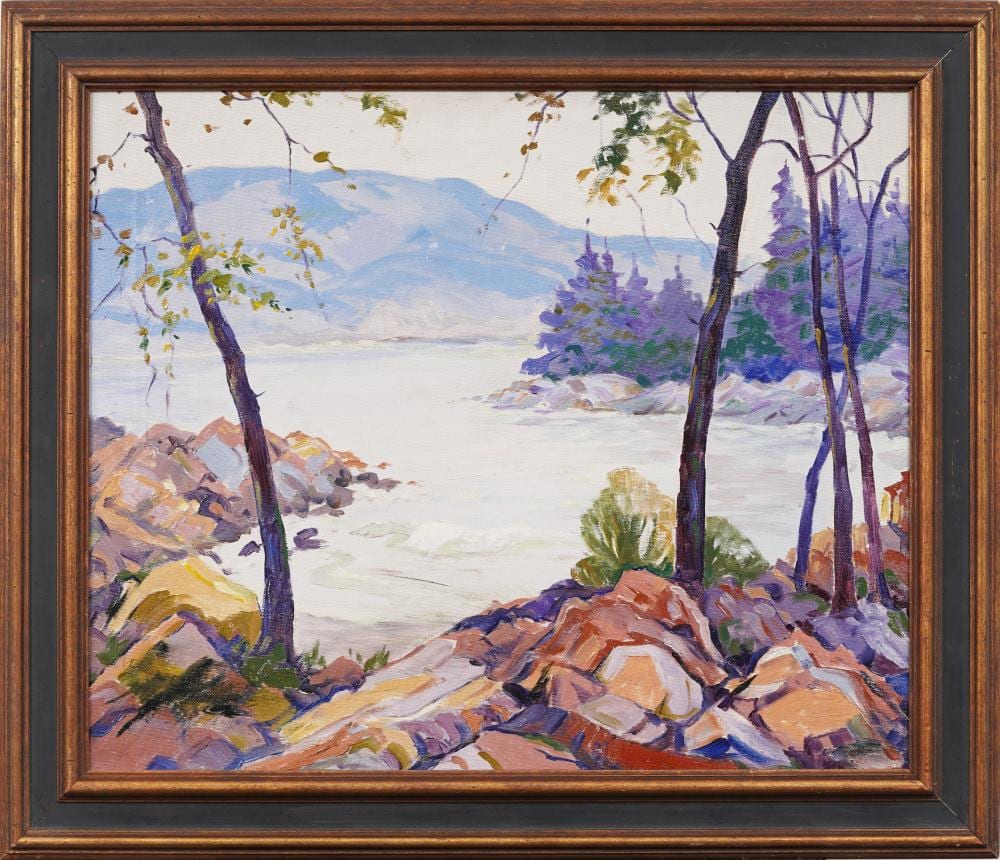 |
Antique Canadian Fauvist Mountain Lake Landscape Framed Original Oil Painting | Curated Gallery Auctions | 2026-06-14 | 509 | USD 200 |
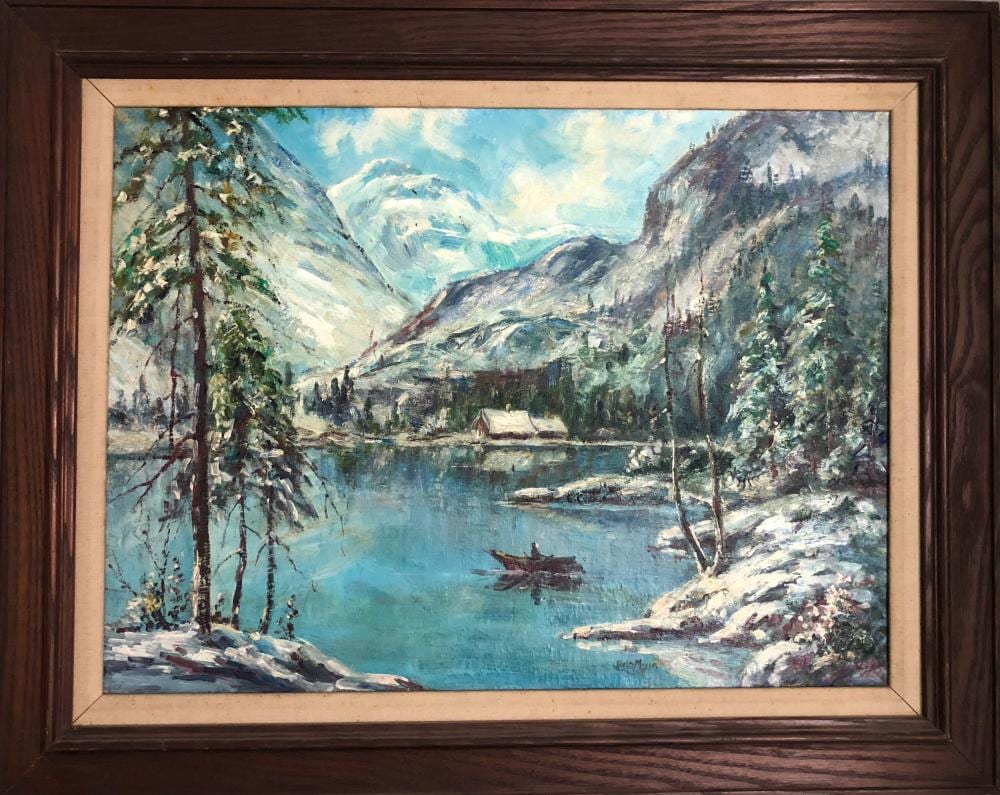 |
Peter Bela Mayer (Hungarian/American,1887-1993) New England Mountain Lake Landscape Painting, 1950s | Kensington Estate Auctions | 2019-03-25 | 100 | USD 225 |
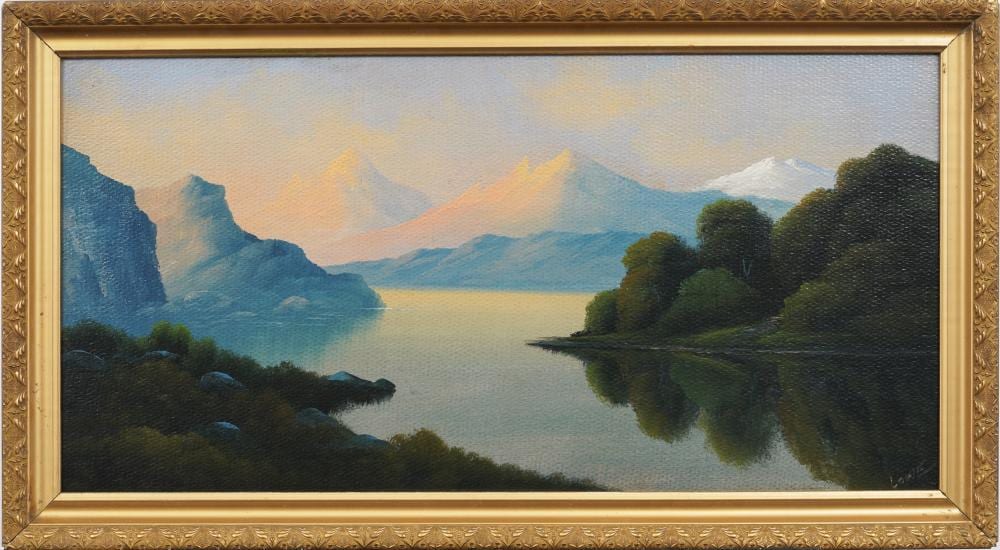 |
Vintage Signed Winter Impressionist Glacier Mountain Lake Framed Landscape Oil Painting | Curated Gallery Auctions | 2025-12-07 | 349 | USD 70 |
How these auction records were verified
These sales are market context, not an object estimate.
Each row retains its exact source URL, lot identity, retrieval time, access result, and immutable record hash. Live source access was blocked; the exact record matched Appraisily's immutable pipeline provenance. Inspect the public comparable provenance record.
Free photo check
Not sure if your painting is worth appraising? Let us take a look.
Upload a photo, tell us what you know, and get a free first read. If a full appraisal makes sense, we will say so.
Free. No card needed. Takes about two minutes.
FAQ
Q: How can I tell if my mountain lake painting is oil or acrylic? A: Under magnification, oils often show visible brush ridges with a slight translucency in thin passages, and may have a slightly yellowed varnish. Acrylics tend to have a more even, plastic-like film with sharper edges to strokes. Lightly rolling a cotton swab dampened with water on an inconspicuous edge won’t affect a cured acrylic but risks swelling grime on oil; do not test aggressively. When in doubt, defer to a conservator.
Q: The signature is illegible. Is there any point in researching it? A: Yes. Photograph the signature in raking light and adjust contrast digitally. Look for distinctive letters or diacritics that hint at a language or region. Compare style, palette, and composition to regional schools. Even without a firm ID, coherent evidence of a regional school can improve marketability and context.
Q: Can I clean the yellowed varnish myself? A: Avoid DIY cleaning. Yellowing may be surface grime, aged natural varnish, or a combination. Using the wrong solvent can blanch varnish, smear paint, or create tide lines. A conservator can test solubility and safely remove or adjust varnish to recover original color balance.
Q: Are frames important to value? A: Yes. A period-appropriate frame in good condition enhances presentation and can support dating. However, frames are often swapped. A later frame doesn’t invalidate the painting; likewise, a period frame alone doesn’t confirm age. Value the object primarily on authorship, quality, and condition.
Q: What size differences affect value? A: Standard, display-friendly sizes (e.g., 24x36 inches) often bring stronger prices than small studies. Very large works can command premiums if the quality supports them, but oversized pieces may face a smaller buyer pool due to display challenges.
With careful observation—materials, technique, inscription, and condition—you can place a mountain lake canvas credibly in the mid-20th century, separate original from reproduction, and set realistic expectations for conservation and value.