
Victorian George III style furniture: appraisal and identification basics
Start by separating actual George III period furniture from Victorian revival furniture made in George III taste. Check joinery, saw marks, secondary woods, veneer versus solid construction, hardware, finish, matched-set integrity, maker or retailer marks, condition, provenance, and recent sales for comparable suites.
Victorian George III style furniture appraisal notes
Serious antique and art appraisal calls for precise terms. A phrase like “an original circa Victorian era solid wood George III style furniture set” describes a late-19th-century suite made in homage to earlier Georgian design, executed predominantly in solid timber. The task for an appraiser is to verify that each part of that claim—date, style, materials, and integrity as a set—holds up under scrutiny. This guide distills what to look for, how to test those claims, and what factors most influence value.
Defining the terms: Victorian-era, George III style, “set,” and “solid wood”
- Victorian-era: Queen Victoria reigned 1837–1901. In furniture, the second half of the 19th century saw both exuberant new designs and sophisticated revivals of earlier periods. George III period furniture (c. 1760–1820) became a favored model for high-quality revivals, especially after the 1860s.
- George III style: Think restrained neoclassicism and the lightness of Hepplewhite and Sheraton influences. Typical traits include:
- Chairs with shield, oval or square backs; tapered, often reeded legs; spade feet; carved Prince of Wales feathers or husk swags.
- Sideboards with inlaid satinwood stringing and oval paterae, serpentine fronts, and symmetrical arrangements.
- Tables with reeded legs, brass cup casters, and fine edge profiles (ovolo, beading).
- Chests and commodes with rectilinear forms, delicate line inlay, and boxwood/satinwood stringing.
- “Set”: A set may be a dining suite (extending table, sideboard, and chairs) or a bedroom suite (wardrobe, dressing chest, washstand, bedside). Appraisal hinges on whether pieces started life together or were later “married” to appear as a set.
- “Solid wood”: Many sellers say “solid” loosely. In genuine 19th-century cabinetmaking, even “solid” pieces often have veneered show surfaces (crossbanded tops, inlaid panels) over solid substrates, with secondary woods inside. Verify rather than assume.
The most likely reading is a Victorian-era revival suite built in George III taste, largely in solid mahogany or oak, possibly with satinwood stringing and period-appropriate brass.
Design and construction hallmarks to confirm Victorian George III revival
Construction evidence is your best friend. These clues tie style to the correct manufacturing era and separate authentic Victorian revivals from later reproductions.
- Woods:
- Primary: Mahogany dominates (Honduran in late Victorian; earlier Cuban mahogany is denser and finer). Walnut resurges in the 1870s–90s for certain suites. Oak appears in carcasses and Arts & Crafts-influenced revivals.
- Secondary: Deal (pine), oak, or ash for drawer linings, runners, and backs. Uniform plywood is a 20th-century sign.
- Sawn surfaces:
- Hand-saw marks (irregular, straight) suggest pre-1840, but by mid-19th century circular saws leave telltale arc striations on unseen surfaces—consistent with Victorian revivals.
- Joinery:
- Dovetails: Victorian machine-assisted dovetails are relatively uniform, narrower than Georgian hand-cut, but not as tiny and perfect as late 20th-century machine joins.
- Drawer bottoms: Typically chamfered and slid into grooves front-to-back; look for oxidation darkening toward edges and old tool marks.
- Chair frames: Tenon-and-mortise joints with hide glue; corner glue-blocks under seats, often hand-chamfered and pinned.
- Hardware:
- Brass: Cast pulls and escutcheons with crisp detailing are better; thin stamped brass with sharp back edges is often later. Victorian screws will be machine-made but with blunt points and slight slot irregularities; modern screws look too perfect and pointed.
- Casters: Brass cup casters on tables and sideboards; tops of cups show wear; iron axles may oxidize.
- Fasteners:
- Nails: Cut nails linger into mid-19th century; wire nails become common c. 1880 onward. Mixed fasteners are normal in original pieces; all modern wire nails are suspicious.
- Finish:
- Shellac/French polish is standard. Under UV light, shellac fluoresces orange. Polyurethane or thick modern varnish suggests later refinishing.
- Patina: Edges should show rounded, honest wear; color gradients from sunlight and use; oxidation inside cavities darker than any newly exposed wood.
- Inlay and stringing:
- Boxwood or satinwood line inlay should be let in by hand, with tiny irregularities and oxidation. Mass-printed faux inlay or overly perfect machine channels often indicate later copies.
- Proportions:
- George III style favors lightness and restraint. If the piece is heavy in carving with cabriole legs and acanthus everywhere, that’s more Chippendale or high-Victorian; George III revival is crisper and flatter in ornament.
A Victorian George III revival dining suite, for example, often includes an extending mahogany table with a screw-and-winder mechanism, a set of 6–12 shield-back chairs, and a serpentine sideboard with satinwood stringing and brass mounts.
Authenticity of the “set”: original, matched, or a marriage
“Original set” is a claim worth testing. Appraisers distinguish:
- Original set: All pieces made together in the same workshop for the same client. Indicators:
- Matching timber selection and color cast across components.
- Identical construction quirks: same dovetail spacing, drawer linings, dust-board configuration.
- Consistent inlay string widths and materials.
- Assembly marks: penciled numerals, Roman numerals (III, IV) on rails/leaves; stamped pattern numbers beneath chair seats.
- Uniform hardware pattern and patination (not uniformly shiny replacements).
- Matched set: Pieces made around the same time and pattern, but not for each other; often retailed to look harmonious. Common in Victorian suites. Acceptable in the market if quality and match are strong, but value is lower than a documented original commission.
- Marriage: Disparate pieces combined later to create a “set.” Tell-tales include:
- Mismatched secondary woods or interior layout.
- Uniform modern finish overlaying dissimilar original finishes.
- Hardware holes that don’t align; extra plugged holes.
- Inconsistent tool and saw marks.
For chair sets, flip them over:
- Seat rails should show the same webbing pattern and tack types across the set (allowing for reupholstery). Glue-blocks should be of similar shape and wood. The backs’ carving flow and depth should match.
For tables with leaves:
- Leaves should share the same thickness, edge profile, and timber; numbers or letters scratched on leaf tongues should align with the table frame. A mismatched leaf lowers value.
Appraisal framework: quality, condition, completeness, and provenance
Approach valuation systematically:
- Quality of craftsmanship:
- Crispness of carving and inlay, finesse of joinery, and timber selection separate top-tier cabinetmaking from factory-grade wares.
- Known makers and retailers raise the ceiling. Look for stamps, pencil notes, or labels from firms like Gillows, Maple & Co., Edwards & Roberts, or Shoolbred. Retailers’ paper labels may hide under drawers, on the back of mirrors, or inside wardrobes.
- Condition:
- Expect honest wear: slight shrinkage lines, minor veneer losses (even on “solid” furniture, banding may be veneered), oxidized interiors, and softened edges.
- Red flags: active woodworm (fresh frass), structural breaks, replaced legs, severe water damage, or modern sprayed finishes. Sympathetic, well-executed restorations are acceptable; heavy refinishing that erases patina reduces value.
- Completeness:
- Full chair counts (sets of 8, 10, or 12); original table leaves and winding handle; sideboard cellarette; mirror crestings for dressing chests; and matched bedside components strengthen value.
- Missing or mismatched elements reduce desirability, particularly in true “sets.”
- Provenance:
- Documented purchase, estate inventories, or inclusion in period photographs boost confidence and price. Even retailer invoices from the late 19th century can be decisive.
- Market context:
- Brown furniture cycles. After a long softness, select high-quality Georgian and Victorian revival pieces have been regaining interest, especially among buyers who value sustainability and craftsmanship.
- Dining suites see variable demand with changes in how people entertain; bedroom suites often break up unless they’re especially fine. The presence of a standout element (e.g., an exceptional sideboard with Gillows traits) can carry a set.
When expressing value, align the assignment to context: fair market value (private sale or auction), retail replacement (for insurance), or probate. Each will yield different figures. Expect the best Victorian George III revival suites by named makers to command a premium; average-quality factory suites trend lower. A tightly matched set in untouched original surface outperforms a pieced-together ensemble in bright new polish.
Verifying “solid wood” and navigating restoration
Even when cataloged as “solid,” inspect key areas:
- Tops and show surfaces: Crossbanding and veneer are common and entirely correct historically. Look for veneer edges where tops meet edge molding; end grain patterns that don’t match face grain can signal veneer.
- Carcasses and frames: Legs, rails, and stiles should be solid; drawer fronts may be either solid or veneered onto solid.
- Drawer linings and runners: Often solid oak or pine; wear grooves and replacement runners are typical.
Restoration guidance that preserves value:
- Keep original surface where possible. Clean gently and re-wax rather than strip and refinish. French polishing can be appropriate for Victorian surfaces, but over-enthusiastic polishing obliterates patina and detail.
- Use reversible materials: hide glue for structural repairs; shellac for finish touch-ins; alcohol-soluble dyes rather than oil stains.
- Treat inactive worm holes aesthetically only if overwhelming; stabilize the structure if needed. For active infestation, use professional, minimally invasive treatments.
- Replace missing hardware with like-for-like period or high-quality cast reproductions; avoid bright lacquered brass. Always keep any original components you remove.
- Reupholstery: Respect original seat heights and profiles; use traditional webbing and stuffing if possible. Save any old trims or linings bearing retailer tags.
Care, display, and long-term preservation
- Environment: Keep relative humidity stable (40–55%) and avoid direct heat sources. Sudden swings cause splits and loose joints.
- Light: Protect from direct sun; UV fades mahogany and inlays.
- Cleaning: Dust with a soft cloth. Wax sparingly 1–2 times per year with a quality paste wax; avoid silicone polishes that contaminate finishes and complicate future conservation.
- Use: Felt pads under accessories; coasters and pads on table tops; lift rather than drag pieces. Engage extending table mechanisms gently and keep leaves stored flat.
- Handling: Move chests by their bases, not by top galleries; carry chairs by their seat rails, not the crest rail or arms.
Practical appraisal checklist
- Confirm date:
- Circular saw marks present? Machine-cut dovetails? Wire nails? These support late 19th-century manufacture.
- Confirm George III style:
- Shield/oval chair backs, tapered/reeded legs, spade feet, satinwood stringing, paterae, brass cup casters.
- Verify “set” integrity:
- Matching timbers, inlay, finish, and construction quirks across all elements; assembly marks align.
- Assess materials:
- Primary wood (mahogany/walnut/oak) consistent; secondary woods appropriate; veneers used correctly on show surfaces.
- Inspect joinery and wear:
- Honest patina, hide glue residues, oxidation in recesses; no pervasive modern fasteners.
- Evaluate condition and restorations:
- Note repairs, refinishes, missing hardware, replaced leaves or chair elements; check for active worm.
- Seek maker/retailer attribution:
- Stamps, labels, pencil notes, or trade marks inside drawers/under seats/behind backs.
- Determine value context:
- Identify assignment (FMV, retail replacement, probate); compare with recent sales of similar quality and completeness.
What similar items actually sold for
Real auction sales of items like your george iii style chairs. Open a sale to see the original listing.
Shown USD range: USD 100-USD 768. Median of these 6 USD examples: USD 287.50.
| Comparable | What sold | Auction house | Date | Lot | Source-reported amount |
|---|---|---|---|---|---|
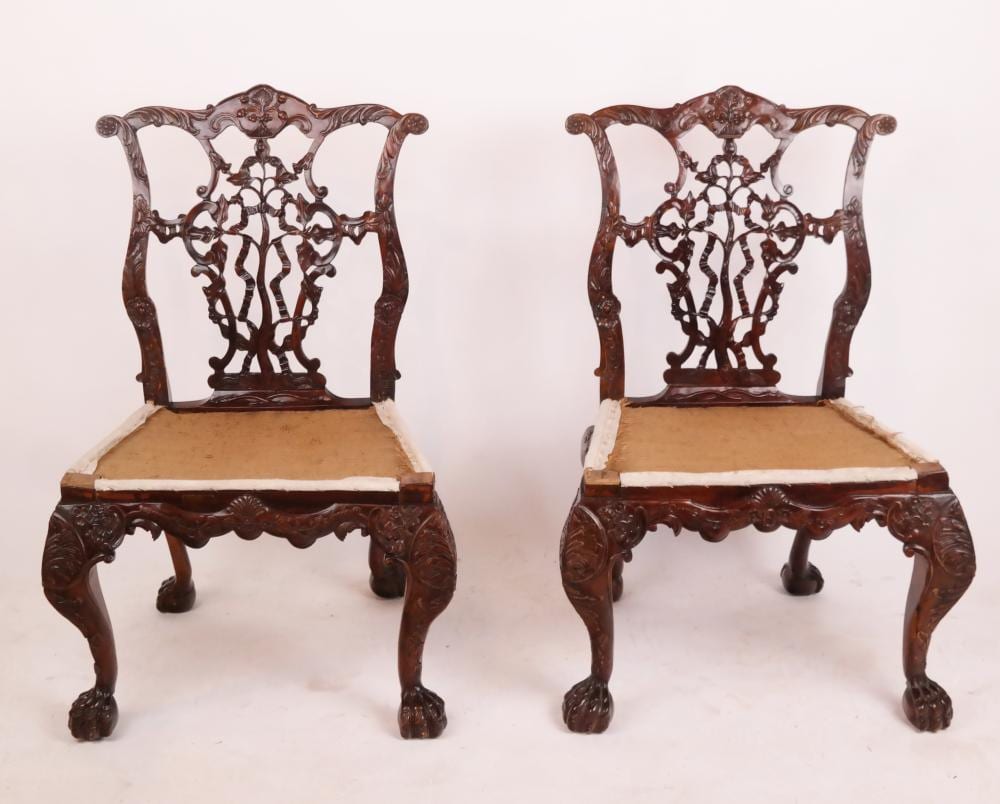 |
Pair of George III-Style Mahogany Side Chairs | Roland Auctions NY | 2023-04-28 | 233 | USD 275 |
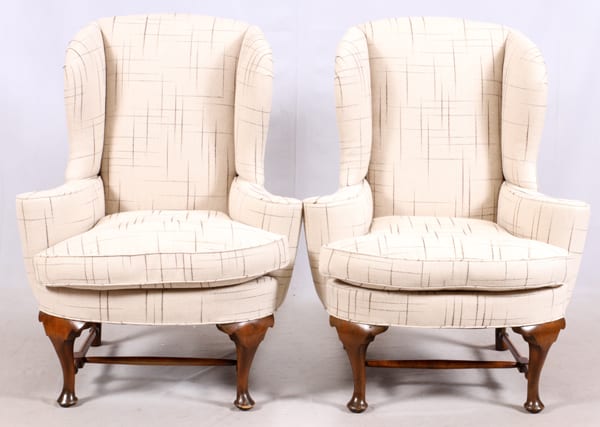 |
GEORGE III STYLE MAHOGANY WING BACK CHAIRS, PAIR | DuMouchelles | 2018-04-14 | 1166 | USD 100 |
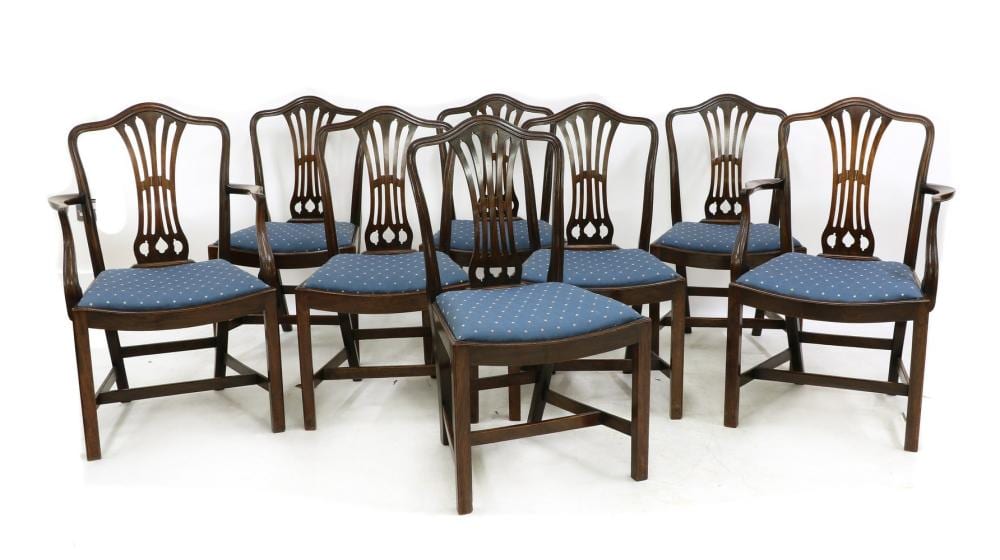 |
A set of eight George III style mahogany dining chairs | Sworders | 2022-01-18 | 476 | GBP 280 |
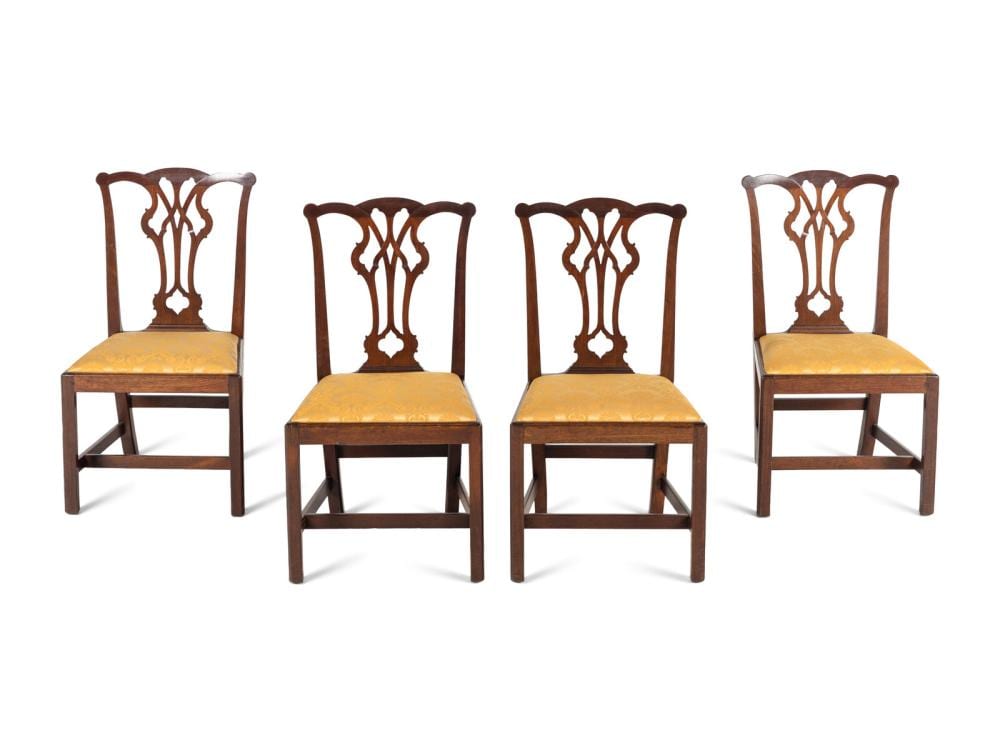 |
Four George III Style Carved Mahogany Side Chairs | Hindman | 2024-04-23 | 101 | USD 325 |
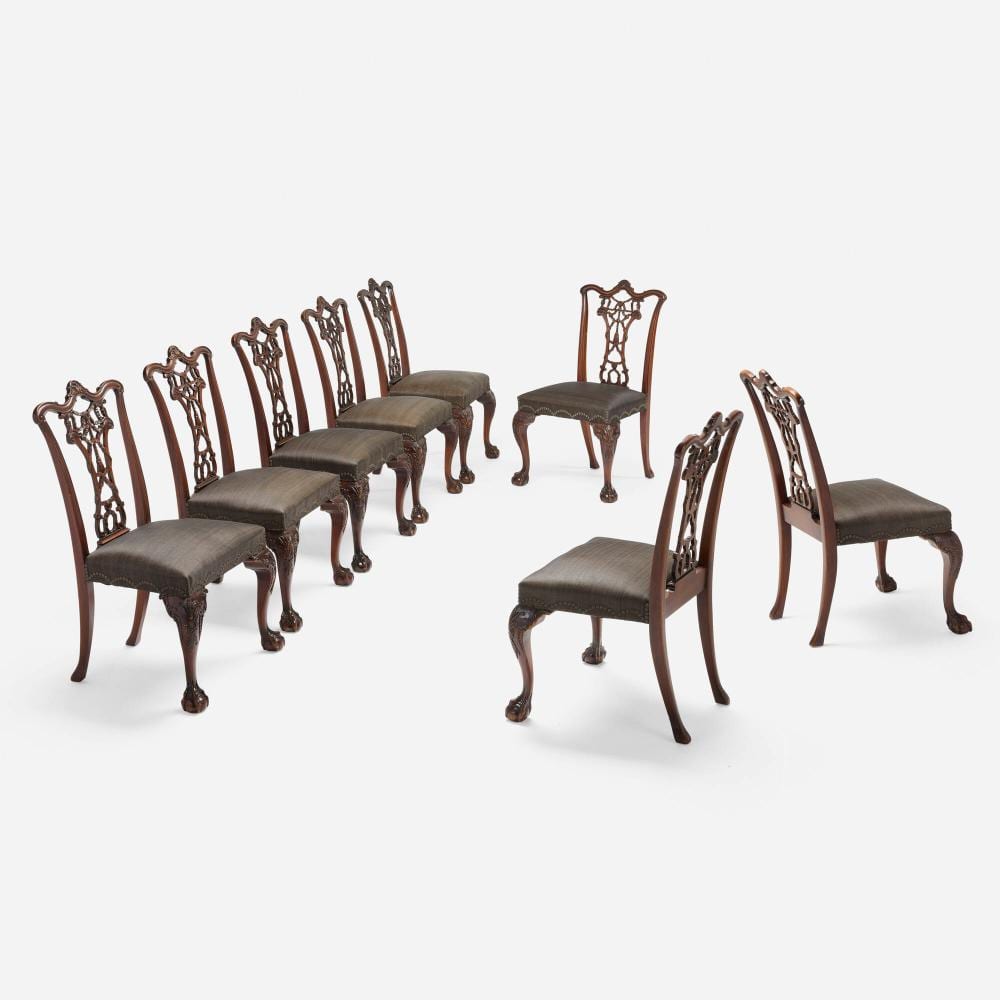 |
English, George III style dining chairs, set of eight | Toomey & Co. Auctioneers | 2025-07-02 | 168 | USD 100 |
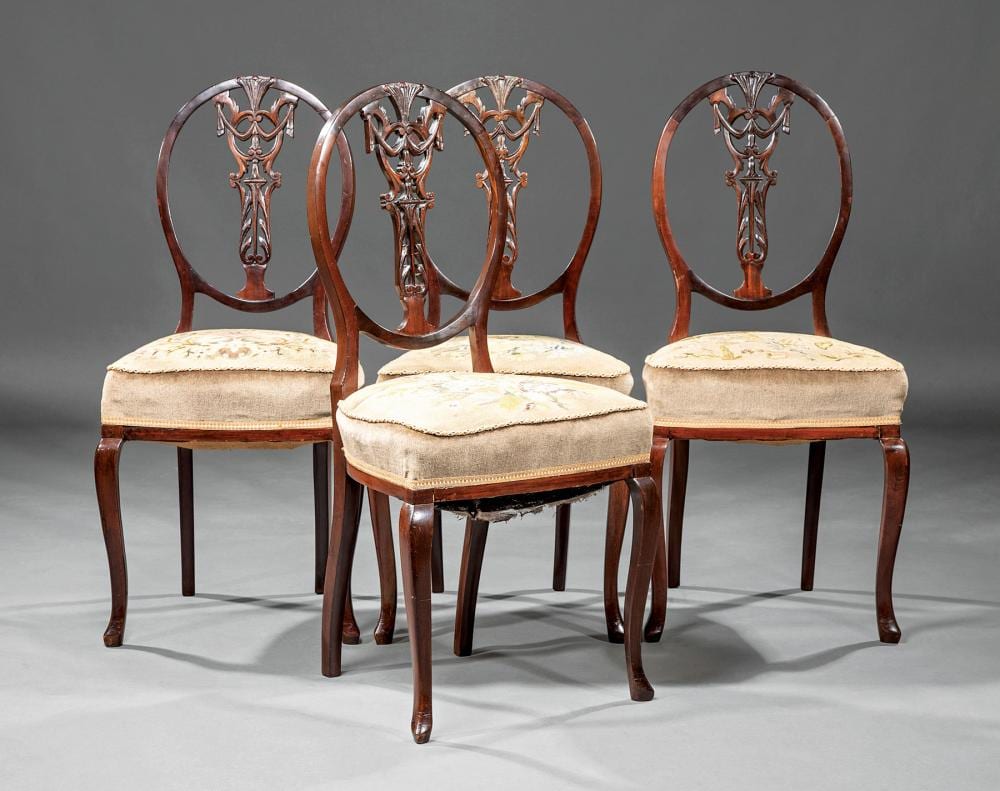 |
George III-Style Carved Mahogany Dining Chairs | Neal Auction Company | 2019-04-14 | 681 | USD 768 |
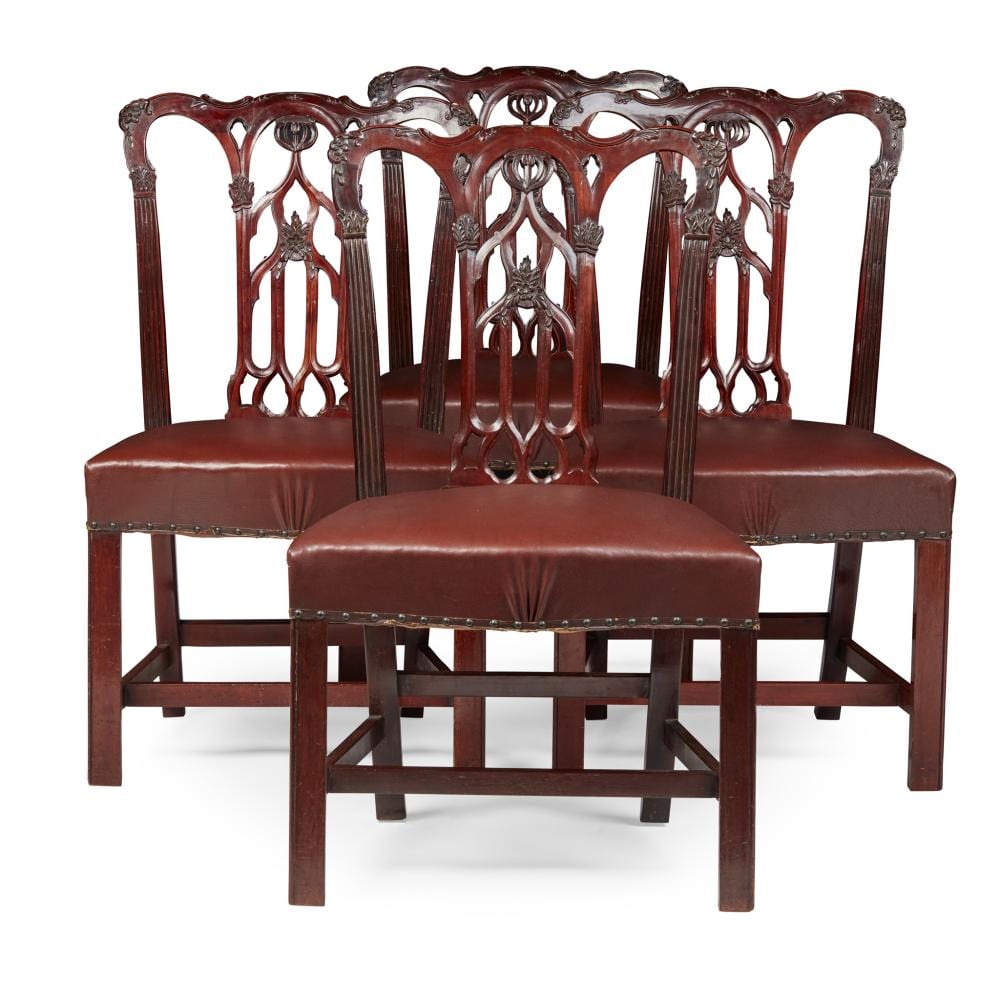 |
SET OF FOUR GEORGE III STYLE MAHOGANY SIDE CHAIRS | Lyon & Turnbull | 2024-02-21 | 75 | GBP 320 |
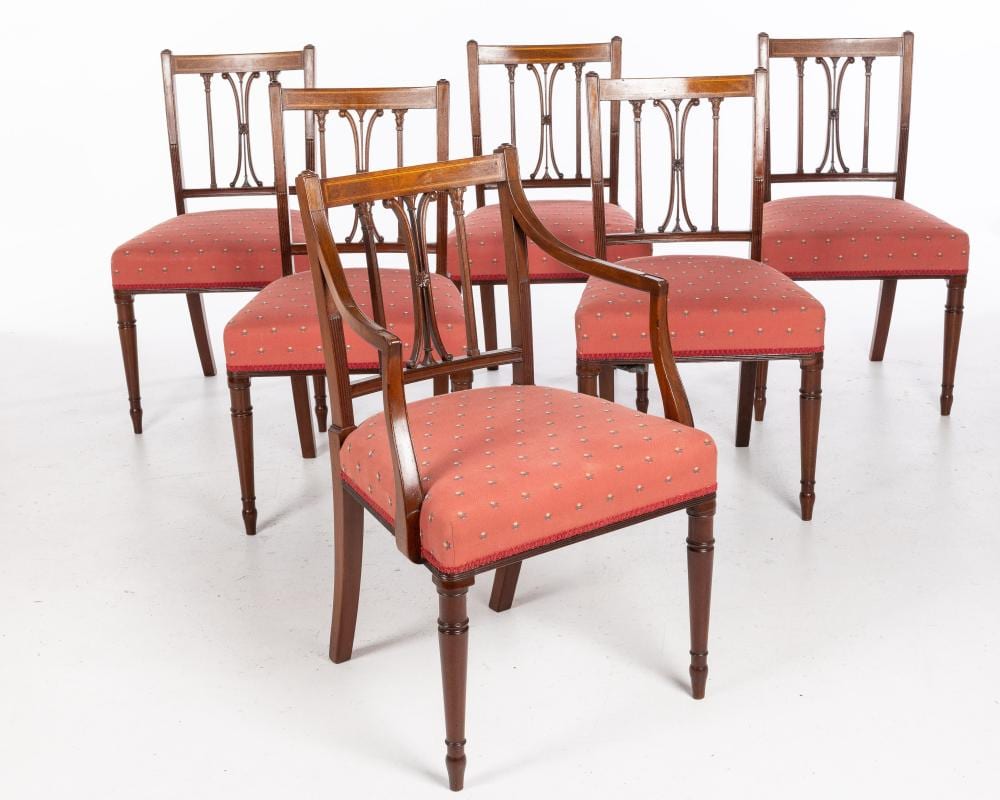 |
6 GEORGE III STYLE MAHOGANY SIDE CHAIRS, 19TH C | Everard Auctions and Appraisals | 2023-02-28 | 259 | USD 300 |
How these auction records were verified
These sales are market context, not an object estimate.
Each row retains its exact source URL, lot identity, retrieval time, access result, and immutable record hash. Live source access was blocked; the exact record matched Appraisily's immutable pipeline provenance. Inspect the public comparable provenance record.
Free photo check
Not sure if your item is worth appraising? Let us take a look.
Upload a photo, tell us what you know, and get a free first read. If a full appraisal makes sense, we will say so.
Free. No card needed. Takes about two minutes.
FAQ
Q: How do I distinguish a Victorian George III revival from an actual George III period piece? A: Start with construction. Victorian revivals typically show circular saw marks, more uniform machine-cut dovetails, and consistent brass screws; period George III favors hand-sawn backs, hand-cut dovetails with some irregularity, and earlier fasteners. Stylistically they can be very close, so the unseen construction is decisive.
Q: Does refinishing always reduce value? A: Not always, but heavy stripping and modern varnish usually do. A careful conservation clean and French polish refresh on an original Victorian finish can be acceptable. Original surface, especially with mellow patina, is most prized.
Q: Can a matched set be worth nearly as much as an original set? A: Yes, if the quality is high, the match is excellent, and the suite is complete. However, documented original commissions and sets by named makers command a premium over matched ensembles of similar appearance.
Q: What woods are correct for a Victorian George III style set marketed as “solid”? A: Mahogany is most common for frames and tops, with secondary woods like oak or pine inside. Expect satinwood or boxwood stringing as inlay. “Solid” often coexists with veneered show surfaces such as crossbanded edges; that’s historically correct.
Q: How many chairs make a desirable dining set? A: Eight is a practical minimum; ten or twelve increase desirability, provided they are original to the set. Armchairs at the heads enhance appeal, and original leaves for the table are important for completeness.
A precise, methodical look at style, construction, materials, and set integrity will allow you to confirm the claim implicit in “an original circa Victorian era solid wood George III style furniture set” and to present a defensible appraisal grounded in the object itself.


