
Ancient Peruvian Feather Dress: appraisal and value basics
Ancient Peruvian Feather Dress research should start with identification, condition, provenance, and recent comparable sales. Use this guide to compare the signals that matter before paying for a formal appraisal or deciding whether to sell.
An ancient Peruvian bird-feather miniature dress is a rare kind of pre-Columbian textile made by attaching brightly colored feathers to a woven foundation. These pieces are sometimes described as miniature tunics, miniature dresses, or miniature garments, and they appear in museum collections as well as (more rarely) in the legitimate private market.
Because the category involves archaeological cultural heritage, organic materials, and international trade rules, value depends on more than “how old it looks.” This guide focuses on what specialists check first: materials and construction, condition, provenance and legality, and what those factors typically do to market value.
Free photo check
Not sure if your item is worth appraising? Let us take a look.
Upload a photo, tell us what you know, and get a free photo check. If a full appraisal makes sense, we will say so.
Free. No card needed. Takes about two minutes.
What is a Peruvian feather miniature dress?
In Andean textile terminology, “featherwork” usually means a woven base (often cotton) with feathers attached in ordered rows so the plumage forms the visible surface. Some pieces are full-size garments; others are miniature examples that may have had ceremonial, symbolic, or funerary roles.
A useful public reference is the Metropolitan Museum of Art’s example of a miniature dress from Peru, which shows the basic concept and how museums describe the form and construction.
Dating and cultural attribution: why labels can be inconsistent
Online listings often assign a very early date (for example “500–800 AD”) and a specific culture (for example “Chincha”). In reality, attribution is often probabilistic unless there’s excavation documentation, a long paper trail, or specialist examination.
Two reasons dating can be tricky:
- Feathers and fibers are hard to date by eye. They can survive for centuries in arid conditions, but they can also be repaired or re-mounted later.
- Market terminology compresses categories. “Chincha,” “South Coast,” “Ica,” and “Late Intermediate Period” are sometimes used interchangeably by non-specialists.
If you’re trying to be accurate in an appraisal or listing, it’s safer to say “pre-Columbian Peruvian featherwork, attributed to South Coast tradition” until a specialist can confirm a narrower attribution.
Materials and construction: what experts look for
Feather miniature garments are valued partly because they combine multiple fragile materials. Appraisers typically document:
- Feather type and quality: brilliance, color stability, and whether the colors appear natural vs. heavily dyed.
- Attachment method: feathers tied, stitched, or wrapped onto a cord system; consistent spacing suggests skilled production.
- Foundation textile: weave type, spin, and whether the base looks consistent with pre-Columbian Andean textiles.
- Edges and joins: hems, seams, and finishing details that can indicate period technique.

Authenticity red flags (common with featherwork)
Because featherwork is visually striking and hard for beginners to judge, modern and “assembled” pieces do appear. Red flags don’t automatically mean “fake,” but they raise the need for closer examination:
- Uniform, plastic-looking color with no variation, fading, or oxidation (especially on very bright greens/reds).
- Modern adhesives visible on the back, or a glue-like sheen on feather shafts.
- Machine stitching or modern thread inconsistent with the textile’s apparent age.
- Inconsistent wear patterns: a pristine feather surface but heavily degraded backing (or vice versa) can indicate reworking.
In an appraisal context, the goal is not to “declare authenticity” from one photo. It’s to document the evidence and recommend the next test (fiber identification, microscopic examination, or conservation review) when the value justifies it.
Condition: what hurts value the most
Condition drives value sharply because featherwork is fragile. Typical condition issues include:
- Feather loss and bald patches (often the biggest value hit).
- Insect damage to the fiber base (pinholes, frass, or weakened areas).
- UV fading (colors shift, especially blues/greens, when displayed in strong light).
- Previous mounting that stresses the textile (staples, pressure points, rigid backings).
Do not clean, brush, or tape featherwork. If the piece seems valuable, consult a conservator; even well-intentioned cleaning can cause irreversible loss.
Provenance, legality, and ethical considerations (read this before selling)
Pre-Columbian textiles are often treated as cultural patrimony, and featherwork can also involve protected wildlife materials. This means the “best” market path might be insurance documentation or a museum donation rather than a sale.
Before you list or ship anything, gather documentation such as:
- Old invoices, collection records, or estate documents showing when/where it was acquired.
- Any export permits or customs paperwork (especially important for cross-border transactions).
- Prior appraisals, conservation reports, or published references.
If provenance is thin, a professional appraisal can still help you understand what you have, but you may need legal guidance or a specialist dealer who handles cultural heritage compliance. For many owners, the safest next step is to document the object thoroughly and explore non-commercial options.
Appraisal value: realistic ranges (and why $15,000–$20,000 is plausible)
Values for feather miniature garments vary widely because comparable sales are scarce and legality/provenance creates a hard “ceiling” on what reputable buyers will pay.
As broad guidance (assuming lawful ownership and sale):
- Decorative featherwork fragments or later tourist pieces: often under $1,000.
- Smaller pre-Columbian feather panels with stable color: commonly in the low-to-mid thousands.
- Miniature garments with strong construction, good condition, and credible provenance: can reasonably reach $15,000–$20,000 and higher in the right venue.
The same physical object can appraise at different numbers depending on purpose:
- Insurance replacement may be higher (what it costs to replace through a compliant dealer).
- Fair market value may be lower (what it might sell for between willing parties).
- Liquidation value may be lower still (quick sale constraints and compliance friction).
How to photograph a feather miniature dress for an appraisal
Clear photography reduces back-and-forth and helps specialists focus on construction details. Aim for:
- Overall front and back with a ruler for scale.
- Close-ups of feather rows (show how they’re attached).
- Backing weave (macro shot, evenly lit).
- Edges, seams, and any repairs (especially re-mounting points).
- Documentation (old invoices, permits, letters) photographed flat and readable.
What similar items actually sold for
Real auction sales of items like your feather textile. Open a sale to see the original listing.
Shown USD range: USD 225-USD 800. Median of these 4 USD examples: USD 650.
| Comparable | What sold | Auction house | Date | Lot | Source-reported amount |
|---|---|---|---|---|---|
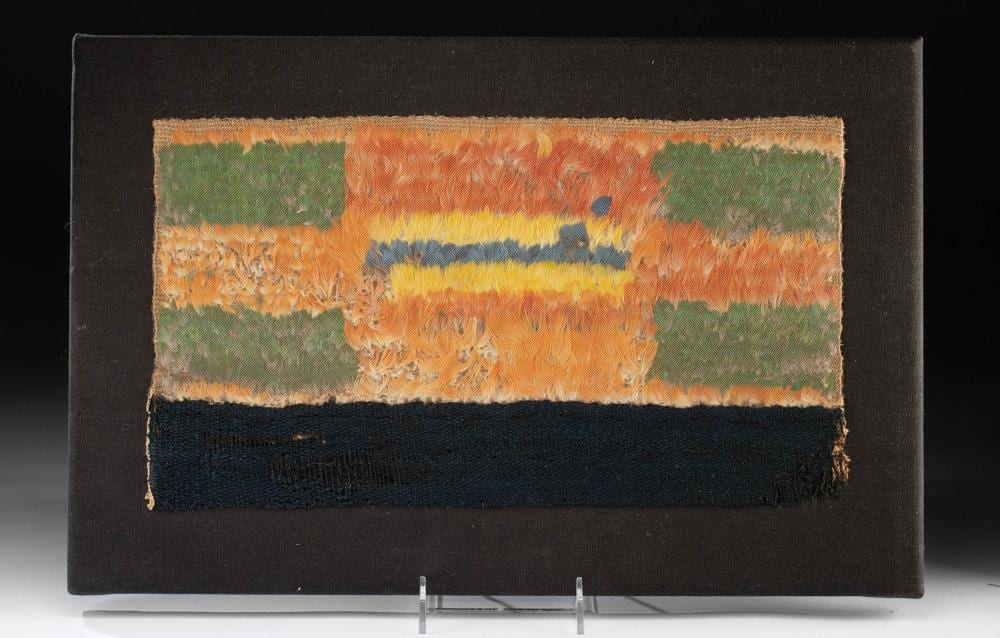 |
Vibrant & Rare Nazca Feather Textile Panel | Artemis Gallery | 2024-08-09 | 20 | USD 800 |
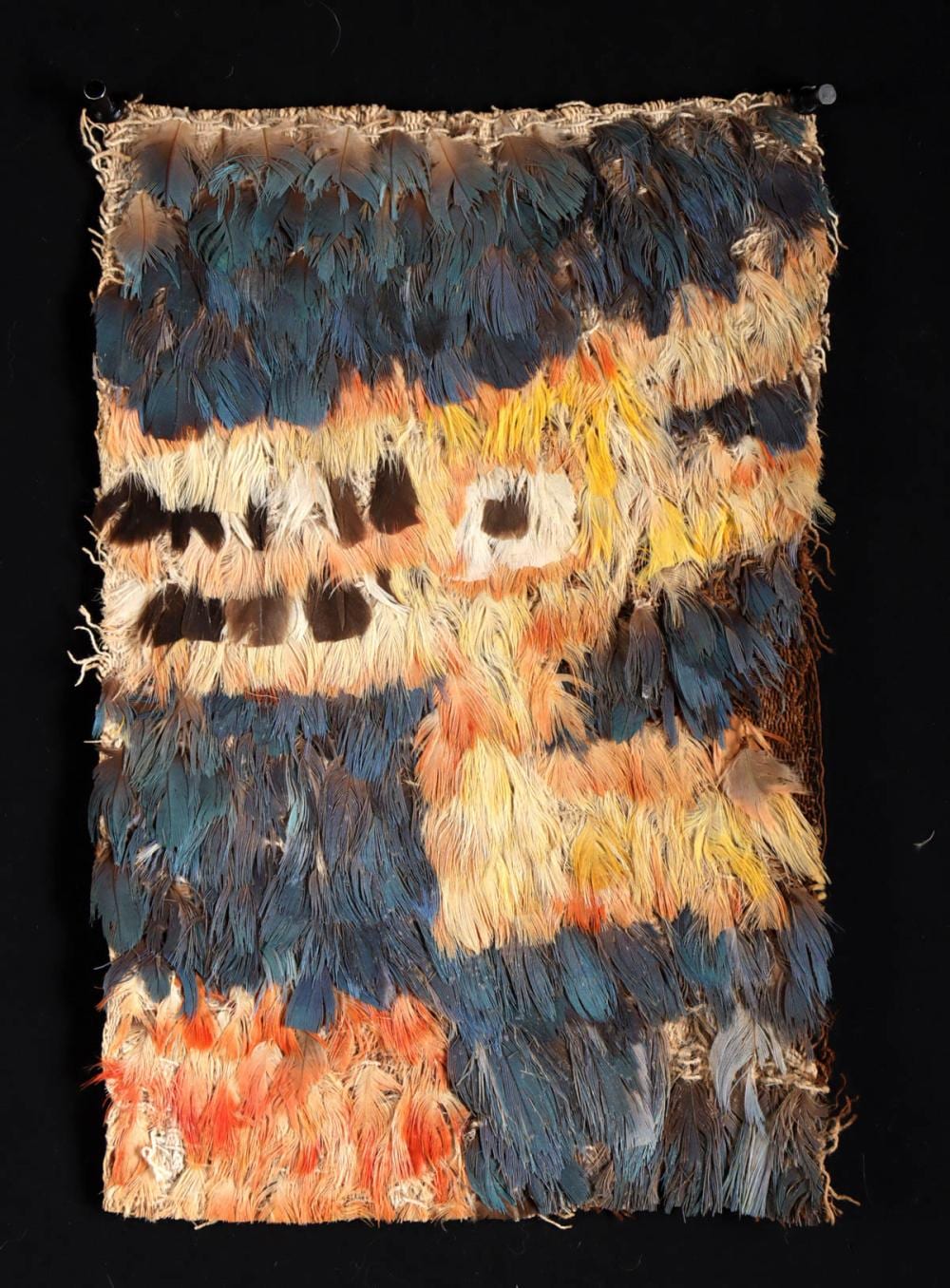 |
Nazca Feather Textile Panel - Zoomorph in Profile | Artemis Fine Arts | 2024-05-11 | 48A | USD 800 |
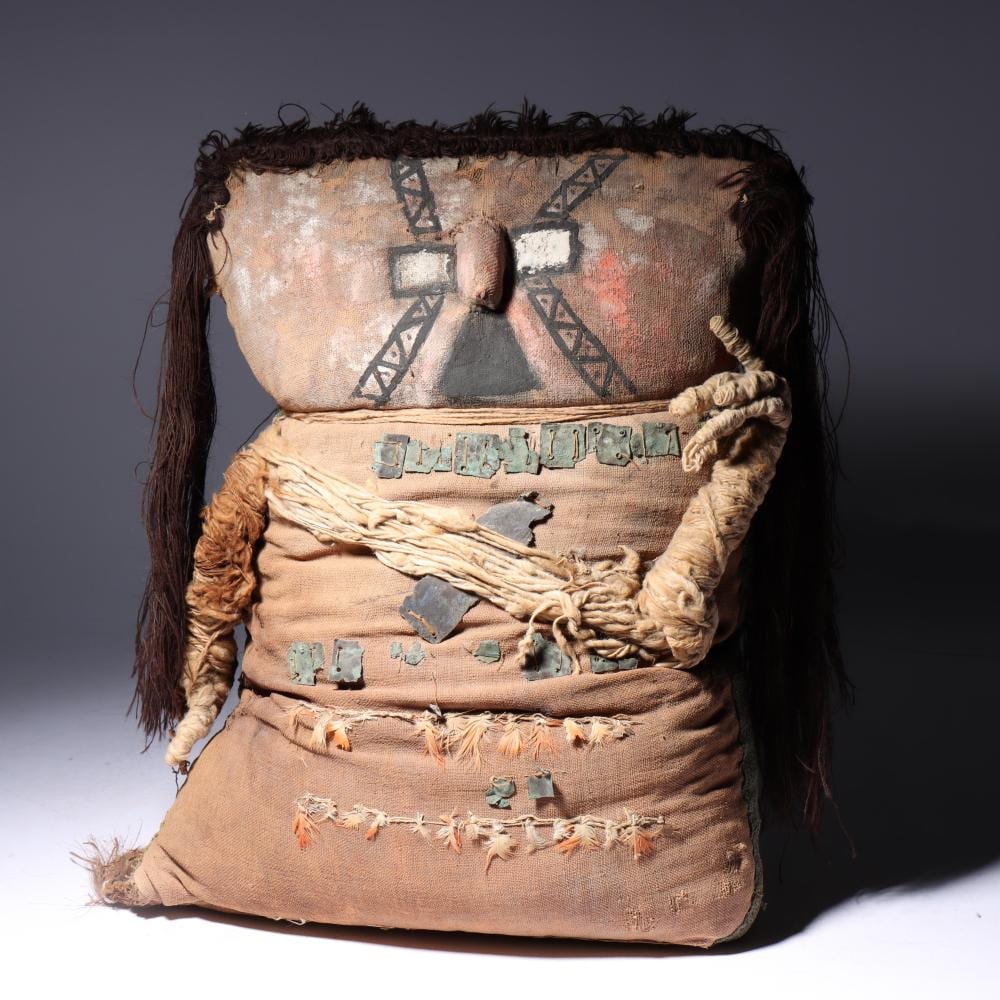 |
Peruvian Chancay mummy bundle textile adorned with copper and feather fragments 14 1/2"H x 12"W | Ripley Auctions | 2024-10-05 | 48 | USD 225 |
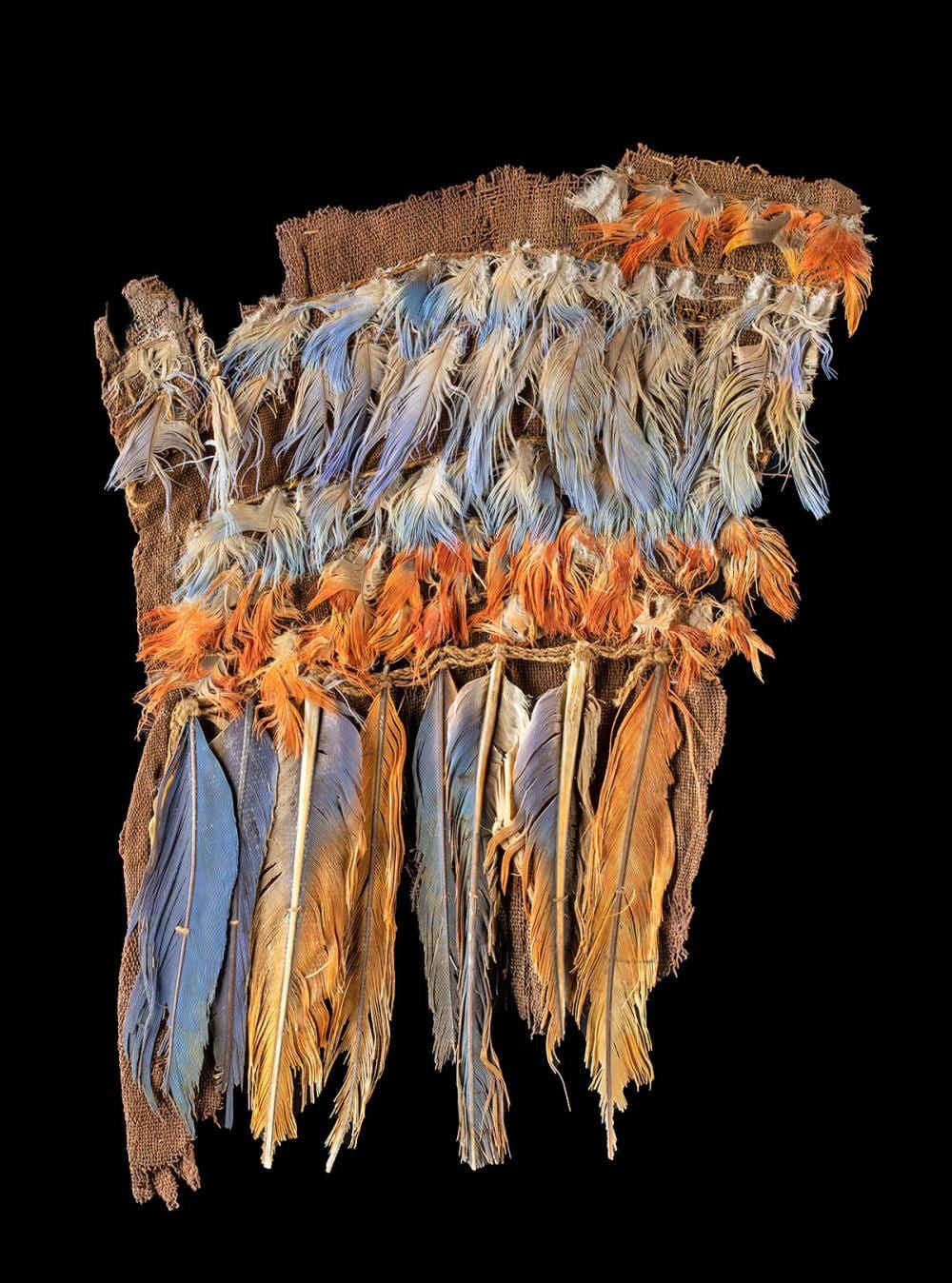 |
Nazca Feather Textile Bag Fragment | Artemis Gallery | 2021-04-15 | 113 | USD 500 |
How these auction records were verified
These sales are market context, not an object estimate.
Each row retains its exact source URL, lot identity, retrieval time, access result, and immutable record hash. Live source access was blocked; the exact record matched Appraisily's immutable pipeline provenance. Inspect the public comparable provenance record.
Search variations (people also ask)
- How do I identify a pre-Columbian Peruvian feather textile?
- What is a Chincha feather miniature dress?
- How can you tell if featherwork is ancient or modern?
- Does provenance affect pre-Columbian textile value?
- Is it legal to sell an ancient Peruvian textile in the US?
- How should I store and display fragile featherwork?
- What photos does an appraiser need for feather textiles?
- What is the value range for pre-Columbian feather garments?
Each question is addressed in the identification and valuation sections above.